

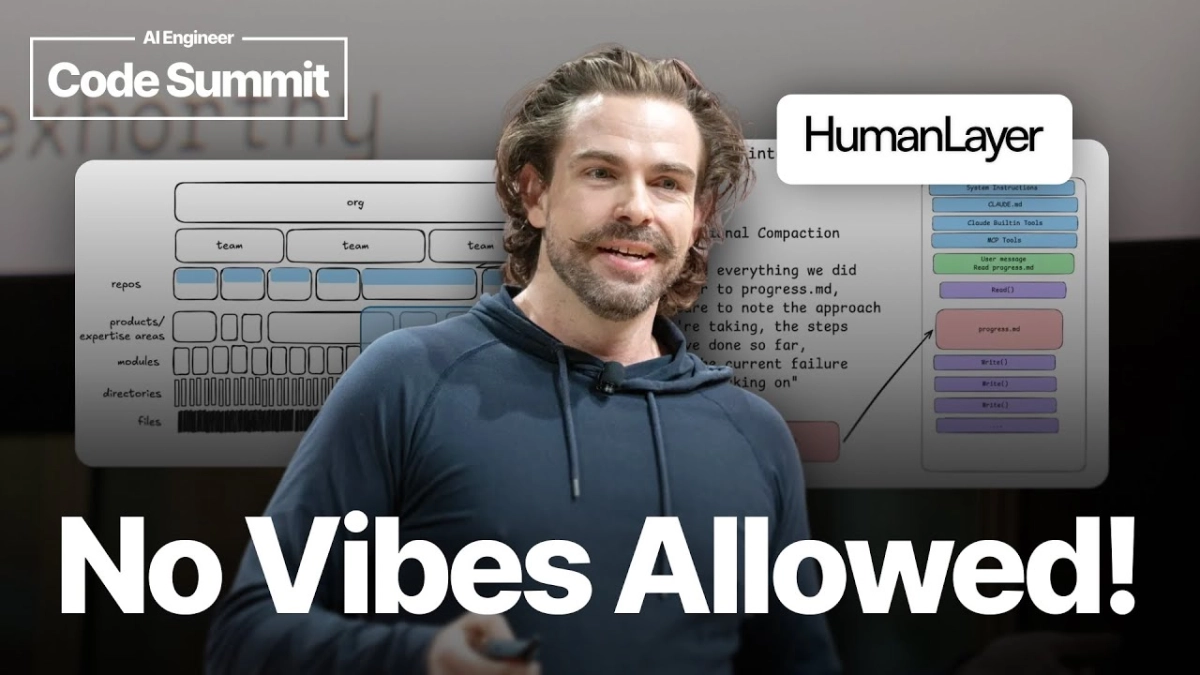
The widespread belief that AI coding tools falter when confronted with complex, established codebases is a challenge actively being tackled by innovators like Dex Horthy, Founder and CEO of HumanLayer. Speaking at the AI Engineer Code Summit, an event presented by Google DeepMind and sponsored by Anthropic, Horthy laid bare the inefficiencies of current AI integration, particularly for "brownfield" projects, and introduced a potent solution: advanced context engineering. He asserted that, contrary to common pessimism, today's models can achieve remarkable productivity gains if approached with the right methodology.
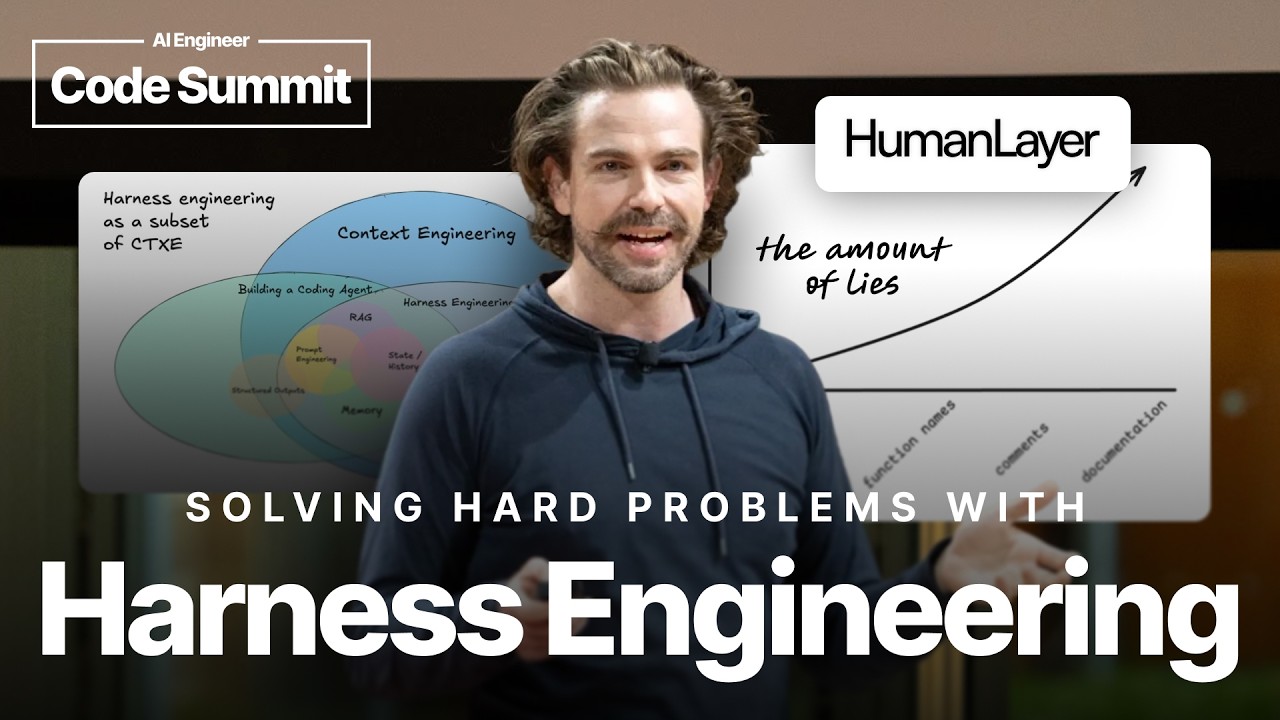
Horthy began by echoing a prevalent sentiment among developers, citing a Stanford study that found most AI use in software engineering leads to significant rework and makes developers less productive in large, mature codebases. "Most of the time you use AI for software engineering, you're doing a lot of rework, a lot of codebase churn," he stated, highlighting the frustrating reality where AI-generated code often merely corrects flaws from previous AI outputs. This cycle of "slop" and "tech debt factory" scenarios leaves many believing that AI's true potential for complex systems lies "maybe someday when the models get better."
However, Horthy argued that the wait is over. "That's what context engineering is all about," he declared. The core principle lies in "getting the most out of today's models" by meticulously managing the context provided to the AI. His team at HumanLayer discovered that a disciplined approach, which they term "Frequent Intentional Compaction," can dramatically enhance AI's efficacy, enabling them to tackle 300,000-line Rust codebases, ship a week's worth of work in a single day, and maintain expert-reviewed code quality.
The "naive way" to interact with a coding agent involves a continuous back-and-forth, repeatedly correcting the AI's missteps until the context window overflows or the developer simply gives up. A slightly smarter approach involves refreshing the context by starting a new conversation when the AI veers off track, providing targeted guidance. Horthy's team elevated this further with intentional compaction, where the AI is prompted to summarize its progress into a markdown file. This distilled information then serves as the concise, relevant context for subsequent interactions, allowing the agent to "get straight to work instead of having to do all that searching and codebase understanding and getting caught up."
The crucial insight here is that "context is everything." Large Language Models (LLMs) are stateless. The quality of their output directly correlates with the quality of the input tokens. Therefore, optimizing the context window for correctness, completeness, size, and trajectory is paramount. Horthy introduced the concept of the "dumb zone," noting that when more than approximately 40% of the context window is used, diminishing returns kick in. "The more you use the context window, the worse the outcomes you'll get," he cautioned, emphasizing the need to keep context lean and focused to avoid overwhelming the model with irrelevant information.