

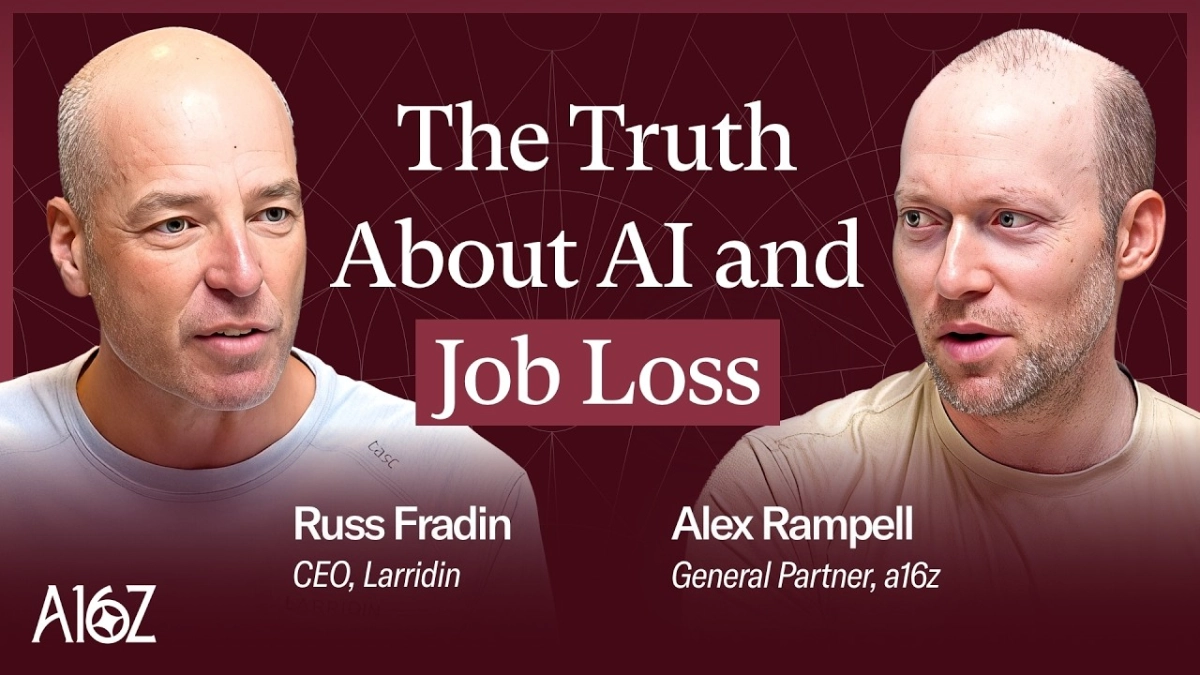
Enterprises are pouring billions into artificial intelligence, yet 85% of companies admit they have no clear method to measure if these investments are actually yielding results. This stark reality formed the crux of a recent a16z podcast featuring Russell Fradin, CEO and Co-founder of Larridin, and Alex Rampell, General Partner at a16z. Fradin, a seasoned entrepreneur with a history in ad tech, argued that the AI industry is currently grappling with a fundamental measurement and attribution problem strikingly similar to the early days of internet advertising.
Fradin, who sold his first company for $300 million and was a foundational executive at comScore, spoke with Rampell about the critical missing infrastructure in AI adoption. Their conversation highlighted why the measurement systems that fueled the trillion-dollar boom in online advertising are precisely what AI needs to move beyond its current state of unquantified potential. The core issue, as articulated by Fradin, is that companies are buying AI tools without understanding whether anyone is truly using them, let alone if they are driving actual productivity gains.
A central insight of the discussion was the parallel drawn between the nascent AI market and the early internet advertising landscape. In the late 1990s, advertisers invested heavily in banner ads without clear metrics for their effectiveness. "A lot of ad tech is here's an advertisement, and there's this attribution problem," Rampell noted, questioning, "Who is responsible for that sale?" This lack of attribution and measurement infrastructure stifled growth until companies like comScore provided verifiable data. Fradin contends AI faces the same hurdle: "The technology is unbelievable... but also there are very boring but important questions." These questions revolve around whether AI tools deliver tangible benefits or merely inflate costs.
The current state of AI adoption within large enterprises is often characterized by a "hope-and-pray" strategy. Companies purchase AI solutions, but lack visibility into actual employee usage or the impact on workflows. Fradin shared a telling anecdote: a 28-year-old investment banking analyst used ChatGPT to create a 30-slide deck in minutes, a task that would typically take eight hours. Instead of recognizing this individual's innovative use, the company organized a global call to teach everyone how to use ChatGPT. This, Fradin stressed, is "an absurd way to hope people adopt world-changing technology."
Another critical insight is the behavioral aspect of AI adoption. Many productive employees are reportedly "hiding their AI usage from management." This clandestine adoption stems from a fear of looking "dumb" or, more profoundly, anxiety about job security. Companies are not providing the necessary training or safe spaces for employees to experiment and integrate AI tools openly. This creates a disconnect where management invests in tools, but widespread, transparent, and measured adoption remains elusive.