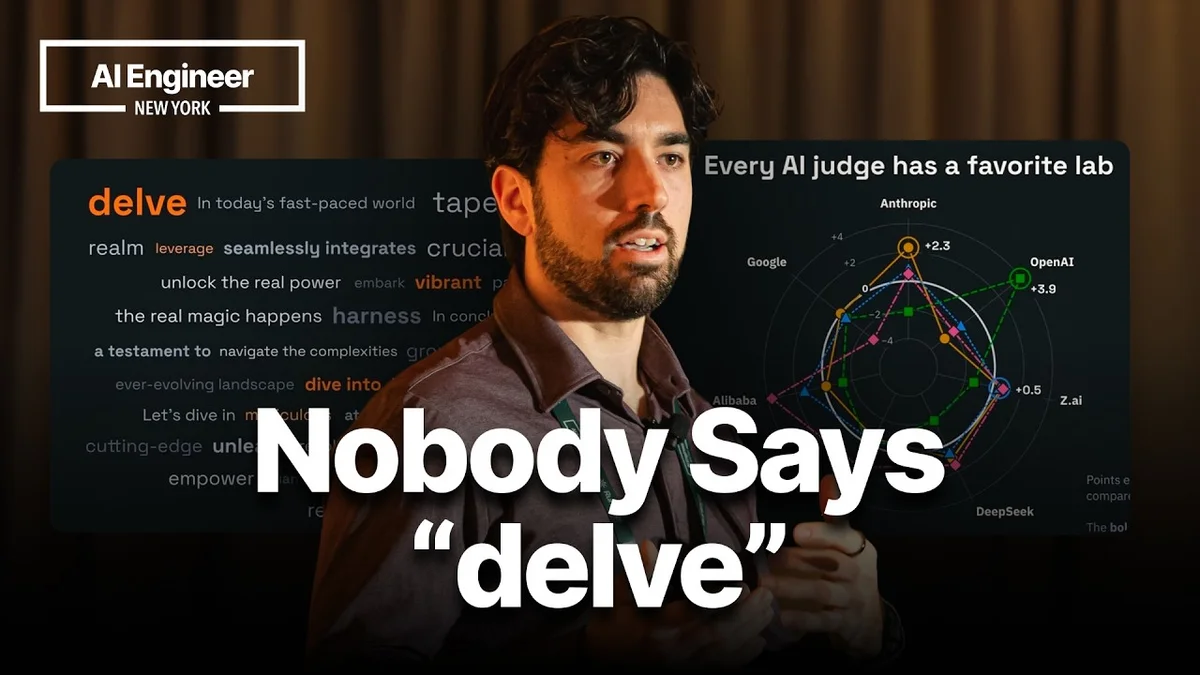
Louis-François Bouchard used AI Engineer to launch Tone Bench, a 10-script benchmark that grades whether models can write in his exact voice without sounding generated.
I do not buy that a benchmark tuned to one editor predicts slop for anyone else, because voice is personal and slop is treated as a general failure.
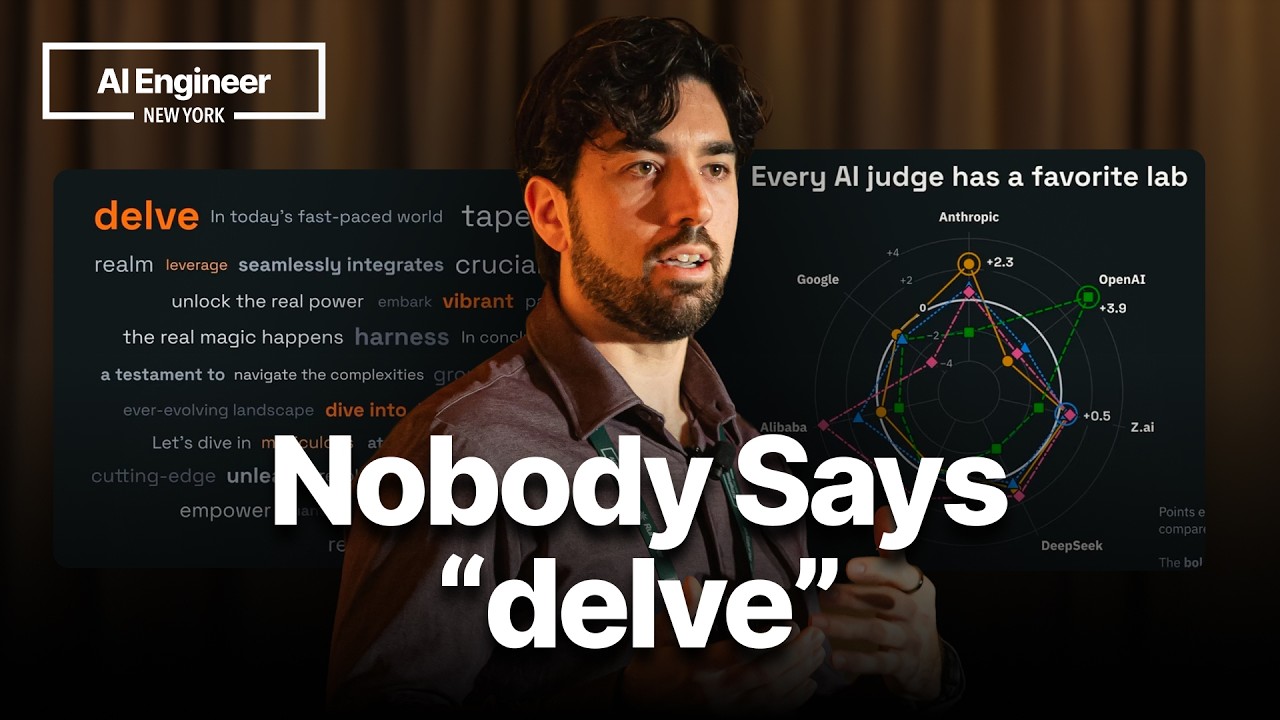
Bouchard said slop shows six patterns including overused words, empty generalities and mismatched tone, and he scores nine metrics grouped as tone, writing quality, instruction following, research accuracy and slop across 120 models with five drafts per task and four LLM judges fed 14,000-word rubrics.
To his credit he details the cost at about 500 hours for ten scripts plus more than $2,000 to change one rubric line and more than $4,000 to change one prompt line, and he admits judges prefer their own families, with OpenAI and Anthropic models consistently downgrading each other, which is why he added 1,000 human A/B comparisons.
The gap is that the field still lacks a shared definition, and a September 2025 analysis found AI slop has no agreed definition nor standard measurement for low-quality AI text, per arXiv analysis, which leaves a single-voice score without external validity.
If you asked me what to run in production, I would generate ten cheap drafts with GLM 5.3 Flash at roughly one fiftieth the cost of Opus 5.5 extra high and let one high-reasoning judge pick and merge instead of paying for Opus 5.5 Max Thinking at about 2.5 times the price for the same result.