

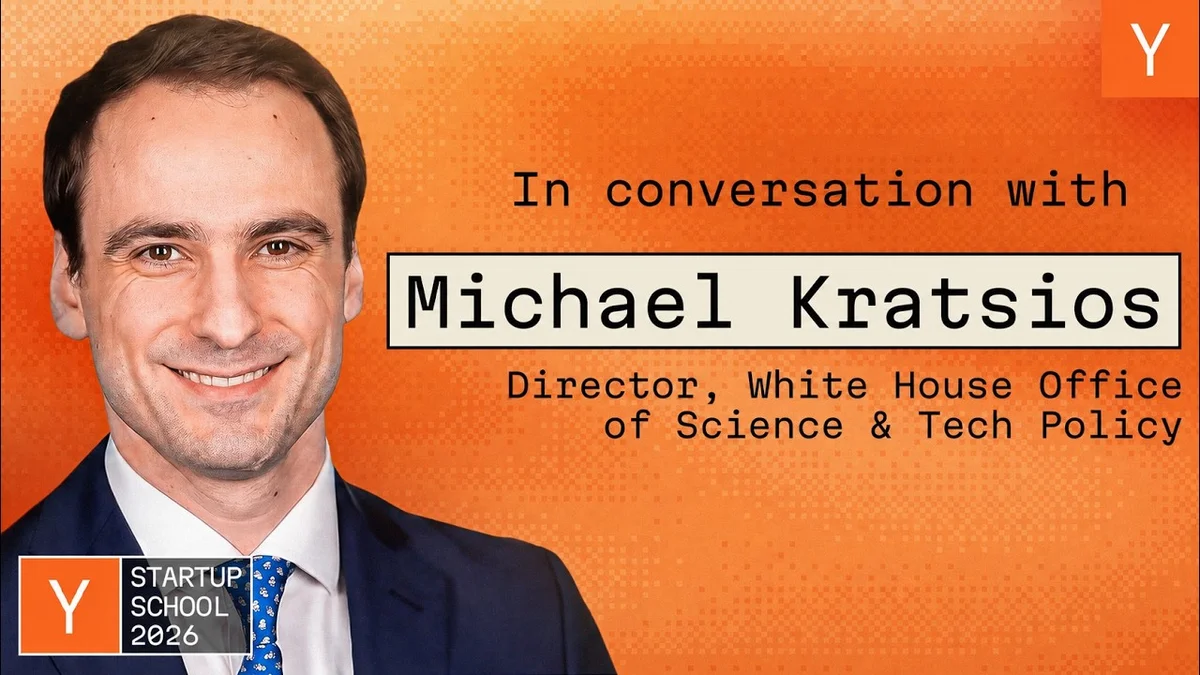
White House AI Strategy: Kratsios on Policy & Innovation

Michael Kratsios, White House OSTP Director, discusses US AI strategy, open-source models, and the future of science at a YC event.

Michael Kratsios and Luther Lowe speaking at Y Combinator Startup School
YC
Visual TL;DR
Kratsios: Startup COOCore
former COO of Scale AI, bridging startup world to government policy
From the article 3 mentionsKratsios, a key architect of America's national AI strategy, discussed his unique experience navigating the frontier of AI from both hyper-growth startups and the White House.
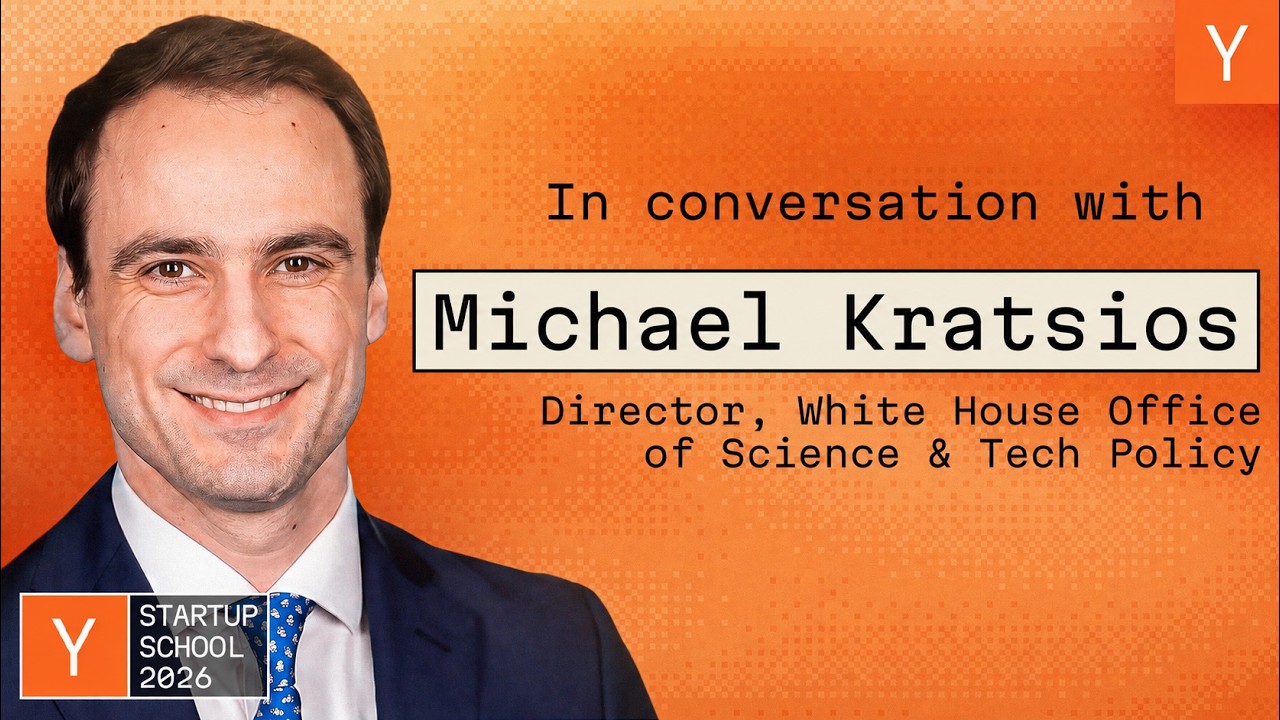
White House AI AdvisorCore
OSTP Director and key architect of US national AI strategy
From the article 5 mentionsThe White House's role, therefore, is to bring these agencies together to forge coherent policy.
Bridge Washington-StartupEffect
connecting fast-paced tech innovation with intricate D.C. policy processes
From the articleThis background allows him to bridge the gap between the fast-paced world of startups and the intricate policy-making processes in Washington D.C.
Government AI LeadershipContext
discussing the administration's approach to artificial intelligence policy
From the article 5 mentionsWhen asked about his motivation for public service, Kratsios emphasized his fundamental belief in the importance of American leadership in emerging technologies.
Regulate Rapid AIDriver
developing policy for a quickly evolving and complex technological field
Navigating Federated PolicyDriver
addressing the complex, distributed nature of policy-making in government
Champion Open Source AIEffect
advocating for open-source models and open weights in AI development
US AI StrategyOutcome
shaping America's national approach to artificial intelligence and innovation
From the articleKratsios, a key architect of America's national AI strategy, discussed his unique experience navigating the frontier of AI from both hyper-growth startups and the White House.
Contents(12)

Michael Kratsios, Director of the White House Office of Science and Technology Policy (OSTP) and former Chief Technology Officer under President Trump, shared insights into the administration's approach to artificial intelligence policy at a recent Y Combinator Startup School event. Kratsios, a key architect of America's national AI strategy, discussed his unique experience navigating the frontier of AI from both hyper-growth startups and the White House.

From Startup COO to White House Advisor

Kratsios's career path offers a dual perspective on the technology sector. He previously served as the Chief Operating Officer of Scale AI, a company at the forefront of AI development, before returning to government service. This background allows him to bridge the gap between the fast-paced world of startups and the intricate policy-making processes in Washington D.C.

The full discussion can be found on YC's YouTube channel.

Michael Kratsios: Inside the White House's AI Strategy - YC
Michael Kratsios: Inside the White House's AI Strategy, from YC

The Role of Government in AI Leadership

When asked about his motivation for public service, Kratsios emphasized his fundamental belief in the importance of American leadership in emerging technologies. He stated, "American leadership in these emerging technologies is one of the most critical questions of our time." He believes that a regulatory environment that fosters success is essential to ensure the American people benefit from AI advancements. Furthermore, he finds working in the U.S. government rewarding due to the scale of the problems tackled, arguing that even the largest tech companies don't deal with issues of comparable magnitude.

Kratsios shed light on a surprising aspect of technology policy-making: its highly federated nature. He explained that decisions aren't concentrated in a few hands but are spread across multiple agencies, each with its own equities, from national security to commercial interests and scientific research. The White House's role, therefore, is to bring these agencies together to forge coherent policy. He used the example of drone regulations, which require coordination between the FAA and agencies overseeing nuclear sites to ensure safety and operational feasibility.

Championing Open Source and Open Weights AI

Addressing recent discussions about AI regulation, Kratsios clarified the White House's stance on open-source and open-weight models. He affirmed that the administration strongly supports these approaches, as outlined in their AI Action Plan released last July. "If the U.S. wants to lead in artificial intelligence, we have to have a vibrant closed and open-source ecosystem," Kratsios stated, highlighting that this collaborative environment is key to making progress. He sees recent community advocacy, like letters from startups urging against clamping down on open models, as crucial for informing policy decisions.

Bridging the Gap Between Washington and the Startup World

Kratsios identified a significant gap between how Washington views AI and how the startup community perceives it. While Washington considers AI's broad societal impacts, from data centers to healthcare and labor markets, startups focus on its potential for new company growth and productivity. He stressed the need for input from the startup community to ensure policy decisions are well-informed, particularly regarding the necessity of widespread computing infrastructure like data centers, which are often met with local resistance.

Regulating a Rapidly Evolving Field

Addressing the challenge of regulating a field that reinvents itself every six months, Kratsios cautioned against setting rigid regulations. He cited the EU AI Act as an example, noting it was finalized before the advent of large language models like ChatGPT, making it potentially outdated. The administration's approach, he suggested, is to remain cautious and ensure policies can adapt to the evolving technological frontier.

Identifying Overblown vs. Underrated AI Risks

When asked about AI risks, Kratsios pointed to cyber risks and biological risks as key concerns. He noted that the same models capable of nefarious acts can also be valuable in hardening existing systems, presenting inherent trade-offs. While acknowledging the potential for biological risks, he suggested that concerns about them, particularly in the short term, might be overblown compared to immediate cyber threats.

The Importance of "Little Tech"

Kratsios acknowledged that tech policy discussions are often dominated by large corporations. He praised the formation of trade associations like the "Little Tech Association" as a mechanism to ensure smaller companies have a voice. He cited the administration's push for national preemption of state AI laws as an example of supporting smaller players, as a patchwork of regulations is manageable for large companies but prohibitive for startups.

A Vision for the Future of Science and Technology

Kratsios also discussed the report "Science: A New Golden Age," which he co-authored. Inspired by a letter from President Franklin D. Roosevelt to his science advisor, the report examines the evolution of R&D funding and highlights AI's transformative potential in scientific discovery. He envisions a future where AI agents autonomously run experiments, leading to accelerated breakthroughs across various scientific domains.

The Future of Technology: Beyond AI

Looking ahead, Kratsios identified quantum information science and quantum computing as technologies that Washington will increasingly focus on. He drew parallels to the early days of promoting AI, suggesting that concerted government effort is crucial for nurturing nascent technological fields.

The Role of Congress and Legislative Action

Kratsios emphasized the need for legislative action from Congress, particularly regarding preempting state-level AI regulations to ensure a unified national standard. He also highlighted the importance of addressing AI's interaction with intellectual property and personal likeness, acknowledging creators' concerns about the impact of AI on their work.

Encouraging Public Service in Tech

In closing, Kratsios encouraged young professionals in the tech field to consider public service. He described the experience as deeply fulfilling and impactful, despite potential bureaucratic challenges. He believes that creating an environment where startups can thrive is a rewarding endeavor, and the White House Science and Technology Office is always seeking talented individuals.

© 2026 StartupHub.ai. All rights reserved. You may not republish this article in full without a license. Search engines and AI research tools may crawl and summarize for reference. Bulk reproduction or model training requires a license. See our terms.
Daniel Singer

Written by

Daniel Singer

Editor, StartupHub.ai

Daniel Singer is the editor of StartupHub.ai, a technology expert and thought leader on AI and its applications across sectors, from fintech and healthcare to developer tooling and consumer software. He writes and tests the tools covered here thoroughly and regularly, and built StartupHub.ai to give founders, operators and buyers a clearer read on what they are actually being sold.