

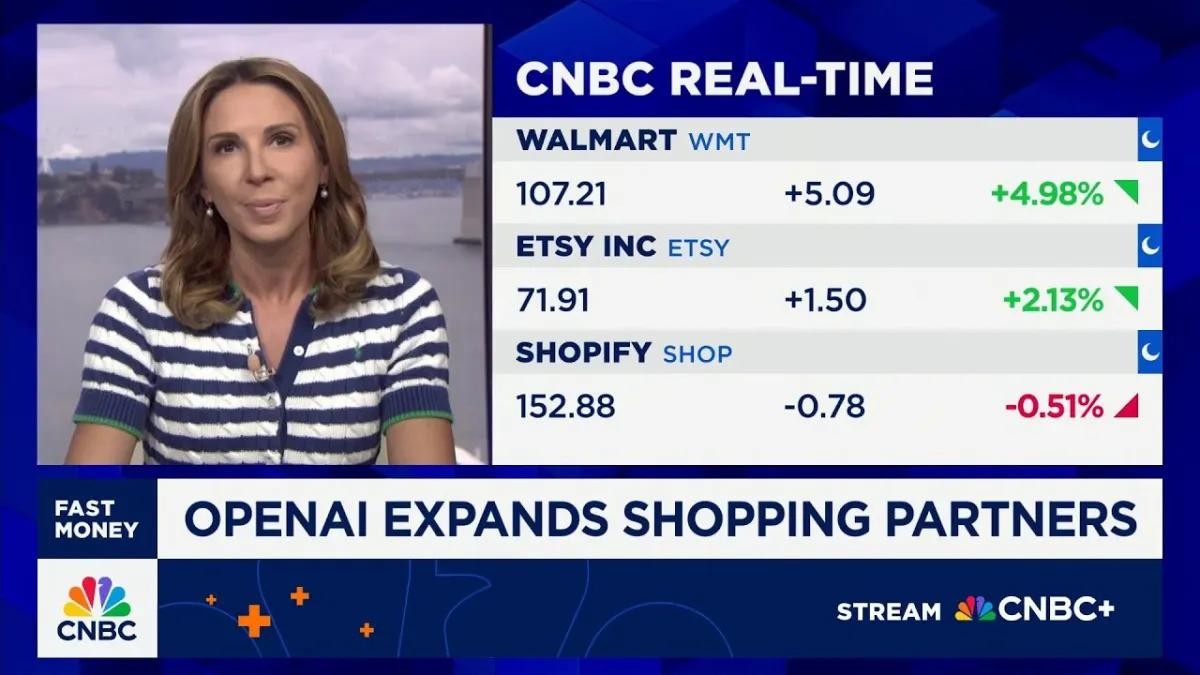
The dramatic near 5% surge in Walmart's stock, adding an estimated $41 billion to its market capitalization, underscores a pivotal moment: the tangible financial impact of artificial intelligence integration into mainstream commerce. This significant market movement, as highlighted in a recent CNBC "Fast Money" segment, is not merely about a new feature; it heralds a fundamental shift in how consumers will discover and purchase goods, powered by conversational AI.
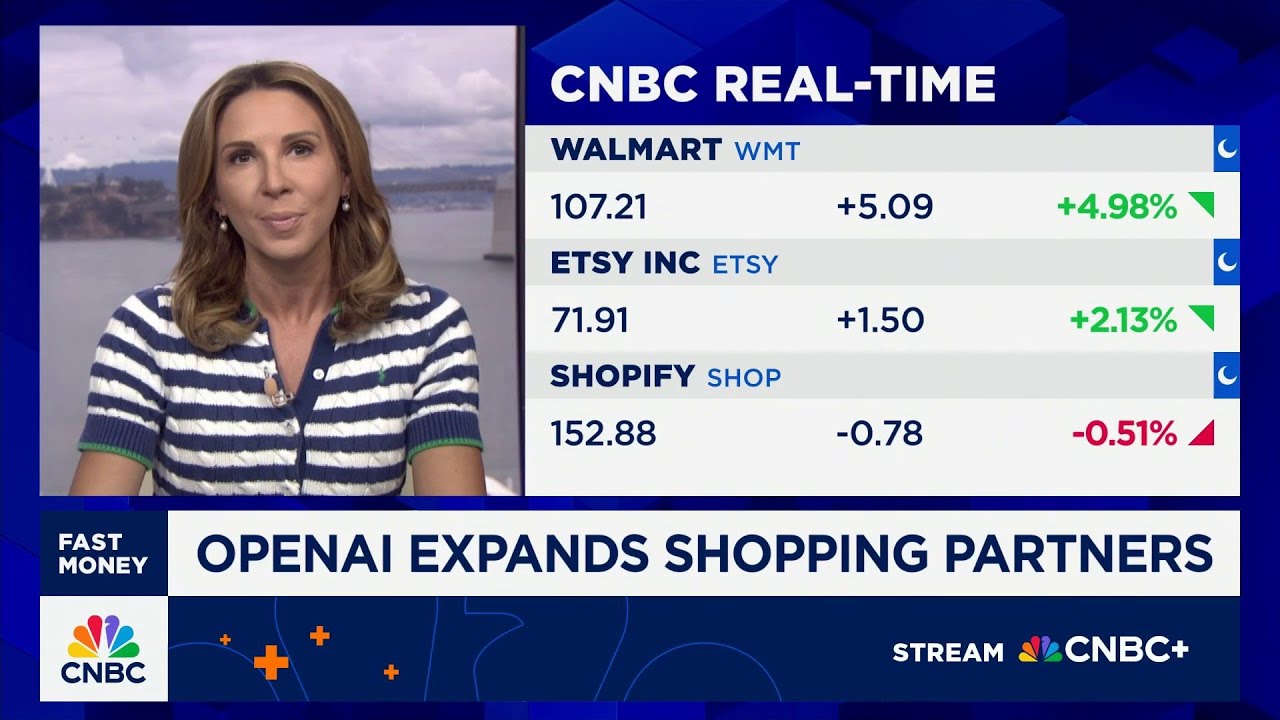
CNBC's MacKenzie Sigalos, reporting on "Fast Money," discussed the groundbreaking partnership between retail giant Walmart and artificial intelligence pioneer OpenAI. The collaboration aims to embed a direct shopping experience within ChatGPT, allowing users to interact with the AI, receive product recommendations with accompanying videos and images, and complete purchases directly through what Walmart terms "Instant Checkout." This development marks a critical juncture for both companies and the broader digital economy.
A central concern immediately arises regarding the neutrality of AI-driven recommendations when a direct financial partnership exists. The question of whether ChatGPT would be incentivized to steer shoppers toward Walmart was directly addressed. Sigalos clarified, stating, "This doesn't mean that Walmart gets priority placement inside of ChatGPT." OpenAI reportedly maintains that "product results remain organic and unsponsored, ranked purely by what's most relevant to the user." This commitment to algorithmic impartiality is crucial for user trust and the long-term viability of AI as a discovery platform, preventing it from devolving into a mere advertising channel.
Walmart's integration is not about gaming the system, but about enhancing the user experience. The "Instant Checkout" tool is designed to streamline the purchase process, allowing consumers to complete transactions seamlessly within the conversational interface. This move indicates a strategic focus on convenience, leveraging AI to reduce friction in the buyer journey, a constant pursuit for any e-commerce player.
From OpenAI's perspective, this partnership represents a significant evolution in its business model. Beyond its successful subscription services, the collaboration with Walmart is "one of the first ways that OpenAI is monetizing ChatGPT beyond subscriptions." The revenue structure involves "merchant fees that are bespoke, negotiated case by case," a model that Sigalos suggests "could ultimately resemble Apple's App Store." This platform-centric approach allows OpenAI to leverage its powerful AI infrastructure to facilitate commerce, creating a new revenue stream tied directly to transactional volume rather than just access. This is a powerful new paradigm for AI companies to consider for monetization.