

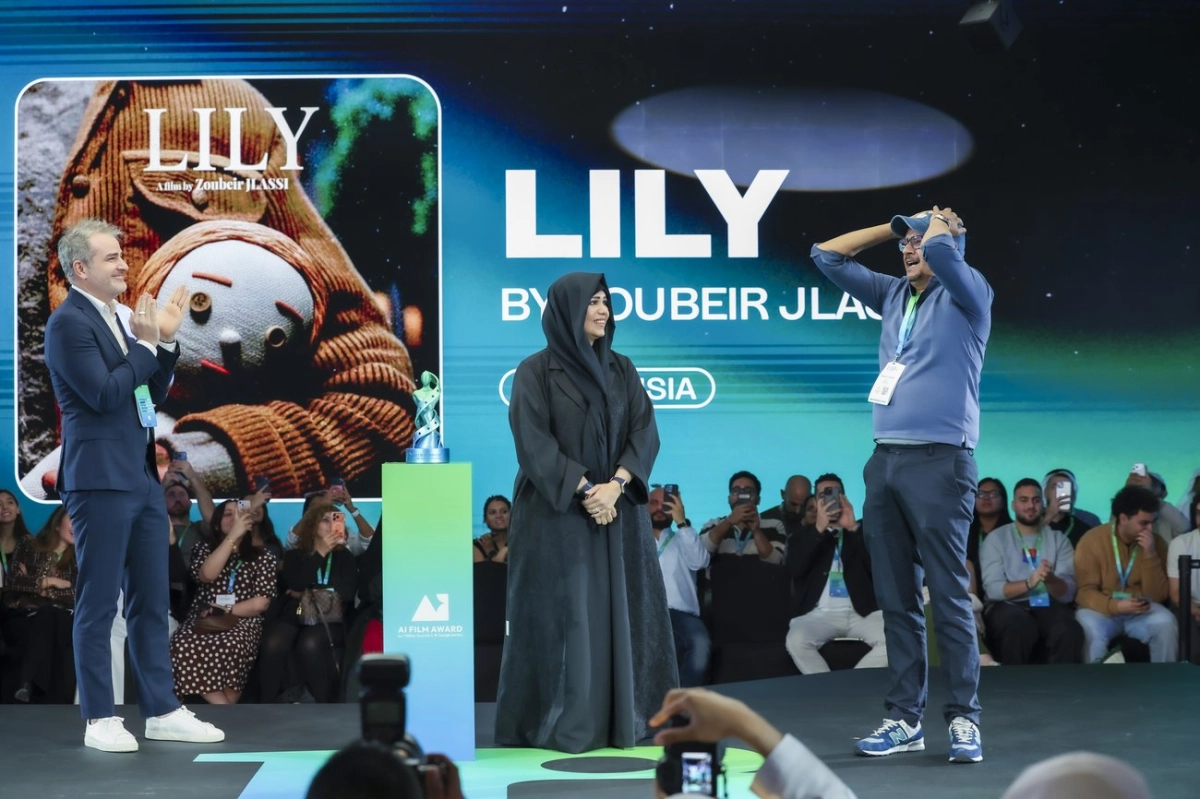
The recent announcement of the Global AI Film Award winner, Zoubeir ElJlassi, marks a critical inflection point for generative video technology. His winning film, Lily, was heavily reliant on Google's advanced suite, specifically leveraging the Veo AI video model for its distinct cinematic quality. This $1 million validation signals that AI video generation is now a viable component in high-stakes professional creative pipelines.
ElJlassi’s success was directly tied to Veo’s ability to handle complex aesthetic requirements under narrative pressure. According to the announcement, Veo provided the "consistent, high-quality video" necessary to establish the film’s "gloomy aesthetic." This moves the conversation past simple prompt-to-video generation and into controlled, atmospheric world-building, a traditional hurdle for previous models struggling with temporal consistency.
Beyond Generation: The Control Layer
Crucially, the winning workflow was not solely dependent on Veo. The integration of Flow, which allowed for precision control over character empathy and scene style, demonstrates that professional AI filmmaking requires a layered toolset. Gemini further anchored the process, handling foundational tasks from storyboarding to character look and feel. This integrated approach confirms that single-model solutions are insufficient for complex narrative demands and that the future of generative media lies in specialized, interconnected tools.
The sheer volume of submissions, 3,500 entries, underscores the rapid adoption rate of these tools among global creators. While the technology lowers the barrier to entry for production, the jury’s focus on how ElJlassi blended human emotion with technology is instructive. The industry takeaway is clear: technical proficiency with models like the Veo AI video model is necessary, but narrative mastery remains the ultimate differentiator.
The AI Film Award has effectively served as a high-profile proof of concept for Google’s generative media strategy. By showcasing Veo and its companion tools in a competitive, high-budget environment, Google has established a benchmark for quality and control. We should expect accelerated development in consistency and directorial control features as competitors rush to match the narrative fidelity demonstrated by Lily.