



US chip stocks have seen a sharp downturn, a consequence of a widening selloff in the artificial intelligence sector that originated in Asia. The video discusses the broad impact of this trend across the market, highlighting how the intense demand for AI-driven technologies is creating significant volatility for companies involved in semiconductor manufacturing and supply chains.
AI's Ripple Effect on Chip Stocks
The recent plunge in US chip stocks is directly linked to the ongoing selloff in the artificial intelligence market. This trend, which began in Asian markets, is now significantly affecting semiconductor companies globally. The insatiable demand for AI capabilities, particularly for large language models (LLMs), has created a massive need for advanced processing power, primarily in the form of high-end GPUs. This has led to a surge in demand for chip manufacturers, but also heightened concerns about supply chain constraints, geopolitical risks, and the sustainability of such rapid growth.
Market Volatility and Investor Sentiment
The interconnectedness of the global market means that downturns in one sector, especially one as influential as AI, can quickly spread to others. The selloff in chip stocks reflects a broader investor sentiment shift, likely driven by concerns about overvaluation, the potential for slowing growth, or regulatory pressures. Companies that were previously seen as direct beneficiaries of the AI boom are now facing increased scrutiny, leading to a re-evaluation of their stock prices.
The full discussion can be found on Bloomberg Podcast's YouTube channel.
The Role of AI in Business Operations
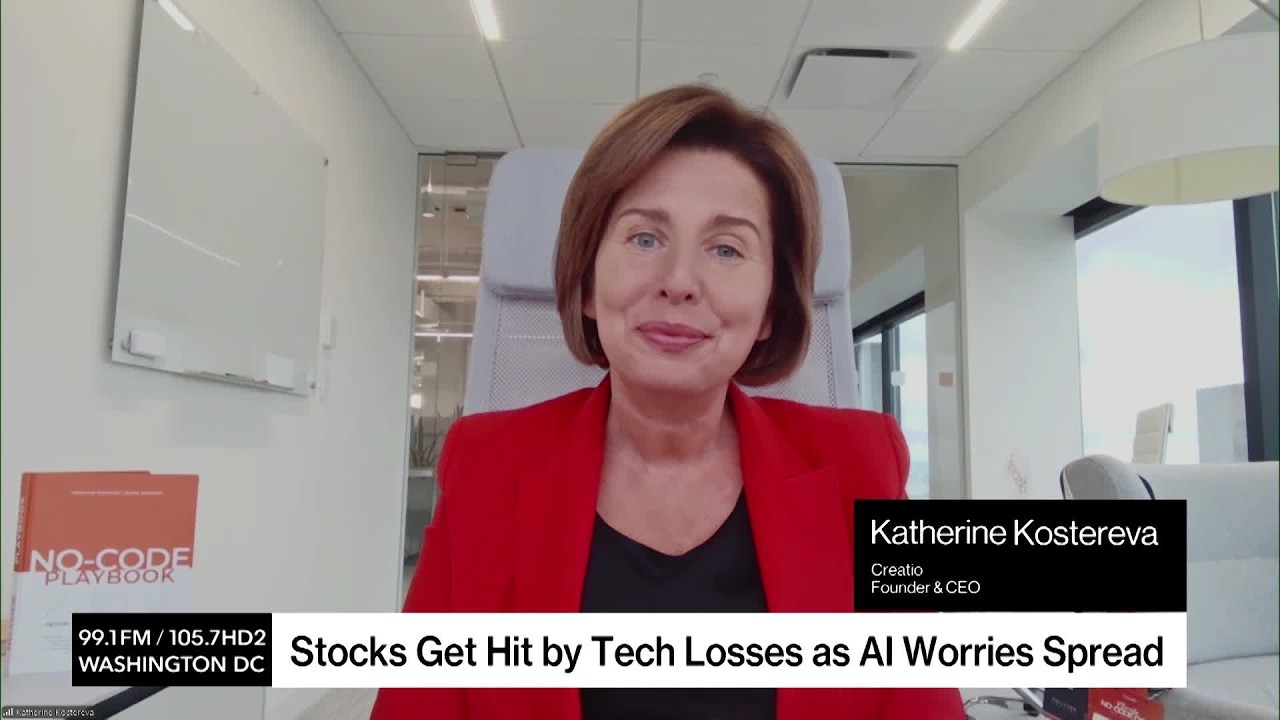
Beyond the stock market implications, the video touches upon how AI is transforming business operations. Katherine Kostereva, Founder & CEO of Creatio, discusses the integration of AI into workflows. She highlights how AI can automate tasks, streamline processes, and enable businesses to operate more efficiently. Kostereva emphasizes that the future of business automation involves a hybrid approach, combining human-led workflows with AI-driven capabilities to create more agile and responsive organizations. This integration is not just about efficiency but also about democratizing access to complex business processes through no-code and low-code platforms, making AI more accessible to a wider range of users.