The prevailing notion of a winner-take-all dynamic in the burgeoning artificial intelligence sector is being actively challenged by a new paradigm of deep collaboration. As Microsoft CEO Satya Nadella articulated, "As an industry, we really need to move beyond any type of zero-sum narrative or winner-take-all hype." This sentiment underpins a significant multi-pronged partnership recently announced by Microsoft, Anthropic, and Nvidia, signaling a collective commitment to accelerating AI development through synergistic efforts across the technology stack.
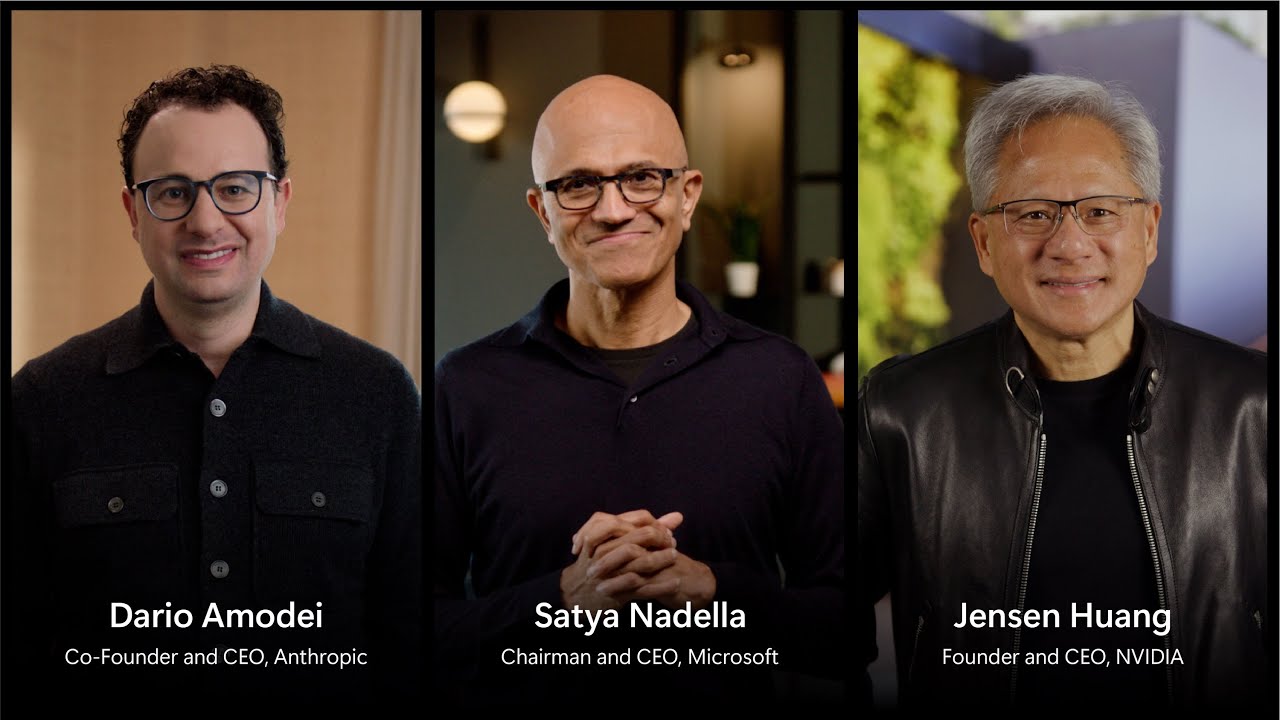
Satya Nadella, joined by Dario Amodei, CEO of Anthropic, and Jensen Huang, CEO of Nvidia, detailed a strategic alliance that is less about exclusive dominance and more about fostering an open, robust ecosystem. Their discussion illuminated how these industry titans are pooling their distinct strengths, from silicon innovation to foundational models and global enterprise reach, to democratize access to cutting-edge AI for developers and organizations worldwide. The core message is clear: true progress in AI demands an integrated approach that transcends individual company silos.
A foundational insight from the discussion is the critical importance of advancing every layer of the AI stack in concert. Nadella emphasized that the collaborative efforts of Nvidia at the silicon layer and Anthropic at the cognition layer are "shaping what every developer and every organization will be able to build on going forward." This holistic perspective suggests that optimizing one component in isolation is insufficient; instead, continuous innovation must occur across hardware, systems, models, and applications to unlock AI's full potential.
The partnership specifically outlines four key areas of collaboration. Firstly, customers of Microsoft Foundry will gain access to Anthropic's Claude models, expanding model choice for developers building on Azure. Secondly, access for Claude models will be extended across Microsoft’s Copilot family of products, deeply embedding Anthropic’s advanced capabilities into widely used enterprise tools. Thirdly, Anthropic is committing to Azure capacity, solidifying Microsoft's role as a critical cloud infrastructure provider for one of the leading AI model developers. Finally, Nvidia and Anthropic are establishing a direct partnership to support Anthropic’s future growth, ensuring the model developer has access to the cutting-edge hardware necessary for increasingly complex AI training.
Dario Amodei of Anthropic underscored the value of this multi-cloud strategy, noting, "We're excited to bring our models as a choice to Microsoft Azure." He further highlighted Anthropic's commitment to being the first model available across all three major cloud providers, demonstrating a belief in model optionality for customers. Amodei also pointed to Microsoft's established reputation as a strong enterprise company, recognizing the invaluable opportunity to "work together, to go to market together, and to provide intelligence to the world together."