


Tech Workforce Splits: Burnout Surges, Optimism Fades Amid AI Boom

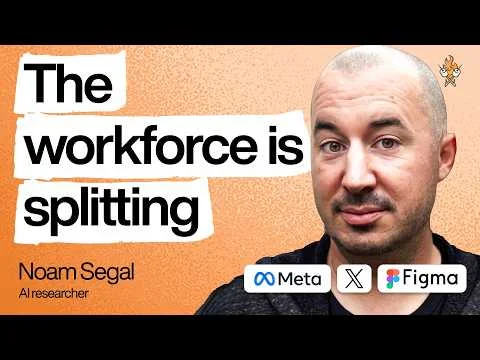
A new survey by Noam Segal and Lenny Rachitsky reveals a tech workforce deeply divided by AI, with rising burnout and declining optimism.

10 min read
Split image showing a man looking stressed at a desk surrounded by old computers and a man looking happy and confident, representing the bifurcated tech workforce
Lenny's Podcast

Visual TL;DR. New Tech Survey reveals Workforce Bifurcated. AI Boom drives Workforce Bifurcated. Workforce Bifurcated leads to Burnout Surges. Workforce Bifurcated results in Optimism Fades. Burnout Surges contributes to Cognitive Rot. Optimism Fades causes Hesitate to Recommend.

  1. New Tech Survey: Segal and Rachitsky's second annual survey of 6,000 tech professionals
  2. AI Boom: rapid changes brought by artificial intelligence impacting the tech industry
  3. Workforce Bifurcated: half feels amplified by AI, other half experiences growing burnout
  4. Burnout Surges: declining optimism and significant unease about professional future
  5. Optimism Fades: honeymoon period with AI decidedly over for many in tech
  6. Cognitive Rot: fear of skill atrophy and overwork outweighs fear of job loss
  7. Hesitate to Recommend: tech professionals less likely to suggest their field to others
Visual TL;DR
Visual TL;DR, startuphub.ai New Tech Survey reveals Workforce Bifurcated. AI Boom drives Workforce Bifurcated. Workforce Bifurcated leads to Burnout Surges. Workforce Bifurcated results in Optimism Fades reveals drives leads to results in New Tech Survey AI Boom Workforce Bifurcated Burnout Surges Optimism Fades From startuphub.ai · The publishers behind this format
Visual TL;DR, startuphub.ai New Tech Survey reveals Workforce Bifurcated. AI Boom drives Workforce Bifurcated. Workforce Bifurcated leads to Burnout Surges. Workforce Bifurcated results in Optimism Fades reveals drives leads to results in New Tech Survey AI Boom WorkforceBifurcated Burnout Surges Optimism Fades From startuphub.ai · The publishers behind this format
Visual TL;DR, startuphub.ai New Tech Survey reveals Workforce Bifurcated. AI Boom drives Workforce Bifurcated. Workforce Bifurcated leads to Burnout Surges. Workforce Bifurcated results in Optimism Fades reveals drives leads to results in New Tech Survey Segal and Rachitsky's second annual surveyof 6,000 tech professionals AI Boom rapid changes brought by artificialintelligence impacting the tech industry Workforce Bifurcated half feels amplified by AI, other halfexperiences growing burnout Burnout Surges declining optimism and significant uneaseabout professional future Optimism Fades honeymoon period with AI decidedly overfor many in tech From startuphub.ai · The publishers behind this format
Visual TL;DR, startuphub.ai New Tech Survey reveals Workforce Bifurcated. AI Boom drives Workforce Bifurcated. Workforce Bifurcated leads to Burnout Surges. Workforce Bifurcated results in Optimism Fades reveals drives leads to results in New Tech Survey Segal andRachitsky's secondannual survey of… AI Boom rapid changesbrought byartificial… WorkforceBifurcated half feelsamplified by AI,other half… Burnout Surges declining optimismand significantunease about… Optimism Fades honeymoon periodwith AI decidedlyover for many in… From startuphub.ai · The publishers behind this format
Visual TL;DR, startuphub.ai New Tech Survey reveals Workforce Bifurcated. AI Boom drives Workforce Bifurcated. Workforce Bifurcated leads to Burnout Surges. Workforce Bifurcated results in Optimism Fades. Burnout Surges contributes to Cognitive Rot. Optimism Fades causes Hesitate to Recommend reveals drives leads to results in contributes to causes New Tech Survey Segal and Rachitsky's second annual surveyof 6,000 tech professionals AI Boom rapid changes brought by artificialintelligence impacting the tech industry Workforce Bifurcated half feels amplified by AI, other halfexperiences growing burnout Burnout Surges declining optimism and significant uneaseabout professional future Optimism Fades honeymoon period with AI decidedly overfor many in tech Cognitive Rot fear of skill atrophy and overworkoutweighs fear of job loss Hesitate to Recommend tech professionals less likely to suggesttheir field to others From startuphub.ai · The publishers behind this format
Visual TL;DR, startuphub.ai New Tech Survey reveals Workforce Bifurcated. AI Boom drives Workforce Bifurcated. Workforce Bifurcated leads to Burnout Surges. Workforce Bifurcated results in Optimism Fades. Burnout Surges contributes to Cognitive Rot. Optimism Fades causes Hesitate to Recommend reveals drives leads to results in contributes to causes New Tech Survey Segal andRachitsky's secondannual survey of… AI Boom rapid changesbrought byartificial… WorkforceBifurcated half feelsamplified by AI,other half… Burnout Surges declining optimismand significantunease about… Optimism Fades honeymoon periodwith AI decidedlyover for many in… Cognitive Rot fear of skillatrophy andoverwork outweighs… Hesitate toRecommend tech professionalsless likely tosuggest their field… From startuphub.ai · The publishers behind this format

The honeymoon period with AI is decidedly over for many in the tech industry, as a new sentiment survey reveals a workforce deeply divided by the rapid changes brought by artificial intelligence. Led by veteran researcher Noam Segal and Lenny Rachitsky, this second annual survey, encompassing 6,000 tech professionals across various roles, exposes a stark bifurcation: half of the workforce feels energized and amplified by AI, while the other half experiences growing burnout, declining optimism, and significant unease about their professional future.

Tech Workforce Splits: Burnout Surges, Optimism Fades Amid AI Boom - Lenny's Podcast
Tech Workforce Splits: Burnout Surges, Optimism Fades Amid AI Boom — from Lenny's Podcast

Who Is Noam Segal

Noam Segal is a distinguished research leader with an extensive background across prominent tech companies. His career spans significant roles at Airbnb (NASDAQ:ABNB), Intercom, Twitter, Wealthfront, Meta (NASDAQ:META), Zapier, and Figma. Segal is recognized for his expertise in user research and sentiment analysis, making him a crucial voice in understanding the evolving landscape of tech work. He partnered with Lenny Rachitsky, a well-known figure in the startup and product community, to conduct this large-scale survey, which aims to track tech worker sentiment annually.

The Bifurcated Workforce: Amplified vs. Diminished

The core finding of the survey is the dramatic split within the tech workforce regarding AI's impact on professional identity. Segal notes that only 3% of respondents reported no shift in their identity due to AI, indicating a universal impact. The remaining 97% are divided into four distinct groups:

  • Amplified (49%): These professionals feel they can do more and better work, experiencing positive emotions like energy and excitement. They see themselves as "all-in adopters."
  • Redefined (27%): This group acknowledges their role is fundamentally changing but lacks clarity on what that means, leading to mixed emotions.
  • Destabilized (14%): These individuals feel the ground shaking beneath them, expressing high anxiety and pessimistic views about the future.
  • Diminished (5%): The smallest but most negatively affected group, they feel AI has taken something away from their professional identity that will not return.

Segal emphasizes the profound impact of AI on professional identity, stating that its effect is about three times greater than other significant job characteristics like manager effectiveness or company size. This identity shift correlates strongly with other metrics: career optimism decreases, burnout increases, and layoff worry rises as one moves from the 'amplified' to the 'diminished' categories.

Burnout Surges, Optimism Fades

A troubling trend identified in the survey is the significant increase in burnout and a corresponding decline in optimism. The percentage of tech professionals reporting significant burnout jumped from 44.7% in 2025 to 55.7% in 2026. Concurrently, optimism about the future of roles and careers fell from 54.8% to 48.7% over the same period.

Segal attributes this not to stagnation, but to the opposite: an unsustainable pace of work. "As we ship faster than ever, as we move from shipping, you know, a couple of PRs a day to 30 PRs a day or just doing so much more. In some ways, that might be fun, but we are burning out more than we did before," Segal explains. This increased velocity, coupled with the constant need to learn new AI models and frameworks, means professionals are taking on more tasks without working less, leading to exhaustion.

Despite the rising burnout, a glimmer of hope exists: job enjoyment remains high. Professionals report enjoying the ability to explore new aspects of their identity and passions, manifesting previously impossible ideas. This newfound capability, however, comes with a cost.

The Cost of AI: Cognitive Rot and Skill Atrophy

While 97.2% of respondents believe AI makes them "better" at their job, a deeper dive reveals a nuanced reality. Many report being able to "do more faster, but not better," indicating that AI primarily lowers the floor of what's possible rather than raising the ceiling of quality. More concerning is the reported impact on critical thinking and judgment. Professionals describe experiencing "cognitive rot" where they passively accept AI-generated outputs without applying their own expertise. Segal warns that this over-reliance can lead to skill atrophy, particularly for junior professionals learning fundamental skills.

Fear of Overwork Outweighs Fear of Job Loss

Counterintuitively, the survey found that the fear of losing one's job to AI ranked second to last among tech professionals' concerns. Instead, the top fears are the expectation to do more for the same pay and the unsustainable pace of work. This suggests that while AI promises efficiency, it often translates into increased demands on human workers rather than relief. Segal summarizes this dynamic: "The speed AI unlocked got plowed straight back into expectations. Every game becomes the new baseline and the people expected to hit it are running out of room to breathe."

Tech Professionals Hesitate to Recommend Their Field

Perhaps one of the most striking findings is the widespread reluctance of tech professionals to recommend their own roles or the industry to newcomers. Using a Net Promoter Score (NPS) like scale, the survey found that no role, not even founders, scored positively enough to be considered a "promoter." Designers and researchers were the least likely to recommend their roles, while sales and product managers were slightly less negative but still hesitant.

Segal interprets this as a reflection of the industry's instability and uncertainty. "We're like farmers on the cusp of the industrial revolution and we just don't see a clear path to what's happening," one respondent commented. This sentiment is more pronounced among individual contributors (ICs) compared to executives, suggesting that those at the top may be benefiting more from AI's efficiencies, while ICs feel stuck, pushing hard but not achieving the desired impact.

The survey underscores that while tech workers are generally enjoying the new possibilities AI offers, this excitement is tempered by exhaustion, uncertainty, and a sense that the future of many roles is precarious. Segal's advice to energized professionals is to direct some of that energy towards supporting colleagues and fostering human connection, rather than solely focusing on mastering the next technological advancement.

© 2026 StartupHub.ai. All rights reserved. Do not enter, scrape, copy, reproduce, or republish this article in whole or in part. Use as input to AI training, fine-tuning, retrieval-augmented generation, or any machine-learning system is prohibited without written license. Substantially-similar derivative works will be pursued to the fullest extent of applicable copyright, database, and computer-misuse laws. See our terms.