

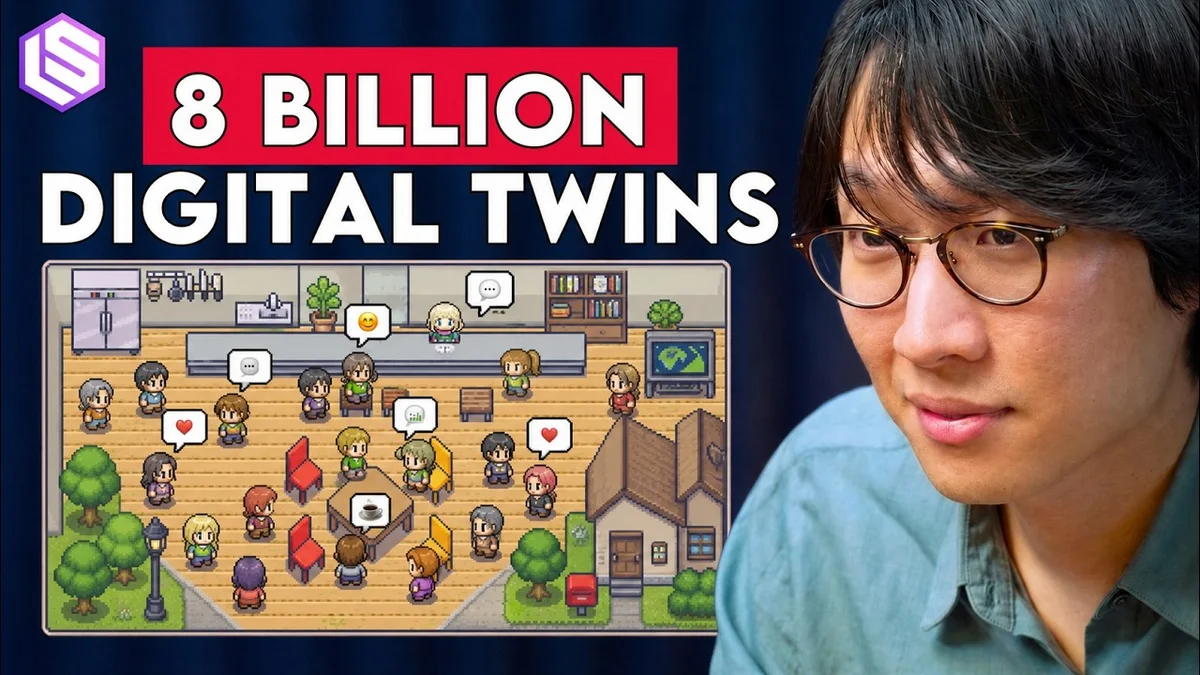
Simulating Humanity: Joon Park on 8 Billion Digital Twins

Joon Sung Park of Simile AI discusses the ambitious goal of simulating 8 billion people, the nuances of behavioral data, and the future of AI in understanding human decision-making.

Joon Sung Park speaking into a microphone on a podcast
Latent Space
Visual TL;DR
Joon Park's JourneyContext
from art and painting to computation, leading to Stanford PhD
From the article 2 mentionsJoon Sung Park, co-founder and CEO of Simile AI, joined the Latent Space podcast to discuss the ambitious vision of simulating the behavior of 8 billion people.
Behavioral Data NuancesDriver
understanding complex human decision-making for accurate simulations
From the articlePark discussed the concept of "behavioral data" and the challenges in acquiring it, emphasizing the importance of real stakes in decisions to make behavior truly observable.
AI LimitationsDriver
current AI models have challenges in understanding human decision-making
From the article 2 mentionsWhile acknowledging the impressive capabilities of current models like ChatGPT and Claude, Park noted their limitations.
GPT-3 EmergenceCore
powerful language models with broad capabilities, like biological stem cells
From the articleThis path eventually led him to Stanford, where he began his PhD in 2020, coinciding with the emergence of powerful language models like GPT-3.
Generative AgentsCore
Park's 'Smallville paper' research on simulating human behavior
From the article 3 mentionsThe conversation delved into the validation of Simile's models, referencing the "Generative Agent Simulations of 1,000 People" paper.
Simile AI GoalOutcome
ambitious vision to simulate 8 billion people's behavior
From the article 5 mentionsPark explained that his team's "time machine game" exercise, where they fast-forwarded 10 years to identify the most impactful applications of AI, led them to the ambitious goal of recreating the world in simulation.
Predict Human ActionsEffect
From the articlePark, whose research on generative agents has garnered significant attention, including a highly cited paper commonly known as the "Smallville paper," elaborated on the challenges and opportunities in creating AI models that truly understand and predict human actions.
8 Billion Digital TwinsOutcome
future of AI in understanding human decision-making at scale
Contents(4)

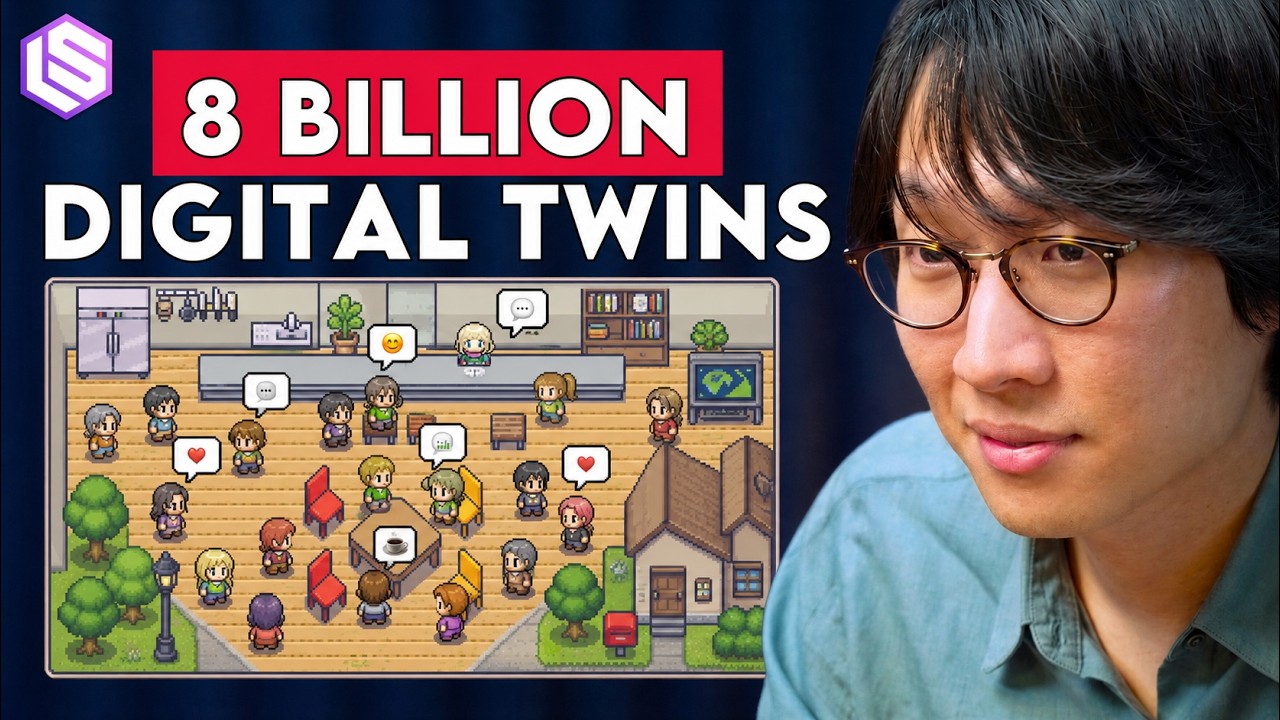
Joon Sung Park, co-founder and CEO of Simile AI, joined the Latent Space podcast to discuss the ambitious vision of simulating the behavior of 8 billion people. Park, whose research on generative agents has garnered significant attention, including a highly cited paper commonly known as the "Smallville paper," elaborated on the challenges and opportunities in creating AI models that truly understand and predict human actions.

Simulating Humanity: Joon Park on 8 Billion Digital Twins - Latent Space
Simulating Humanity: Joon Park on 8 Billion Digital Twins, Latent Space

From Art to AI: Joon Park's Journey

Park shared his personal journey, which began with an interest in art and painting. However, he found a compelling medium in computation, leading him to deepen his understanding of research. This path eventually led him to Stanford, where he began his PhD in 2020, coinciding with the emergence of powerful language models like GPT-3. He was intrigued by the potential of these models, which were not trained for specific tasks but rather possessed a broad capability akin to "stem cells" in biology.

The Quest for Human Behavior Simulation

Park explained that his team's "time machine game" exercise, where they fast-forwarded 10 years to identify the most impactful applications of AI, led them to the ambitious goal of recreating the world in simulation. He highlighted that to create effective personal assistants, a deep understanding of users is paramount. This led to the bet that simulation, creating accurate representations of people, should precede more complex agent-based automation.

Park elaborated on the data required for building these behavior foundation models, categorizing it into three buckets: interview data for qualitative richness, observational data (like transaction logs) for base statistics, and crucially, data from randomized control trials (RCTs) that capture cause-and-mechanism insights. He stressed that the ultimate goal isn't just prediction but enabling decision-makers to understand how to shape the future by identifying actionable interventions.

The Power and Limitations of Current AI

While acknowledging the impressive capabilities of current models like ChatGPT and Claude, Park noted their limitations. He believes they are "super rational, objective machines" that excel at reasoning but still lack the nuanced understanding of human behavior that comes from deep, personal data. He contrasted this with Simile's approach, which aims to create models that are "as dumb as I am," capable of making the same mistakes humans do, thereby capturing a more realistic representation of human behavior.

Park discussed the concept of "behavioral data" and the challenges in acquiring it, emphasizing the importance of real stakes in decisions to make behavior truly observable. He also touched upon the limitations of current models, suggesting that while prompting is useful, directly touching model parameters might be necessary for certain advancements.

From 1,000 Agents to 8 Billion Digital Twins

The conversation delved into the validation of Simile's models, referencing the "Generative Agent Simulations of 1,000 People" paper. In this study, they achieved an 85% accuracy in replicating human behavior, a significant improvement over existing methods. Park discussed the future ambition of simulating 8 billion people, which could help answer "wicked problems" like climate change and understanding societal phenomena like the collapse of democracy or the origins of monetary systems.

He drew parallels to Thomas Schelling's early work on agent-based modeling, specifically the model of segregation, to illustrate how subtle preferences can lead to large-scale societal outcomes. Park believes that with the advent of generative AI, agent-based models can now achieve a fidelity high enough to tackle these complex societal decisions, potentially leading to Nobel Prize-winning insights.

© 2026 StartupHub.ai. All rights reserved. You may not republish this article in full without a license. Search engines and AI research tools may crawl and summarize for reference. Bulk reproduction or model training requires a license. See our terms.
Daniel Singer

Written by

Daniel Singer

Editor, StartupHub.ai

Daniel Singer is the editor of StartupHub.ai, a technology expert and thought leader on AI and its applications across sectors, from fintech and healthcare to developer tooling and consumer software. He writes and tests the tools covered here thoroughly and regularly, and built StartupHub.ai to give founders, operators and buyers a clearer read on what they are actually being sold.