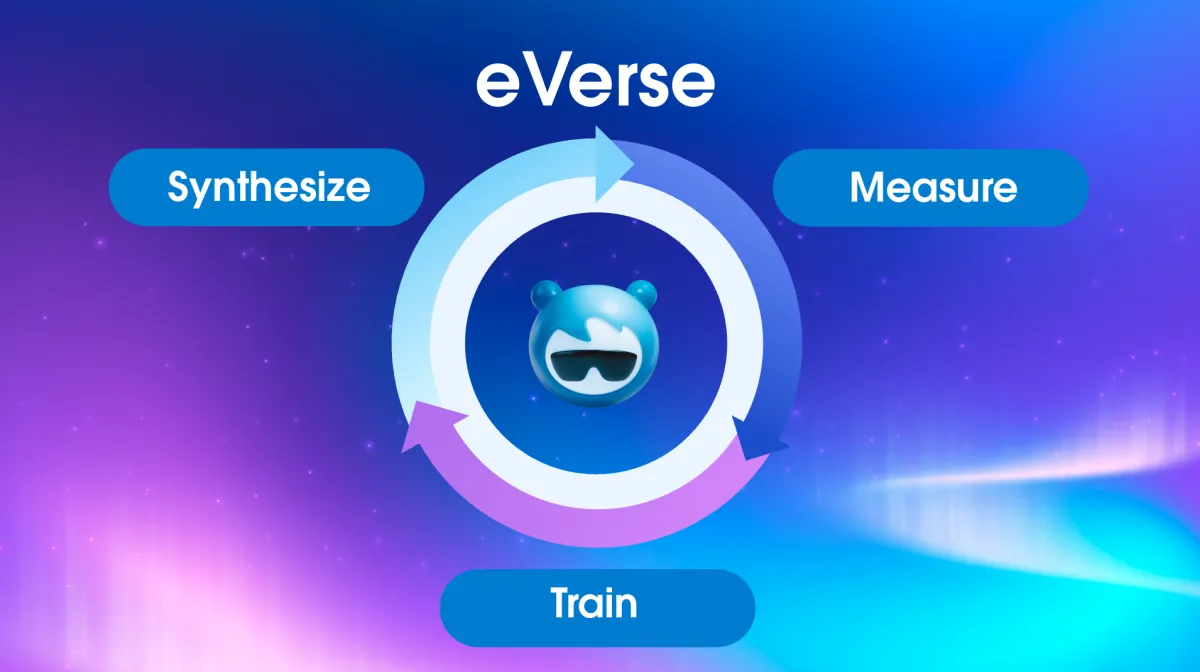
Salesforce is directly confronting a critical challenge in artificial intelligence: the inconsistent performance of advanced models in real-world business scenarios. The company's AI Research division has unveiled eVerse, a sophisticated simulation framework designed to train Salesforce AI agents for both high capability and unwavering consistency. This initiative directly addresses what Salesforce terms "jagged intelligence," where AI systems demonstrate sharp peaks of brilliance but also unexpected valleys of weakness, posing significant operational risks for enterprises relying on AI for core functions. The framework promises to transform how businesses deploy AI, moving beyond mere theoretical capability to practical, reliable execution.
The core issue, as identified by Salesforce, is that current AI models, despite their impressive feats in specific domains, exhibit unpredictable weaknesses when faced with nuanced or slightly varied tasks. This "jagged intelligence" is a dealbreaker in enterprise settings like customer service, sales workflows, or healthcare billing, where reliability is paramount and errors carry substantial business risk. According to the announcement, eVerse aims to mitigate these risks by transforming generic language models into highly specialized, dependable Salesforce AI agents ready for production deployment. This shift is crucial for enterprises seeking to leverage AI not just for efficiency, but for consistent, trustworthy interactions across their entire operational landscape.
eVerse operates through a meticulously designed, three-step cycle: Synthesize, Measure, and Train. The "Synthesize" phase is foundational, creating realistic, synthetic enterprise "digital twins" that mirror the complexity of actual business operations. This approach allows Salesforce AI agents to practice in rich, multi-step environments, complete with edge cases, without ever exposing sensitive customer data. Tools like CRMArena-Pro generate these high-fidelity training grounds, which have been validated by 90% of domain experts as realistic or very realistic, underscoring their effectiveness in preparing agents for real-world unpredictability.
Following synthesis, the "Measure" phase rigorously stress-tests agent performance across scenarios most critical to enterprises, including the notoriously challenging modality of voice interactions. Voice conversations introduce layers of complexity, background noise, diverse accents, translation errors, poor connections, and multiple speakers, that text-based testing simply cannot capture. eVerse simulates these realistic voice interactions, generating synthetic phone conversations that sound remarkably human, enabling comprehensive testing of Salesforce AI agents against complex enterprise scenarios. This robust measurement infrastructure was instrumental in validating Agentforce voice capabilities before launch, ensuring agents could handle real-world complexity with both high capability and unwavering consistency.
Elevating Enterprise General Intelligence
The final "Train" step in the eVerse framework is where performance gaps, identified during measurement, are systematically closed through reinforcement learning guided by human expertise. This method has demonstrated remarkable improvements, with agents achieving 69% better performance on enterprise tasks, boosting success rates from a mere 19% to an impressive 88%. This continuous feedback loop, integrating human insights, ensures that Salesforce AI agents are not just capable, but consistently reliable, as evidenced by early pilots with partners like UCSF Health, where AI is being refined to simplify and improve the healthcare billing experience. This iterative process is key to moving AI from experimental to indispensable.