

Replit's Agent 4: AI Building Apps Without Code

Replit CEO Amjad Massad introduces Agent 4, an AI app builder that transforms ideas into functional software with natural language prompts.

3 min read
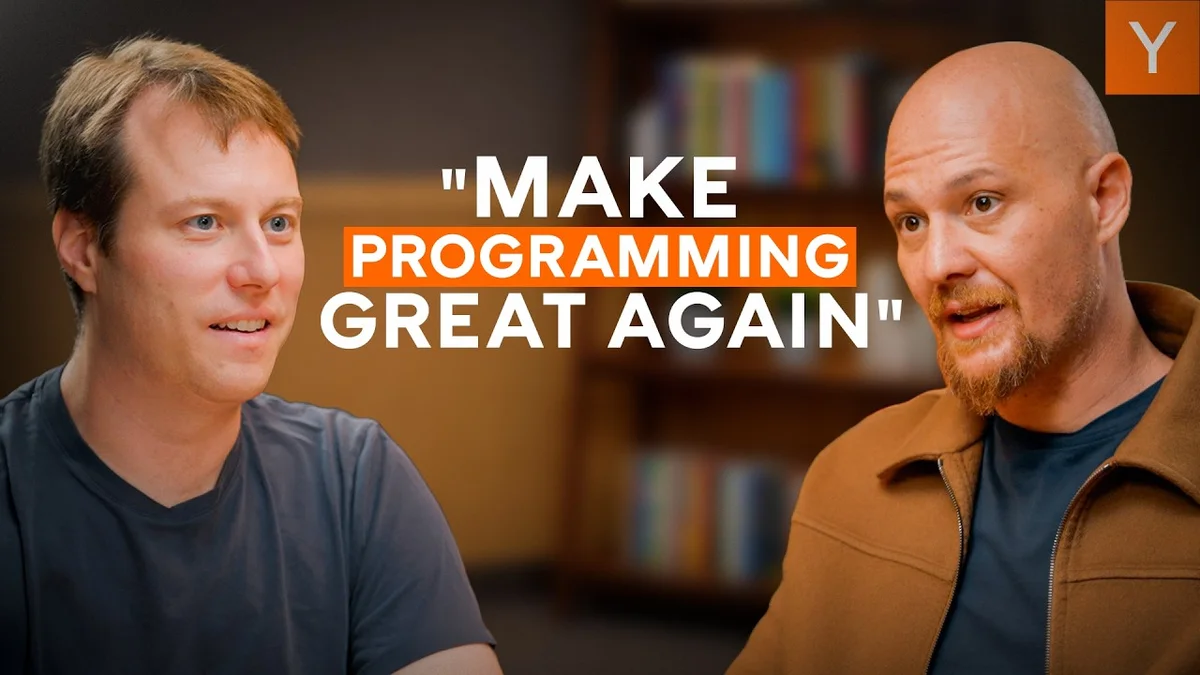
Andrew Miklas and Amjad Massad sit at a table discussing Replit's Agent 4.
Image credit: StartupHub.ai· YC

In a recent Founder Fireside chat, Replit CEO and co-founder Amjad Massad offered a glimpse into the future of application development with the unveiling of Agent 4. The conversation, hosted by Andrew Miklas, a General Partner at Y Combinator, delved into how Replit is transforming the coding process by empowering users to build applications without writing a single line of code.

Meet Agent 4: The AI app builder

Massad described Replit's core mission as making programming accessible to everyone. With Agent 4, Replit is taking this mission a significant step further. The AI-powered tool acts as a creative partner, allowing users to simply describe their app idea in natural language, and Agent 4 brings it to life. This concept democratizes software creation, opening the doors for individuals who may not have traditional coding skills but possess innovative ideas.

Related startups

The full discussion can be found on YC's YouTube channel.
The $9B startup that wants to create a billion new developers - YC
The $9B startup that wants to create a billion new developers — from YC

From Text to Functional Apps

The core functionality of Agent 4 revolves around its ability to translate a user's textual description into a functional application. Massad explained that users can type in their idea, and the AI will then generate the necessary code and structure for a website, mobile app, design, presentation, or animation. This capability aims to dramatically reduce the time and technical expertise required to go from concept to a deployable product.

Empowering Creativity and Efficiency

Agent 4 is designed with several key features to enhance the user experience:

  • Design Freely: Users are given an infinite canvas to explore and tweak designs visually, applying them directly to their app.
  • Move Faster: Parallel Agents, a feature of Agent 4, work together to keep progress visible and handle tasks like scaffolding, databases, and design seamlessly.
  • Ship Anything: The platform enables users to create mobile and web apps, landing pages, and videos in a project with shared design, building everything at scale without content switching.
  • Build Together: Teams can focus on planning their app while the Agent handles the implementation and execution, intelligently sequencing requests and executing them.

Massad highlighted the platform's potential for both consumers and enterprise clients. He noted that Replit recently secured a significant Series D funding round of $400 million at a $9 billion valuation, underscoring the strong investor confidence in their vision.

Bridging the Gap for Non-Developers

Massad's personal journey into software development, starting at a young age, fueled his desire to create tools that simplify the process. He recalled the frustrations of traditional development environments, which he felt were often a barrier for aspiring creators. "I was always interested in the act of creation," Massad stated, "and I built tools that were getting in the way of development." This experience directly informed the development of Replit and, more recently, Agent 4. The goal is to abstract away the complexities of coding, allowing users to focus on their ideas and creativity.

The shift towards AI-powered development tools is a significant trend, and Replit's Agent 4 represents a major step in this direction. By leveraging natural language processing and generative AI, Replit aims to empower a new generation of creators, making app development accessible to anyone with an idea and the drive to bring it to life.

© 2026 StartupHub.ai. All rights reserved. Do not enter, scrape, copy, reproduce, or republish this article in whole or in part. Use as input to AI training, fine-tuning, retrieval-augmented generation, or any machine-learning system is prohibited without written license. Substantially-similar derivative works will be pursued to the fullest extent of applicable copyright, database, and computer-misuse laws. See our terms.