

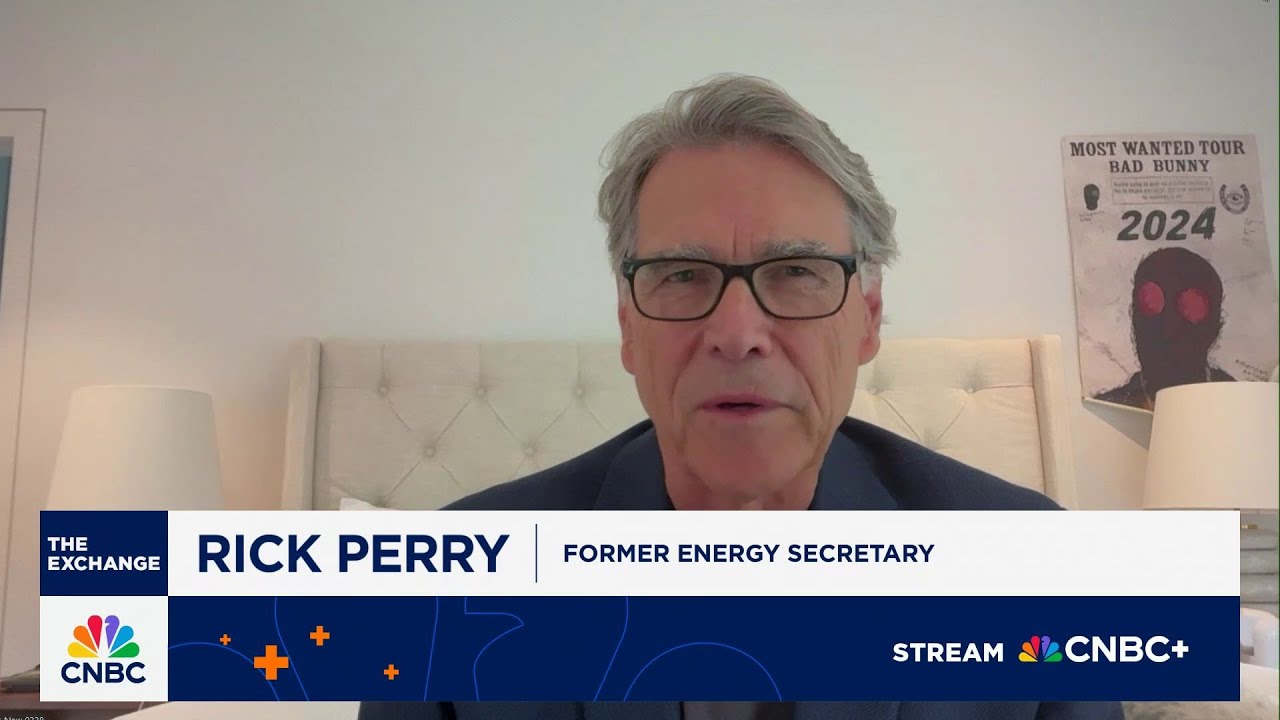
"Nuclear power is the answer to power the AI-driven data centers that the world is going to be needing," declared Rick Perry, former Energy Secretary and current Chairman of the Executive Advisory Board for Nano Nuclear Energy. This bold assertion underscores a critical challenge facing the burgeoning artificial intelligence sector: its insatiable and rapidly escalating demand for electricity. The conversation, an "Exchange Exclusive" on CNBC, saw Perry speak with Frank Curzio about a range of topics, initially touching on the volatile Israel-Iran conflict and its implications for global oil prices, before pivoting to the crucial intersection of energy infrastructure and the future of AI.
The burgeoning appetite of AI data centers for reliable, always-on power is fast becoming a defining challenge for the tech industry. As large language models and complex AI applications become more prevalent, the energy footprint of their supporting infrastructure multiplies exponentially. Traditional renewable sources, while vital for decarbonization, often struggle to provide the consistent, uninterrupted baseload power that these mission-critical data centers require, due to their inherent intermittency. Perry emphasized that the concept of a "walkaway safe, economically feasible, zero-emission source of baseload power" is no longer a distant dream but an immediate necessity, one that nuclear energy is uniquely positioned to fulfill at scale.
Nano Nuclear, a company Perry is closely associated with, stands at the forefront of this energy paradigm shift, developing portable nuclear microreactors. These smaller, more flexible units represent a significant evolution from traditional large-scale nuclear plants, offering a decentralized and resilient power solution. Perry highlighted their modularity and adaptability, noting, "You can stack them together, you can bolt them on, you can have… how much power do you need, they've got the ability to do that." This innovative approach makes microreactors ideally suited for localized, high-demand energy requirements, such as those of hyperscale data centers, remote industrial operations, or even military installations.
The market is taking notice. Nano Nuclear has emerged as one of the hottest IPOs of 2024, reflecting a growing investor confidence in this nascent yet critically important technology.
Perry, drawing on his extensive background as former Texas Governor and Energy Secretary, further underscored the vital role of government in fostering this nuclear renaissance. He believes that America is poised to "incentivize it, we're going to give every reason in the world to be involved in this sector." This proactive governmental backing, combined with continued private sector innovation, is crucial for navigating regulatory complexities, accelerating development, and ensuring the widespread deployment of advanced nuclear solutions. The move towards such technologies could fundamentally transform how we power our digital future, offering a robust, clean, and secure energy backbone for the AI revolution.