

Fidji Simo, the CEO of Applications at OpenAI, is not just running a product division; she is charting the commercial course for the most disruptive technology of the decade. Her moves are less about research and more about platform dominance, a reality underscored by the company’s latest announcement: ChatGPT ads are coming.
Advertising rules ChatGPT
Yesterday, Simo made headlines with a tongue-in-cheek public invitation to three founders of Thinking Machines to return to OpenAI and work under her. Today, the focus shifts entirely to monetization. OpenAI is rolling out a new, lower-cost subscription tier, ChatGPT Go ($8 USD/month), and simultaneously confirming that ads will begin testing in the coming weeks for both the free and Go tiers in the US.
The timing and framing of the announcement are crucial. Simo’s official statement, centers heavily on "trust" and "accessibility." She argues that advertising is necessary to expand access to powerful AI tools, ensuring that the technology does not reinforce existing societal divides.
"People trust ChatGPT for many important and personal tasks," the announcement reads, emphasizing that responses must be "objectively useful, never by advertising." OpenAI promises that ads will be clearly labeled, separated from the organic answer, and that user data will never be sold to advertisers.
For first-time readers, this commitment to ethical monetization might sound admirable. But for those of us who have covered the tech industry and Generative AI since its inception, this narrative is a false identity.
The bias is already baked into ChatGPT. OpenAI has already signed extensive licensing deals with major content companies. As we have repeatedly documented, the surfacing of results is drastically biased toward these partners. Ask for statistics or cooking advice, and content from partners like Business Insider often surfaces with unnatural frequency.
When Simo attempts to set a new mask—a masquerade of independence—it rings hollow. The principle of "Answer independence," where ads do not influence the answers ChatGPT gives you, is already compromised by commercial content deals that dictate the model’s knowledge base and retrieval priorities.
The Inevitable Conflict of Utility and Revenue
The introduction of ChatGPT Go, priced at $8 per month, is a classic platform squeeze. It sits awkwardly between the free tier (now ad-supported) and the premium Pro, Business, and Enterprise tiers (which remain ad-free). This structure is designed to push users into one of two camps: either accept the new friction of ads or upgrade to the higher-margin, ad-free Pro tier. This is not Instacart...
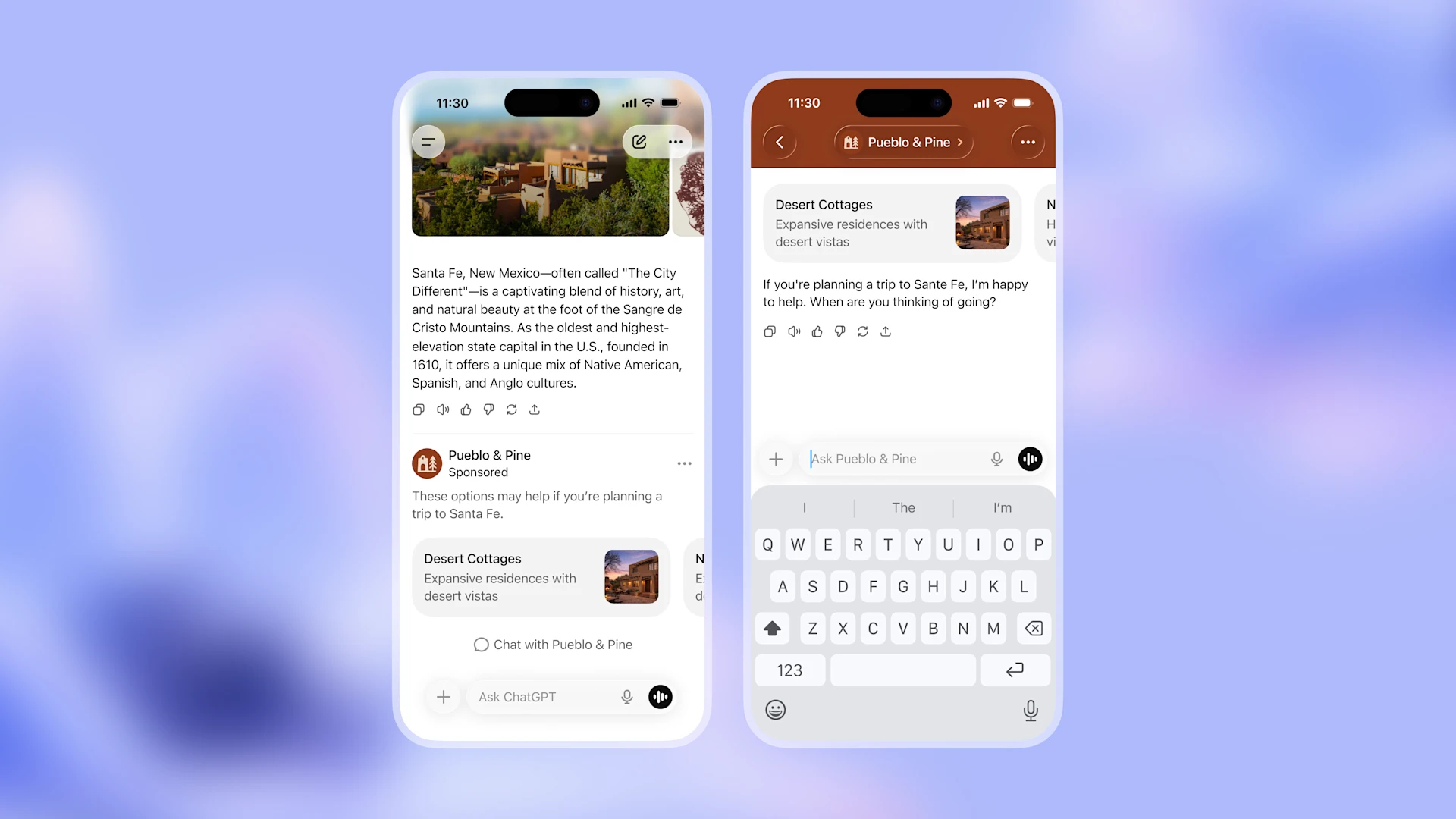
The proposed ad format is highly contextual. OpenAI plans to test ads at the bottom of answers when there is a relevant sponsored product or service based on the current conversation. Examples provided show a recipe request followed by a sponsored hot sauce recommendation, or a travel query followed by an ad for local accommodations.
This conversational ad format is exactly what makes the monetization so potent—and potentially disruptive to the user experience. The promise of being able to ask follow-up questions directly to the ad is a powerful conversion tool, but it fundamentally shifts the user’s relationship with the AI from assistant to sales funnel.
OpenAI claims it will not optimize for time spent in ChatGPT, prioritizing user trust and experience over revenue. Yet, the entire structure of the new ad platform is built on maximizing relevance and conversion within the conversation flow. This is the core conflict: the more useful the ad is, the more integrated it must be, and the more it erodes the perception of objective utility.
We anticipate a buggy, inconvenient ChatGPT experience as these ads roll out. The integration of commercial interests into the core conversational loop will inevitably lead to friction and frustration, especially for users who relied on the platform for objective, unbiased information.
The market is already highly competitive. As OpenAI focuses on maximizing revenue from its existing user base through ads and tiered subscriptions, it risks alienating the very users who drove its explosive growth. We predict a decrease in user activity going forward.
This shift provides a massive opening for competitors. Anthropic’s Claude, which has consistently focused on safety and utility without the immediate pressure of mass monetization, is perfectly positioned to clean up the market share lost by an ad-cluttered, commercially compromised ChatGPT. Other new entrants will also capitalize on the inevitable user fatigue.
OpenAI’s move confirms that the age of the pure research lab is over. It is now a commercial platform, and like every major platform before it, the pursuit of revenue will ultimately supersede the principles of trust and independence.
As this was Fimo's "Raison d'Être," aggressive monetization and product scaling, we anticipate mixed to negative performance of this direction by Simo, and consequently, we anticipate her near departure, under a vague reasoning guise.


