


OpenAI's GPT-Live: Real-time Translation and Conversation

OpenAI introduces GPT-Live, a voice model enabling real-time language translation and conversational capabilities, bridging communication gaps.

5 min read
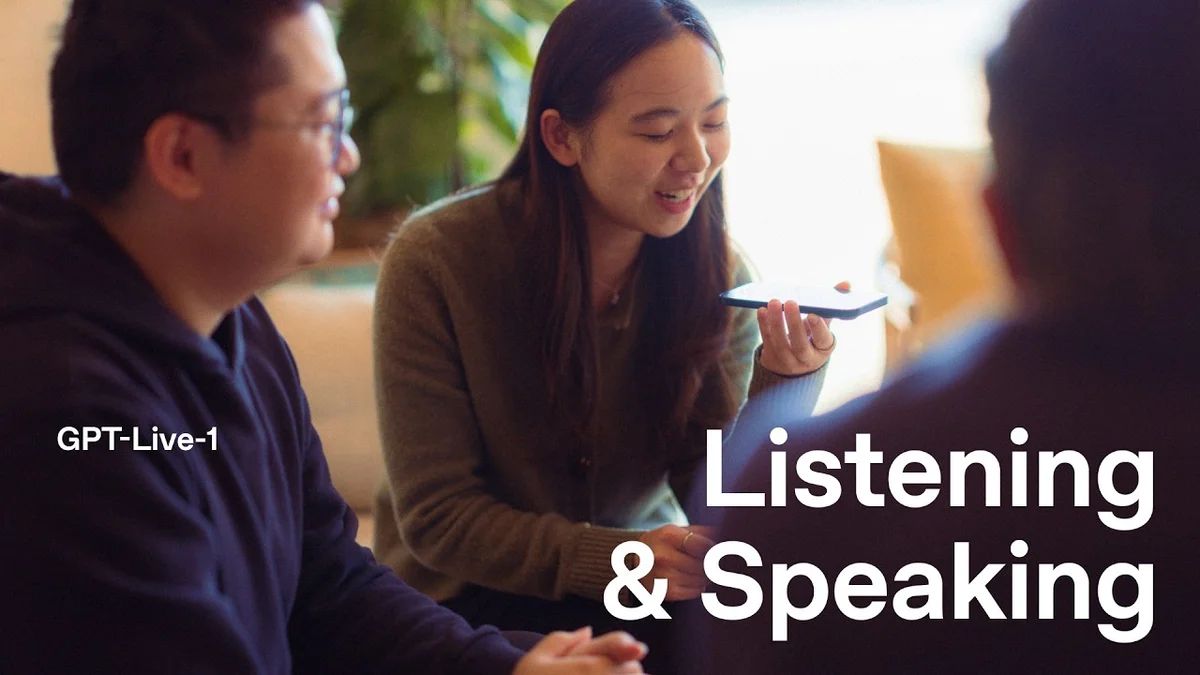
Three people sitting on a couch, discussing AI technology.
OpenAI Youtube
Visual TL;DR
Communication GapsDriver
From the article 3 mentionsThis capability is particularly significant for breaking down communication barriers in a globalized world, enabling users to interact naturally with others regardless of their native tongues.
GPT-Live IntroducedCore
From the article 4 mentionsIn a demonstration of its latest advancements, OpenAI showcased GPT-Live, a new voice model designed to facilitate real-time listening and speaking capabilities.
Real-time TranslationEffect
instantaneous spoken language translation for seamless flow
From the article 5 mentionsShe noted that the ability to translate simultaneously and speak back in real-time made the interaction feel profoundly different from traditional translation tools.
AI's RoleContext
from listening to understanding, enabling natural responses
Personalized InteractionContext
adapting to individual user needs and preferences
From the article 5 mentionsHe emphasized that GPT-Live is built to achieve this, offering a more intuitive and engaging interaction.
Conversational CapabilitiesEffect
enabling natural, flowing conversations between users
From the article 3 mentionsThe system is designed to not only understand and translate but also to respond in real-time, creating a near-seamless conversational experience.
Future of ConversationOutcome
bridging communication gaps, enabling global interaction
From the article 4 mentionsJustin Uberti also participates, highlighting the model's ability to translate spoken language into another language almost instantaneously, enabling natural, flowing conversations.
AI Development ImplicationsOutcome
advancements in voice models and conversational AI
From the article 2 mentionsThe video features members of the OpenAI technical staff, including Yuchen Zhang and Alyssa Huang, discussing the implications and potential of this new technology.
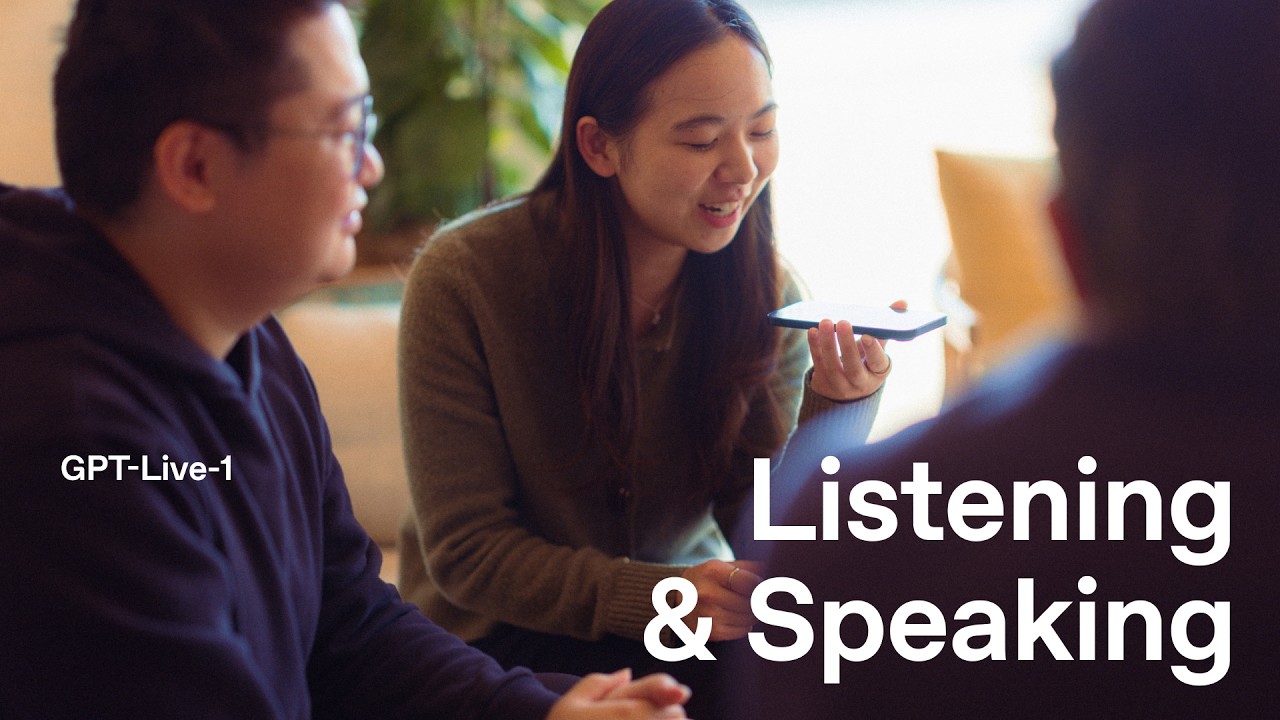
In a demonstration of its latest advancements, OpenAI showcased GPT-Live, a new voice model designed to facilitate real-time listening and speaking capabilities. The video features members of the OpenAI technical staff, including Yuchen Zhang and Alyssa Huang, discussing the implications and potential of this new technology. Justin Uberti also participates, highlighting the model's ability to translate spoken language into another language almost instantaneously, enabling natural, flowing conversations.

The Power of Real-time Translation

The core of the GPT-Live demonstration revolves around its impressive speed and accuracy in translating spoken language. The system is designed to not only understand and translate but also to respond in real-time, creating a near-seamless conversational experience. This capability is particularly significant for breaking down communication barriers in a globalized world, enabling users to interact naturally with others regardless of their native tongues. The participants highlighted how this technology could transform travel, international business, and everyday communication.

The full discussion can be found on OpenAI Youtube's YouTube channel.

Listening & Speaking with GPT-Live - OpenAI Youtube
Listening & Speaking with GPT-Live, from OpenAI Youtube

From Listening to Understanding: The AI's Role

Yuchen Zhang explained that for an AI to effectively listen and speak, it needs to think and make decisions in milliseconds, managing the flow of conversation. He emphasized that GPT-Live is built to achieve this, offering a more intuitive and engaging interaction. The model's ability to process spoken input, translate it, and then generate a spoken response in the target language, all within a fraction of a second, represents a significant leap in natural language processing. This capability moves AI interaction beyond simple question-and-answer formats into more dynamic dialogues.

A Glimpse into the Future of Conversation

Alyssa Huang shared her personal experience with the model, describing how it felt like conversing with another person. She noted that the ability to translate simultaneously and speak back in real-time made the interaction feel profoundly different from traditional translation tools. This real-time feedback loop is crucial for building rapport and trust in AI-driven communication. The technology aims to make AI feel less like a tool and more like a conversational partner.

Personalizing the Interaction

The conversation also touched upon a lighter aspect of AI interaction, with a demonstration of the model's ability to handle personal questions. When asked about favorite foods, both Alyssa and Yuchen provided answers in their respective languages, which were then translated and summarized by the AI for Justin. Alyssa expressed her fondness for omelets, while Yuchen shared his preference for Cantonese dim sum, including crystal shrimp dumplings, sticky rice chicken, and blanched beef tripe, as well as egg tarts. Justin's favorite was street tacos with al pastor, pineapple, salsa, and spicy sauce. This playful exchange demonstrated the model's versatility and its capacity to engage in more casual, human-like dialogue.

Implications for AI Development

The development of GPT-Live signifies a critical step towards creating AI that can truly understand and participate in human conversation. By enabling real-time, multi-lingual interaction, OpenAI is pushing the boundaries of what's possible with large language models. This technology has the potential to not only improve accessibility and global connectivity but also to fundamentally change how humans interact with AI systems, making them more integrated and natural companions in various aspects of life.

© 2026 StartupHub.ai. All rights reserved. Do not enter, scrape, copy, reproduce, or republish this article in whole or in part. Use as input to AI training, fine-tuning, retrieval-augmented generation, or any machine-learning system is prohibited without written license. Substantially-similar derivative works will be pursued to the fullest extent of applicable copyright, database, and computer-misuse laws. See our terms.