

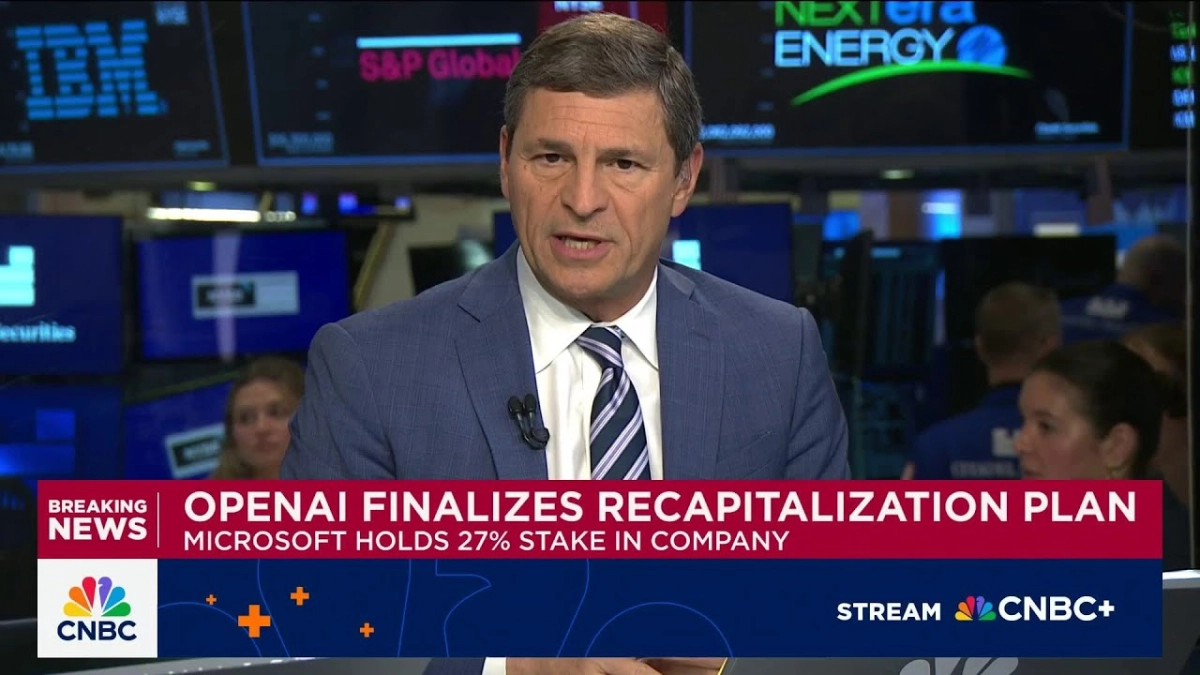
The recent finalization of OpenAI’s recapitalization plan marks a pivotal moment in the trajectory of artificial intelligence, not just for the involved parties but for the entire tech ecosystem. On CNBC, David Faber broke down the intricate details of this agreement, joined by Jim Cramer, who offered his characteristic sharp market commentary. Their discussion illuminated the profound strategic and financial implications of a deal that solidifies Microsoft’s dominant position in the burgeoning AI race and redefines OpenAI’s unique corporate structure.
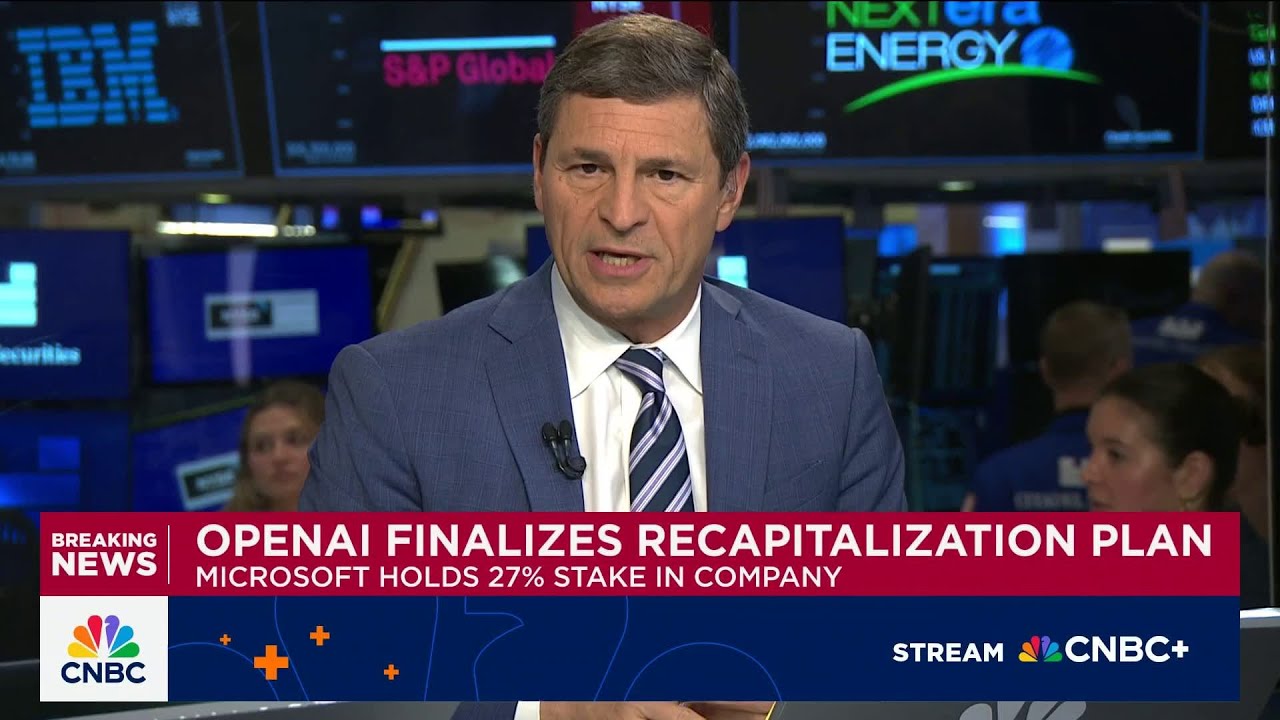
David Faber began by highlighting the core of the news: OpenAI, originally founded as a not-for-profit entity, has completed a recapitalization that transforms its operational model. The central revelation is Microsoft’s significant stake. Faber stated, “Microsoft is going to own 27% on an as-converted diluted basis, inclusive of all owners… that is being valued at $135 billion from Microsoft.” This figure alone underscores the colossal valuation now placed on OpenAI, with Faber calculating the overall company valuation at approximately $548 billion. This valuation positions OpenAI as one of the most valuable private companies globally, a testament to the perceived transformative power and market potential of its foundational AI models.
This massive investment by Microsoft is far from a passive equity play; it represents a deep strategic integration. Microsoft was an early and crucial supporter of OpenAI, providing the computational infrastructure necessary to develop its groundbreaking frontier models. This recapitalization extends and formalizes that partnership, ensuring Microsoft's continued access and influence over OpenAI's cutting-edge innovations. The financial commitment, coupled with the extension of intellectual property rights, cements Microsoft's strategic advantage in a highly competitive sector.
A critical element of the recapitalization involves the intellectual property (IP) rights and the future of Artificial General Intelligence (AGI). Faber detailed a significant shift: "Once AGI is declared by OpenAI... the declaration will now be verified by an independent expert panel. Microsoft's IP rights for both models and products are extended through 2032, now include models post Artificial General Intelligence, with what they say are safety guardrails as well." This amendment is profound. Previously, upon the declaration of AGI, OpenAI's IP was slated to revert to the non-profit foundation, aligning with its original mission of open access for humanity's benefit. Extending Microsoft's rights post-AGI, even with "safety guardrails," signals a recalibration of OpenAI's foundational principles, prioritizing commercial development and partnership longevity alongside its safety commitments.
This hybrid structure, with the original non-profit OpenAI Foundation retaining a 26% equity stake in the for-profit business (valued at about $130 billion), creates one of the best-resourced philanthropic organizations globally. It’s a novel, albeit complex, governance model attempting to reconcile the immense capital requirements of advanced AI research with ethical considerations and a public benefit mandate. The interplay between the for-profit and non-profit arms, particularly concerning the independent verification of AGI and the associated IP rights, will be a closely watched experiment in corporate governance within the AI space. The success of this model could set a precedent for future dual-mission organizations, navigating the delicate balance between innovation, profit, and societal responsibility.