

Nvidia's Huang: AI Will Require 10x Chip Industry Growth

Nvidia CEO Jensen Huang anticipates a tenfold increase in the semiconductor industry to meet AI demands and details a $500B investment with SK Group.

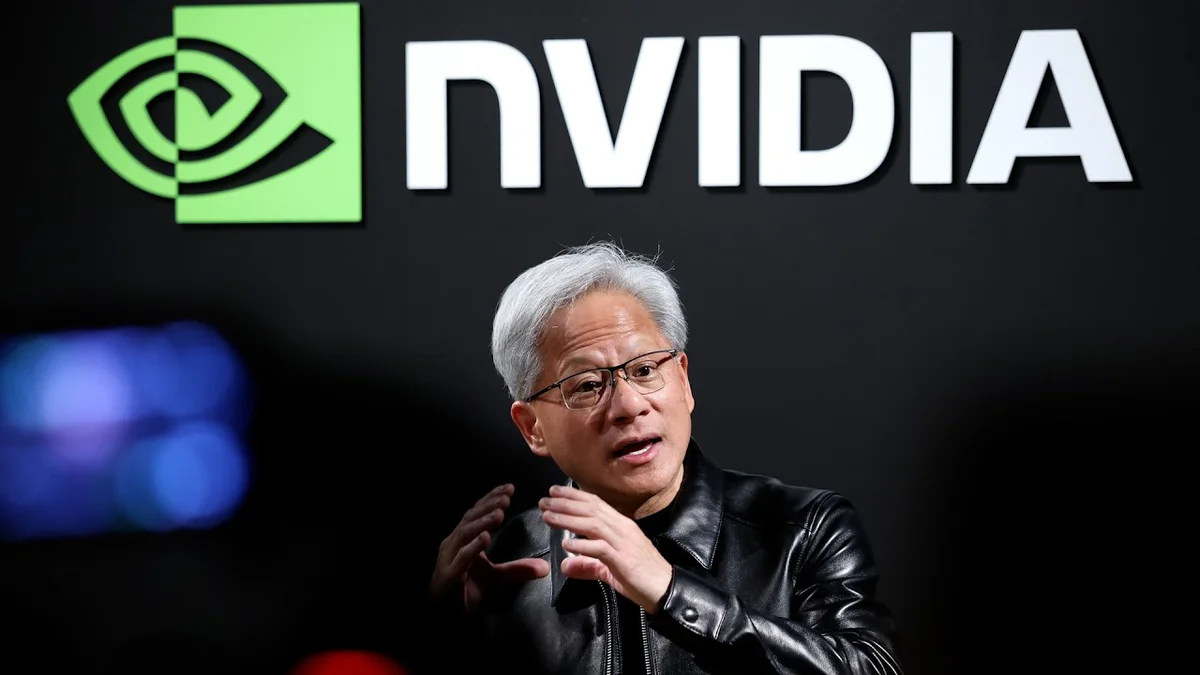
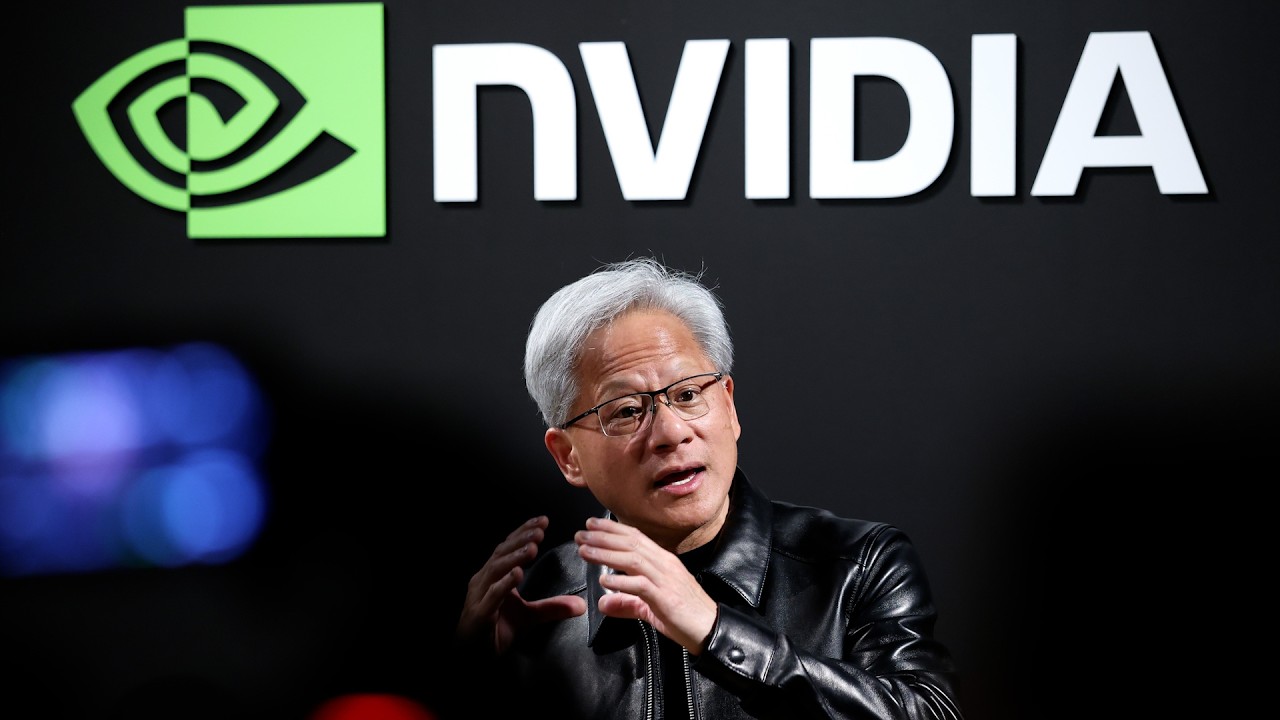
Nvidia CEO Jensen Huang speaking in an interview.
Bloomberg Podcast
Visual TL;DR
AI demand surgesDriver
insatiable demand for AI agents and robots drives industry expansion
From the article 3 mentionsThis surge in demand necessitates massive investments in manufacturing and infrastructure.
Chip industry grows 10xEffect
From the articleSpeaking with Bloomberg Tech host Ed Ludlow, Huang projected that the chip industry will need to be ten times larger over the next decade to support the proliferation of AI agents and robots.
Memory supply constraintsDriver
From the article"We don't have enough bits," Huang stated, referring to the current constraints in memory supply chains like HBM and LPDDR, and even in physical infrastructure such as land, power, and construction labor for data centers.
Nvidia, SK Group partnerCore
Nvidia CEO Jensen Huang announces significant partnership with South Korea's SK Group
$500B investmentCore
collaboration involves a £500 billion investment to meet AI demands
From the article 2 mentionsHuang announced a significant partnership with South Korea's SK Group, involving a £500 billion investment.
SK Hynix supplies memoryEffect
Nvidia purchasing memories from SK Hynix for years to come
SK Telecom AI cloudEffect
From the article 2 mentionsThis collaboration includes Nvidia purchasing memories from SK Hynix for years to come and SK Telecom becoming an AI cloud provider, to which Nvidia will sell AI supercomputers.
AI proliferation enabledOutcome
From the articleSpeaking with Bloomberg Tech host Ed Ludlow, Huang projected that the chip industry will need to be ten times larger over the next decade to support the proliferation of AI agents and robots.
Contents(4)

Nvidia CEO Jensen Huang believes the semiconductor industry is on the cusp of a monumental expansion, driven by the insatiable demand for artificial intelligence. Speaking with Bloomberg Tech host Ed Ludlow, Huang projected that the chip industry will need to be ten times larger over the next decade to support the proliferation of AI agents and robots.

This surge in demand necessitates massive investments in manufacturing and infrastructure. Huang announced a significant partnership with South Korea's SK Group, involving a £500 billion investment. This collaboration includes Nvidia purchasing memories from SK Hynix for years to come and SK Telecom becoming an AI cloud provider, to which Nvidia will sell AI supercomputers. "We don't have enough bits," Huang stated, referring to the current constraints in memory supply chains like HBM and LPDDR, and even in physical infrastructure such as land, power, and construction labor for data centers.

The Shifting Landscape of Computing

Huang articulated a fundamental shift in how computers are built and utilized. Traditionally designed for human use, computers are now increasingly being built for other computers to use. "Instead of just a billion people using computers, we're gonna have 100,000,000,000 agents and billions of robots all using computers," he explained, underscoring the exponential growth in computational demand.

The full discussion can be found on Bloomberg Podcast's YouTube channel.

Huang Says AI Reshapes Chip Industry - Bloomberg Podcast
Huang Says AI Reshapes Chip Industry, from Bloomberg Podcast

Addressing Supply Chain Constraints

The exponential growth of AI is straining existing supply chains. Huang pointed out that the industry is currently constrained not only by memory components but also by the physical limitations of scaling data center infrastructure. "It's really, really hard to scale up land power and shell," he commented, emphasizing that while the industry can double its output annually, exceeding that rate will be challenging due to these infrastructural bottlenecks.

US vs. China in AI Development

The conversation also touched upon the global AI race, particularly the differences between the United States and China. Huang shared insights from a conversation with SK Group chairman Chey Tae-won, who observed that China's AI development is heavily focused on lowering the cost per token, while the US prioritizes the quality of tokens. Huang suggested that both approaches aim for "a smart answer" and that "amazing people will find great answers" regardless of the specific conditions or resources available.

He also noted the significant number of AI researchers in Silicon Valley who hail from China, highlighting the global nature of AI talent. "We ought to keep in keep continue to learn from them, work with them," Huang said.

The Importance of Open Models

In a notable move, Huang recently made his first post on X (formerly Twitter) to share a letter signed by numerous tech leaders, advocating for the importance of open AI models. He emphasized that open models are crucial for safety, security, innovation, and national sovereignty. "I see a future where the world uses tons of closed models. And I I encourage everybody, including my company, to use OpenAI and Claude and Cursor and and cognition and perplexity, use everything that you can because it's of of the cloud because it's just easier," Huang stated. However, he stressed the necessity of open models for companies to build proprietary AI solutions or for industries with strict regulatory requirements and service level agreements.

He clarified the distinction between open-weighted and open-source models, advocating for as much openness as possible. "The reason why you need open open models is because you need to have control, because you need to adapt something for for your own very specialized use cases," Huang concluded, reinforcing that both closed and open models will coexist and play vital roles in the future of AI.

© 2026 StartupHub.ai. All rights reserved. You may not republish this article in full without a license. Search engines and AI research tools may crawl and summarize for reference. Bulk reproduction or model training requires a license. See our terms.
Daniel Singer

Written by

Daniel Singer

Editor, StartupHub.ai

Daniel Singer is the editor of StartupHub.ai, a technology expert and thought leader on AI and its applications across sectors, from fintech and healthcare to developer tooling and consumer software. He writes and tests the tools covered here thoroughly and regularly, and built StartupHub.ai to give founders, operators and buyers a clearer read on what they are actually being sold.

More from Daniel Singer