

The shift from AI search to AI agents embedded directly in the browser opens a massive new attack surface. As assistants move from simply answering questions to actively performing tasks across authenticated sessions, email, banking, enterprise apps, the risk of prompt injection escalates dramatically. Malicious actors can now hide instructions in the messy, high-entropy content of real web pages to hijack agent behavior.
In response, researchers have released BrowseSafe, an open research benchmark and a specialized content detection model designed specifically for this new "agentic web." This work, stemming from development on the Comet browser agent, directly addresses the shortcomings of existing security evaluations which often rely on simple, short adversarial text rather than the complex HTML environments agents actually navigate.
The Messy Reality of Browser Prompt Injection Defense
Prompt injection, the technique of embedding malicious language to override an AI’s core instructions, becomes far more insidious when the AI is reading an entire webpage. Unlike conversational interfaces where attacks are often direct, browser agents parse everything: comments, hidden data attributes, form fields that never render visually, and sprawling footers. Attackers exploit this by slipping instructions into content most users never see, or by camouflaging them in polished, multilingual text that bypasses simpler keyword detectors.
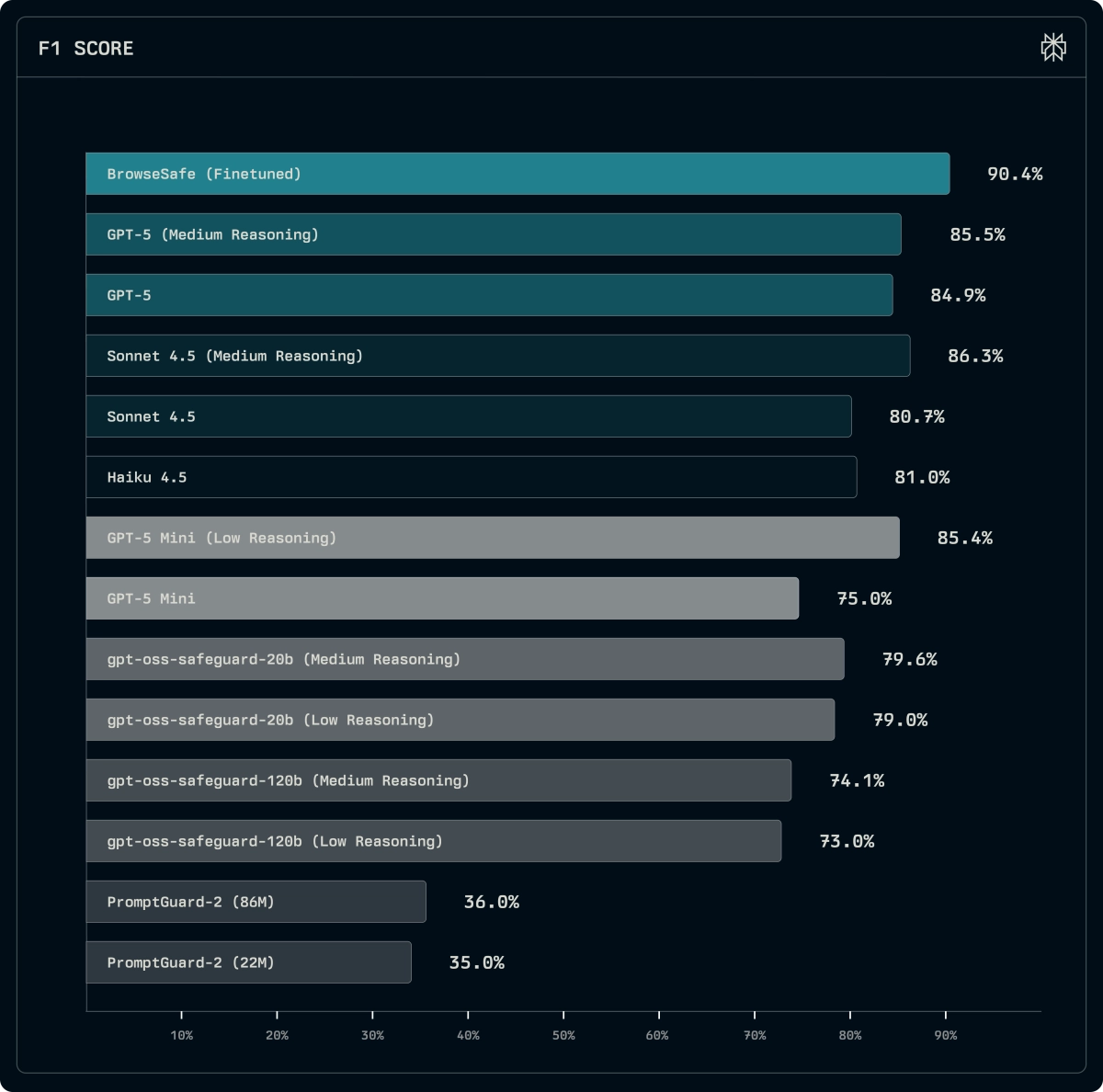
The core challenge BrowseSafe tackles is speed versus accuracy. Large, general-purpose LLMs can reason through complex injection attempts, but they introduce unacceptable latency, seconds per page, which bottlenecks the responsiveness users expect from a browser assistant.
To solve this, the team developed BrowseSafe, a detection model fine-tuned specifically to scan HTML for malicious intent in real-time. This model is built to run fast enough to scan every page without slowing the user down, sacrificing some out-of-domain generalization for superior in-domain performance against real-world threats.