

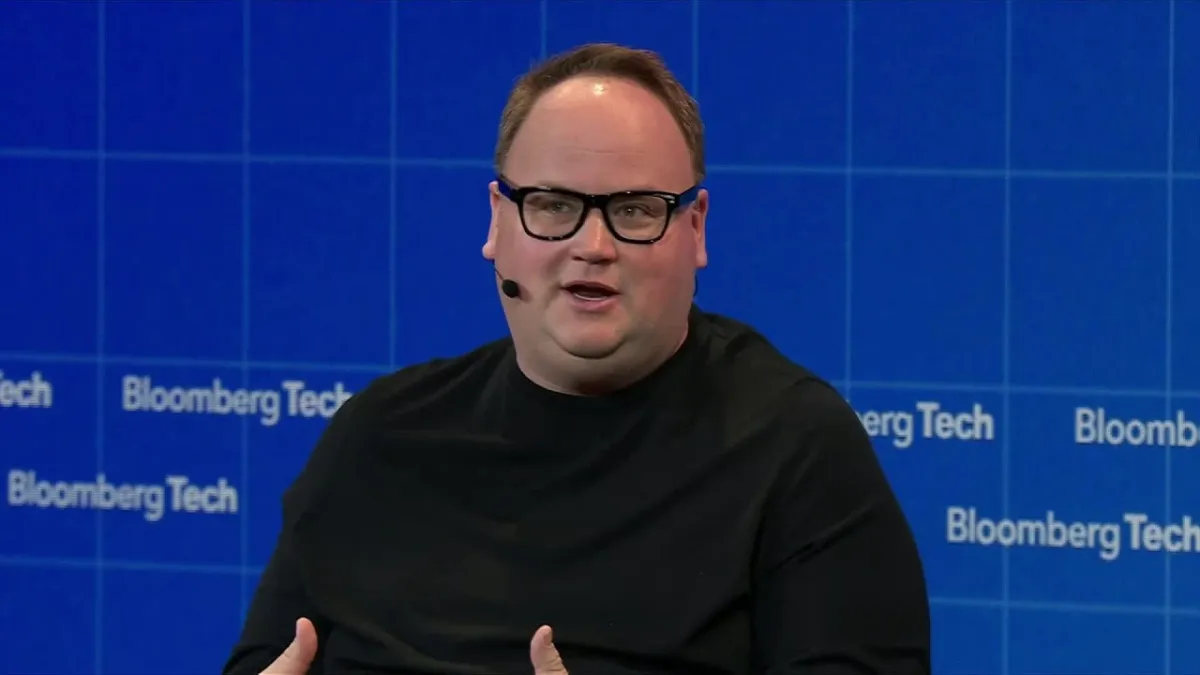
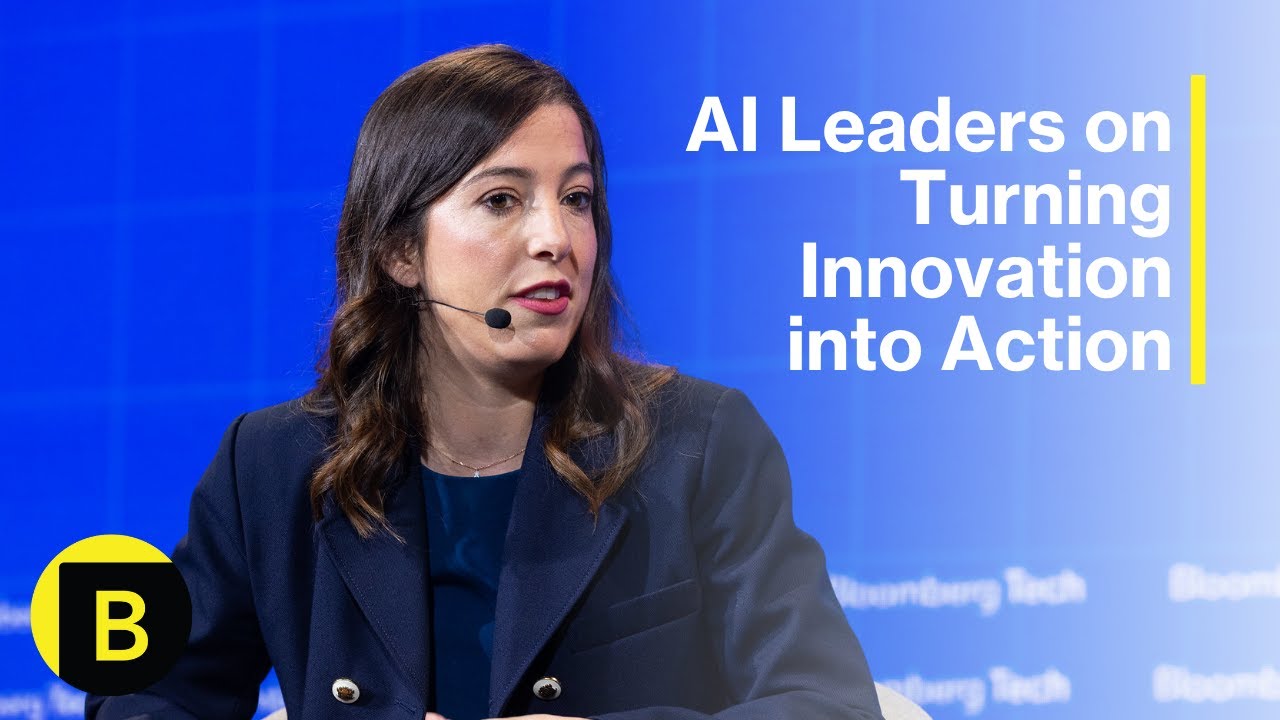
The current epoch of artificial intelligence is not merely a technological shift but a profound reordering of business operations and strategic thinking. At a recent Bloomberg Tech panel in London, moderated by Mark Bergen, a diverse group of AI leaders, Eléonore Crespo (Pigment), Matt Miller (Evantic Capital), Shobie Ramakrishnan (GSK), and Johannes Reck (GetYourGuide), convened to dissect how businesses are actively deploying AI, moving beyond theoretical discussions to tangible action and demonstrable results. Their collective insights painted a nuanced picture of AI as both a potent accelerator and a complex challenge, demanding careful navigation and strategic foresight.
Johannes Reck, Co-Founder & CEO of GetYourGuide, a global platform for booking travel experiences, underscored AI's transformative power as a growth engine. He proudly announced GetYourGuide's achievement of profitability and a staggering 30% year-over-year growth in Q3, attributing much of this success directly to AI. For a business managing a vast network of 35,000 local suppliers, from the Louvre to Italian street food artisans, and localizing content into 40 languages, AI has become indispensable. Reck articulated, "AI really is a growth accelerator for us and it's greatly enhancing our margins." It facilitates the aggregation and proper description of content, helps consumers differentiate between experiences, and scales operations in ways previously impossible.
However, the enthusiasm for AI is tempered by practical hurdles, particularly in enterprise adoption. Eléonore Crespo, Co-Founder & Co-CEO of Pigment, a business planning platform, observed that while companies now readily allocate substantial budgets for AI, "they don't necessarily get yet the adoption, like the bottom-up adoption from every single contributor." Pigment’s strategy is to address the "painful workflows" of individual contributors in areas like financial planning and analysis or supply chain management, integrating AI seamlessly into their day-to-day tasks. Crespo highlighted Pigment's shift towards "per mission" pricing, with an ambition to move to outcome-based pricing, aligning directly with measurable business value rather than mere usage. This approach emphasizes tangible productivity gains and clear business outcomes as the ultimate arbiters of AI success.
The pharmaceutical industry, as presented by Shobie Ramakrishnan, Chief Digital & Technology Officer at GSK, faces a unique set of challenges in its AI journey. With drug development cycles spanning 10-12 years, billions in investment, and a staggering 90% failure rate for new ideas, the stakes are astronomically high. For GSK, AI's primary value lies in R&D productivity. Ramakrishnan noted, "Shortening the timeline… is probably the most important thing we can influence with technology." AI is being leveraged to accelerate the identification of novel scientific hypotheses, optimize clinical trial design, and enable personalized medicine by predicting which patients will benefit most from specific treatments. This strategic application of AI, previously unimaginable, promises to revolutionize patient care and the drug development pipeline.
Yet, the rapid proliferation of AI tools also introduces new risks, a point emphasized by Matt Miller, Founder & Managing Partner at Evantic Capital. He flagged a critical oversight: companies rushing to implement AI solutions without adequately considering data sovereignty and security. The concern is that sensitive enterprise information could inadvertently be shared with external AI services, leading to unforeseen vulnerabilities. Miller highlighted Nexos, a European company Evantic Capital recently invested in, which provides a platform for enterprises to securely empower employees to use external AI services while protecting proprietary data. He drew a parallel to the evolution of mobile technology, where initial widespread adoption was eventually followed by a critical need for robust mobile security solutions.