

"AI gives us more capacity to invest in our business," asserted David Solomon, Chairman and CEO of Goldman Sachs, during a recent interview on CNBC’s Squawk Box with Becky Quick. His remarks offered a compelling perspective on the disruptive yet opportunity-rich landscape of artificial intelligence, underscoring its profound implications for markets and business operations, both within the venerable investment bank and across the global economy. Solomon’s insights painted a picture of AI not merely as a tool for incremental efficiency, but as a fundamental catalyst for reimagining processes and unlocking new avenues for strategic growth.
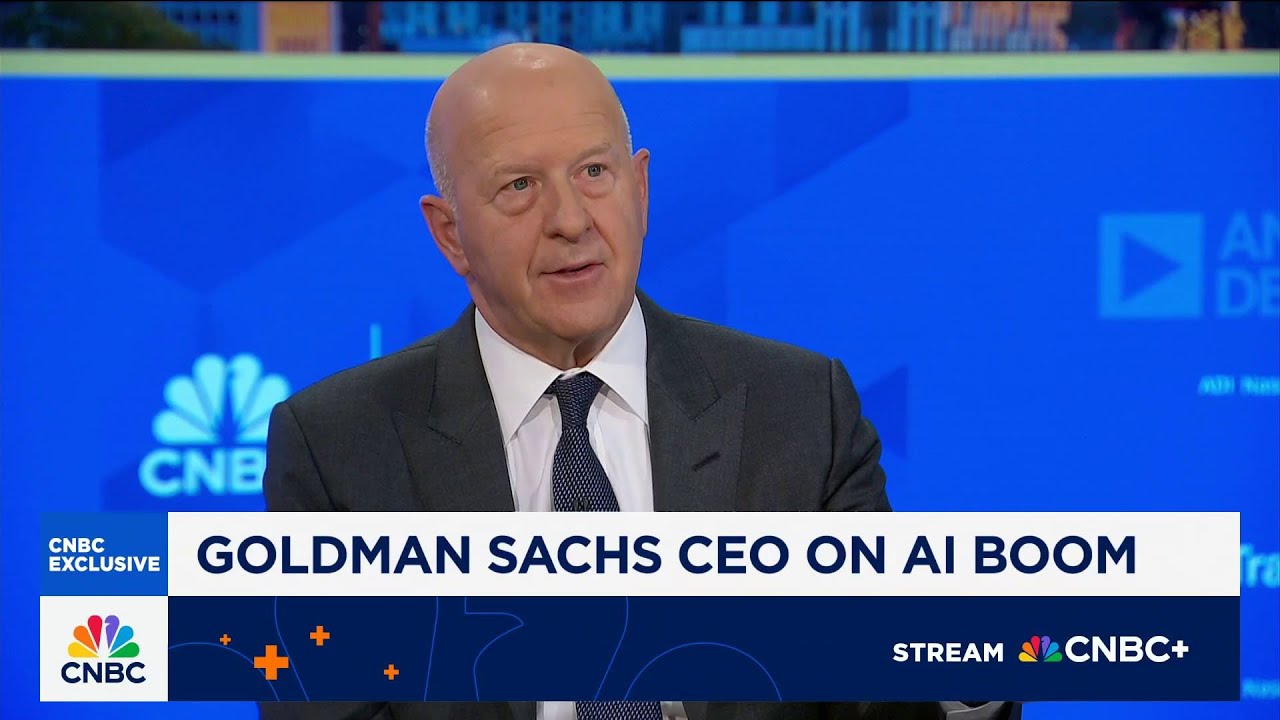
David Solomon, Chairman and CEO of Goldman Sachs, recently joined Becky Quick on CNBC’s Squawk Box to discuss a range of financial topics, with a notable focus on the burgeoning impact of artificial intelligence on markets and business operations. His commentary specifically addressed the evolution of alternative assets, corporate results, regional banks, and credit concerns, but it was his sharp analysis of the AI boom that provided a clear vision for the future of finance and beyond.
Solomon candidly acknowledged the current elevated valuations in the tech sector, stating, "There's no question, you know, we're somewhere in a cycle where the values are higher, but the growth opportunity coming from AI is significant." He refrained from labeling the current environment a "bubble" in the traditional sense, instead emphasizing the genuine, long-term potential of AI. This nuanced view suggests that while some capital allocation might be speculative, the underlying technological advancements are robust enough to justify a substantial re-evaluation of market multiples, particularly for companies poised to harness AI effectively.
He underscored that this new technological wave will inevitably produce both "winners and losers." Capital is being directed towards firms anticipated to become profoundly important, while others will falter. Solomon admitted, with a touch of humility, that predicting every outcome is beyond anyone's foresight, but the broader trend of rebalancing is undeniable.
Internally, Goldman Sachs is actively embracing AI to amplify human capabilities, a strategy Solomon articulated by recalling the firm’s long-standing tradition of leveraging technology. "We get technology tools into the hands of really smart people to make them more productive," he explained. He humorously contrasted the laborious, six-hour process of compiling common stock comparisons forty years ago, requiring trips to the library for microfiche, with the instantaneous capabilities of today's technology, noting that while the work is different, the underlying intelligence of the workforce remains paramount.