


Moderna-Merck Melanoma Vaccine Shows Promising Results

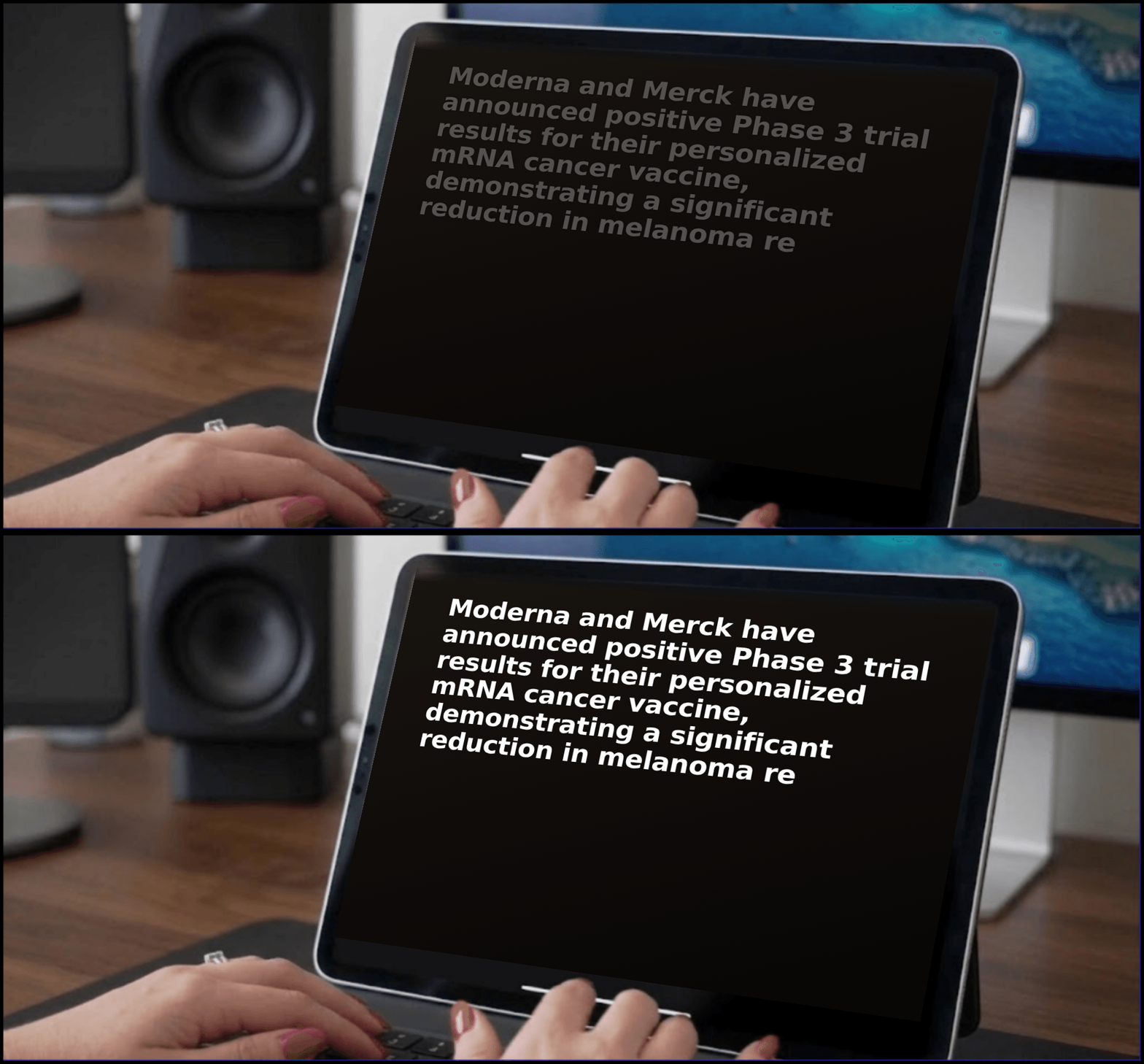
Moderna and Merck have announced positive Phase 3 trial results for their personalized mRNA cancer vaccine, demonstrating a significant reduction in melanoma recurrence. This development marks a major step forward in cancer treatment.

3 min read
Moderna-Merck Melanoma Vaccine Shows Promising Results
Key Takeaways
  • 1
    Moderna and Merck's personalized mRNA cancer vaccine significantly reduced melanoma recurrence in a Phase 3 trial.

  • 2
    This marks the first positive late-stage trial for a personalized cancer vaccine, validating mRNA technology's potential in oncology.

  • 3
    The vaccine, combined with Keytruda, offers a promising new approach for patients at risk of melanoma returning.

Moderna and Merck have reported successful Phase 3 trial results for their personalized mRNA cancer vaccine, showing a significant reduction in melanoma recurrence. The news has led to a substantial surge in Moderna's stock value, reflecting investor confidence in the breakthrough.

The experimental vaccine, mRNA-4157/V940, is designed to be personalized for each patient based on the unique mutational signature of their tumor. It works by training the patient's immune system to recognize and attack specific cancer cells. In the late-stage trial, the vaccine was administered in combination with Merck's immunotherapy drug, Keytruda, to patients who had undergone surgical removal of their melanoma.

The trial's findings indicate that the combined therapy significantly improved recurrence-free survival compared to Keytruda alone. This outcome is a critical milestone, as it represents the first time a personalized cancer vaccine has demonstrated positive results in a large-scale Phase 3 study. The success builds upon earlier Phase 2 data that also showed a benefit in preventing melanoma recurrence.

Melanoma, a severe form of skin cancer, can be aggressive and prone to recurrence even after surgical removal. Current treatments often involve immunotherapy, but the addition of a personalized vaccine could offer a more targeted and effective approach to prevent the cancer from returning. The mRNA technology, which gained prominence with COVID-19 vaccines, is now showing its potential in oncology, opening new avenues for therapeutic development.

The positive trial results are expected to pave the way for regulatory submissions, potentially bringing this innovative treatment closer to patients. The collaboration between Moderna, a leader in mRNA technology, and Merck, a pharmaceutical giant with established oncology expertise, highlights the power of partnerships in accelerating medical advancements.

What This Means for You

For individuals at high risk of melanoma recurrence or those undergoing treatment, this development offers a significant beacon of hope. While the vaccine is not yet available, its success in late-stage trials suggests that a new, highly personalized treatment option could be on the horizon. This could lead to improved long-term outcomes and a reduced risk of cancer returning. For the broader medical community, it validates the potential of mRNA technology beyond infectious diseases, potentially accelerating research and development in other cancer types and personalized medicine.

Frequently Asked Questions

What is a personalized cancer vaccine?

A personalized cancer vaccine is a type of immunotherapy tailored to an individual patient's tumor. Scientists analyze the unique genetic mutations in a patient's cancer cells and then design a vaccine that teaches their immune system to recognize and attack those specific cancerous cells, preventing recurrence.

How does the Moderna-Merck vaccine work?

The Moderna-Merck vaccine (mRNA-4157/V940) uses mRNA technology to deliver instructions to the body's cells, teaching them to produce specific proteins found on the surface of the patient's melanoma cells. This process trains the immune system to identify and destroy any remaining or recurring cancer cells.

When might this vaccine be available?

While the Phase 3 trial results are very promising, the vaccine is not yet available to the public. The next steps involve regulatory submissions to health authorities like the FDA. The timeline for approval and widespread availability will depend on the review process, but successful Phase 3 trials are a critical step towards commercialization.

Track what is happening across AI

StartupHub.ai is a directory and search engine for AI startups, tools, and the people building them. Search the directory to compare options with funding, tech stacks and reviews, or use the free API to pull the data into your own workflow.

© 2026 StartupHub.ai. All rights reserved. Do not enter, scrape, copy, reproduce, or republish this article in whole or in part. Use as input to AI training, fine-tuning, retrieval-augmented generation, or any machine-learning system is prohibited without written license. Substantially-similar derivative works will be pursued to the fullest extent of applicable copyright, database, and computer-misuse laws. See our terms.