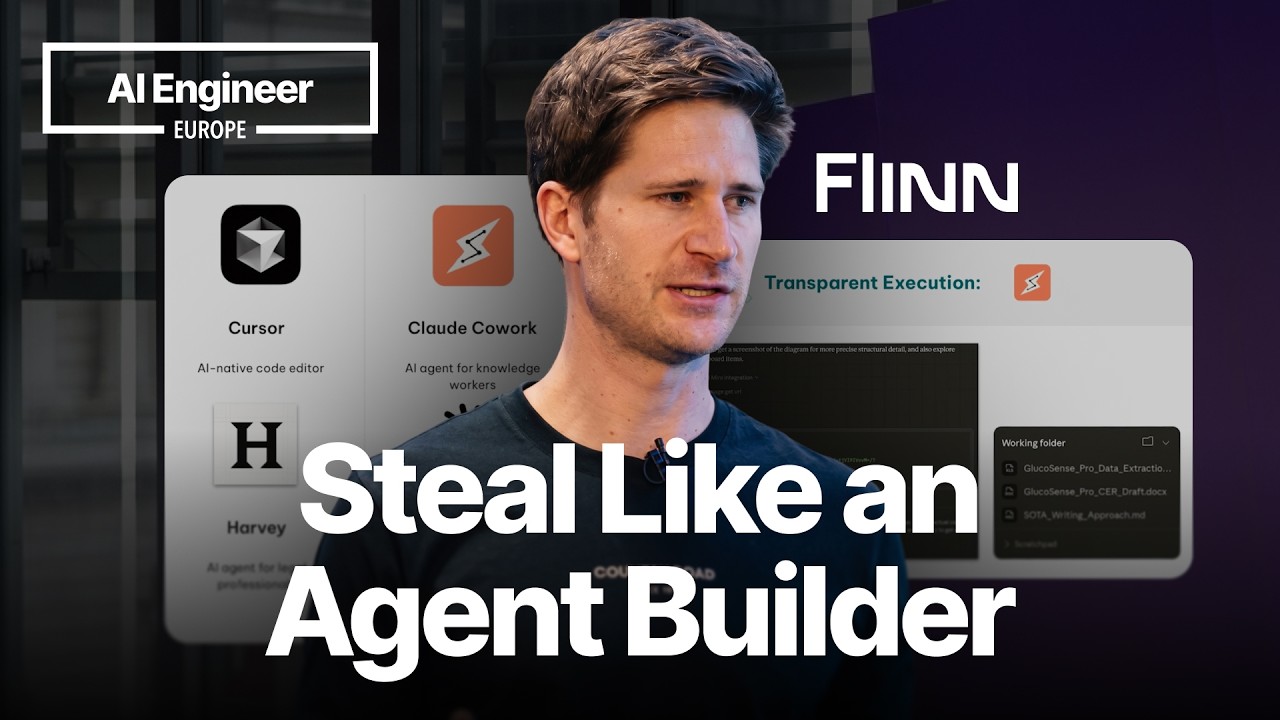




Visual TL;DR
AI Agent Best PracticesCore
Mardu Swanepoel of Flinn AI shares insights on top AI agents
From the articleBy "stealing" these best practices, developers can engineer more effective and reliable AI solutions.
Four Core TraitsContext
Key patterns observed in high-performing AI agents
From the articleSwanepoel articulated that the most successful agents share four key traits: focused modes, transparent execution, personalization, and reversibility.
Focused ModesContext
From the article 2 mentionsFocused Modes: These agents operate within a "constrained scope for dedicated tasks." By narrowing the agent's focus, the output quality for specific functions is improved.
Transparent ExecutionContext
Understanding how the agent operates and its decision-making
From the article 2 mentionsTransparent Execution: The principle here is to "make every step the agent takes visible." This transparency is crucial for building user trust, allowing them to understand the agent's reasoning and actions.
PersonalizationContext
Tailoring agent behavior to individual user needs and preferences
From the article 2 mentionsPersonalization: This involves tailoring agent outputs to "user conventions, preferences, etc." Swanepoel emphasized that personalization significantly increases the "speed to understanding" for users.
ReversibilityContext
Ability to undo or correct agent actions easily
From the article 2 mentionsReversibility: The final key trait is the ability for "every agent action to be easily undone." This feature binds the cost of mistakes, making users bolder and more willing to take risks with AI tools.
High-Performing AgentsOutcome
Achieving superior results and user satisfaction
From the article 9+ mentionsIn a presentation at AI Engineer Europe, Mardu Swanepoel of Flinn AI shared insights into the core characteristics that define effective AI agents.