


LLMjacking: Hackers Steal AI API Keys, Cause Bill Shock

Hackers are increasingly targeting AI API keys through 'LLMjacking' to incur massive charges on victims' accounts, as highlighted in a recent Security Intelligence podcast.

7 min read
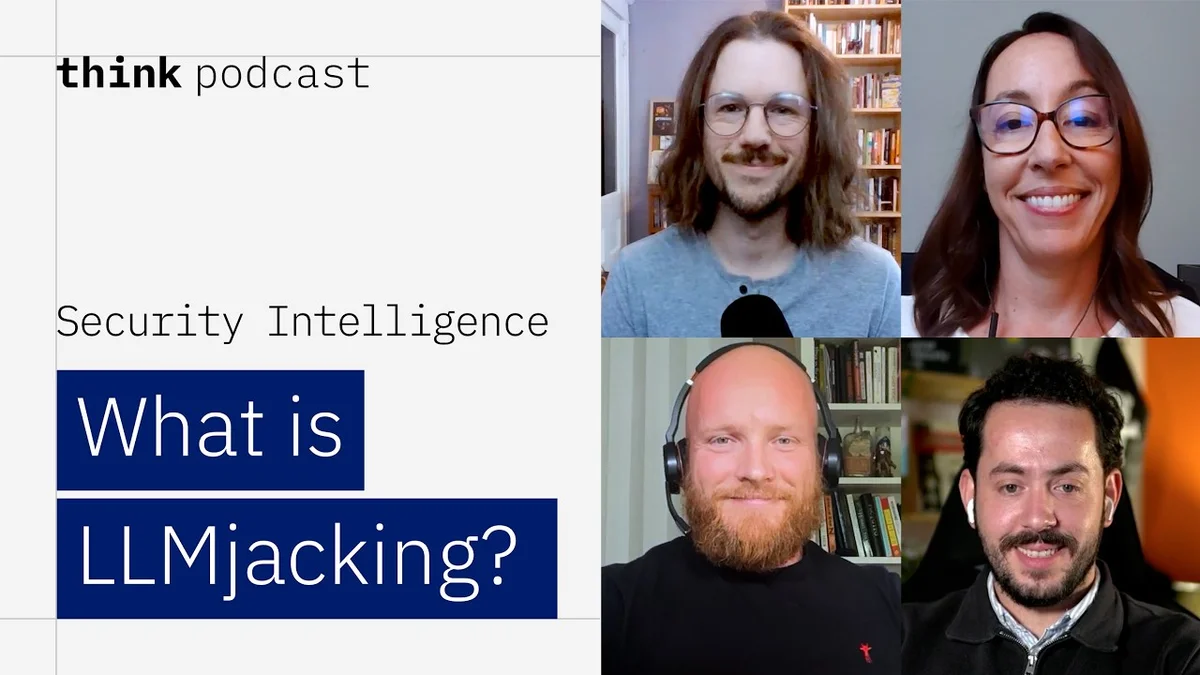
Screenshot of a podcast discussion about LLMjacking, featuring three individuals on screen.
Image credit: Security Intelligence· IBM

The rapid proliferation of powerful AI models has opened new frontiers for innovation, but it has also introduced novel security threats. One such emerging threat, termed "LLMjacking," targets the very APIs that power these advanced AI tools, allowing malicious actors to steal API keys and inflict significant financial damage on unsuspecting users. This tactic bypasses traditional data theft concerns, focusing instead on the direct cost of API usage.

Visual TL;DR. AI API Keys Targeted leads to LLMjacking Attack. LLMjacking Attack causes Massive API Charges. Massive API Charges results in Financial Damage. Unsecured AI Access enables AI API Keys Targeted. Human Element contributes to AI API Keys Targeted. Financial Damage necessitates Protection Recommendations.

  1. AI API Keys Targeted: hackers steal credentials to access powerful AI models
  2. LLMjacking Attack: malicious actors exploit stolen keys for illicit purposes
  3. Massive API Charges: victims incur huge bills from unauthorized AI usage
  4. Financial Damage: attackers cause significant monetary loss to victims
  5. Unsecured AI Access: vulnerabilities in AI systems create attack vectors
  6. Human Element: user error or negligence can lead to key compromise
  7. Protection Recommendations: strategies to secure AI API keys and prevent attacks
Visual TL;DR
Visual TL;DR — startuphub.ai AI API Keys Targeted leads to LLMjacking Attack. LLMjacking Attack causes Massive API Charges. Massive API Charges results in Financial Damage leads to causes results in AI API KeysTargeted LLMjacking Attack Massive APICharges Financial Damage From startuphub.ai · The publishers behind this format
Visual TL;DR — startuphub.ai AI API Keys Targeted leads to LLMjacking Attack. LLMjacking Attack causes Massive API Charges. Massive API Charges results in Financial Damage leads to causes results in AI API KeysTargeted hackers steal credentialsto access powerful AImodels LLMjacking Attack malicious actors exploitstolen keys for illicitpurposes Massive APICharges victims incur huge billsfrom unauthorized AI usage Financial Damage attackers causesignificant monetary lossto victims From startuphub.ai · The publishers behind this format
Visual TL;DR — startuphub.ai AI API Keys Targeted leads to LLMjacking Attack. LLMjacking Attack causes Massive API Charges. Massive API Charges results in Financial Damage. Unsecured AI Access enables AI API Keys Targeted. Human Element contributes to AI API Keys Targeted. Financial Damage necessitates Protection Recommendations leads to causes results in enables contributes to necessitates AI API KeysTargeted hackers steal credentialsto access powerful AImodels LLMjacking Attack malicious actors exploitstolen keys for illicitpurposes Massive APICharges victims incur huge billsfrom unauthorized AI usage Financial Damage attackers causesignificant monetary lossto victims Unsecured AIAccess vulnerabilities in AIsystems create attackvectors Human Element user error or negligencecan lead to key compromise ProtectionRecommendations strategies to secure AIAPI keys and preventattacks From startuphub.ai · The publishers behind this format

In a recent discussion on the "Security Intelligence" podcast, IBM's Michelle Alvarez and Patrick Fussell highlighted the growing concern around LLMjacking. The core of this attack lies in acquiring unauthorized access to AI API keys, which are essentially the credentials that enable users to interact with large language models like Gemini and GPT. Once an attacker possesses these keys, they can then use the victim's account to run computationally intensive tasks, often for mining cryptocurrencies or other illicit purposes, effectively sticking the victim with the bill.

Related startups

Understanding LLMjacking

LLMjacking is a relatively new attack vector that capitalizes on the pay-per-use model of many AI API services. Unlike traditional cyberattacks that might aim to steal user data or deploy ransomware, LLMjacking's primary objective is to exploit the computational resources made available through AI APIs. Attackers gain access to these resources by compromising or stealing API keys, which are often embedded in code or stored insecurely. Once obtained, these keys are used to make a large volume of API calls, driving up the cost for the legitimate account holder.

The full discussion can be found on IBM's YouTube channel.

LLMjacking: How hackers steal your AI API keys and stick you with the bill - IBM
LLMjacking: How hackers steal your AI API keys and stick you with the bill — from IBM

The impact of such an attack can be financially devastating. The podcast hosts cited a real-world example where a developer in Mexico discovered that attackers had used their stolen Gemini API key to rack up an astonishing $82,000 in charges within a mere 48 hours. This incident underscores the critical need for vigilance and robust security practices when integrating AI models into applications or workflows.

The Cost of Unsecured AI Access

The financial implications of LLMjacking are particularly stark when contrasted with the typical monthly spending of developers. The example provided illustrated how a normal monthly spend of $180 could balloon to over $82,000 in less than two days due to unauthorized API usage. This highlights a significant gap in how API security is currently being managed, especially as AI adoption accelerates across industries.

Michelle Alvarez elaborated on the severity of the issue, pointing out that the attackers are not necessarily after personal data but are instead focused on leveraging the computational power of AI models. This shift in attacker motivation means that traditional security measures focused on data protection might not be sufficient to guard against these new threats. The underlying principle is simple: if an attacker can get their hands on your API keys, they can use your resources and send you the bill.

The Human Element in AI Security

Patrick Fussell emphasized the importance of human oversight and proactive security measures in combating such attacks. He noted that while AI tools are powerful, they also introduce new attack surfaces. The key to mitigating risks like LLMjacking lies in understanding the entire lifecycle of AI tool usage, from initial access to ongoing monitoring.

Fussell's insights into adversary simulation also shed light on how organizations can better prepare for and defend against such threats. The idea is to think like an attacker to identify potential vulnerabilities before they can be exploited. This includes rigorous testing of security controls and understanding how AI models might be misused.

Recommendations for Protection

The discussion offered several key takeaways for organizations and developers utilizing AI APIs:

  • Secure API Keys: Treat API keys with the same level of security as passwords and other sensitive credentials. Store them securely, use environment variables or secrets management tools, and avoid hardcoding them directly into source code or public repositories.
  • Implement Access Controls: Employ granular access controls and the principle of least privilege to limit who can access and manage API keys and AI services.
  • Monitor Usage and Costs: Regularly monitor API usage and associated costs. Set up alerts for unusual spikes in activity or spending that could indicate a compromise.
  • Enforce Strict Patching Cadence: Just as with software vulnerabilities, promptly apply patches and updates to AI models and their underlying infrastructure. Attackers often exploit known vulnerabilities in older versions.
  • Human Oversight is Crucial: While AI can automate many processes, human oversight remains critical in identifying anomalies and responding to potential security incidents. Understanding the AI's behavior and outputs can help detect suspicious activity.
  • Develop a Response Plan: Have a clear incident response plan in place that includes steps for API key compromise, including how to revoke keys, notify providers, and assess the damage.

The conversation highlighted that while AI offers immense potential, its integration into business processes must be accompanied by a robust security strategy. LLMjacking is a clear reminder that as technology evolves, so too must our approach to cybersecurity.

© 2026 StartupHub.ai. All rights reserved. Do not enter, scrape, copy, reproduce, or republish this article in whole or in part. Use as input to AI training, fine-tuning, retrieval-augmented generation, or any machine-learning system is prohibited without written license. Substantially-similar derivative works will be pursued to the fullest extent of applicable copyright, database, and computer-misuse laws. See our terms.