

Jon Xu on Picking Startup Ideas

Jon Xu of Y Combinator shares insights on picking startup ideas, emphasizing customer feedback, deep dives, and the importance of commitment over perfection.

5 min read
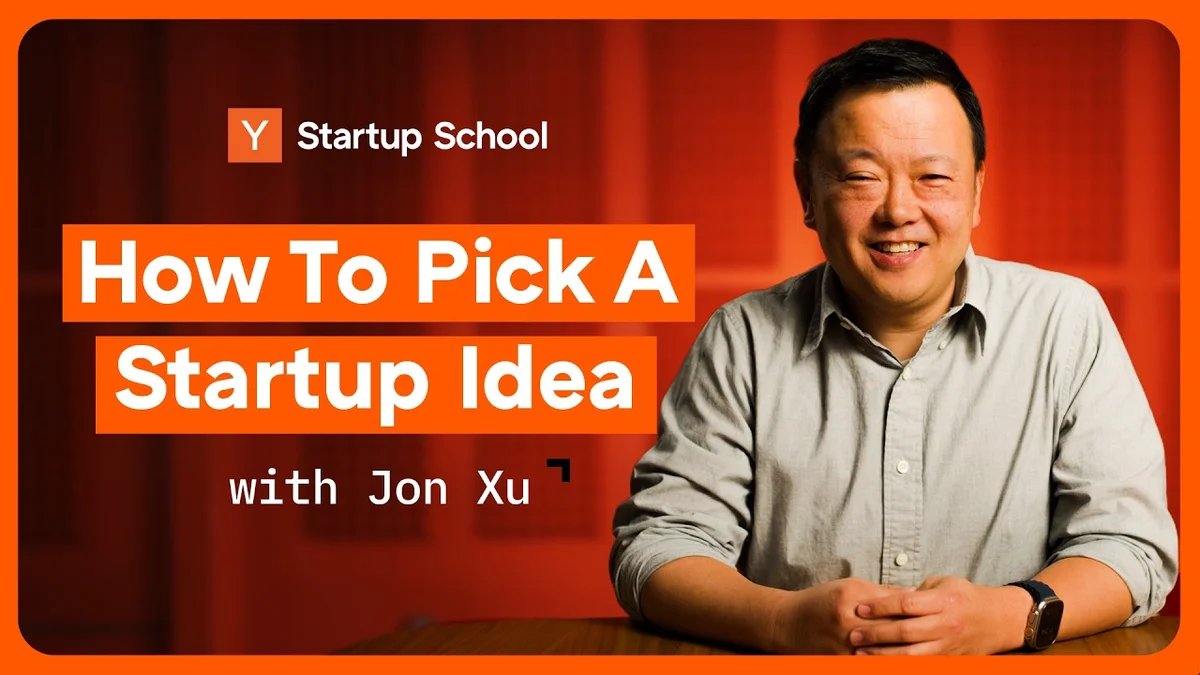
Jon Xu, General Partner at Y Combinator, speaking about how to pick a startup idea.
Jon Xu, General Partner at Y Combinator.· YC

In the whirlwind of startup creation, finding the right idea can feel like searching for a unicorn. Many aspiring founders get bogged down in the pursuit of a 'perfect' idea, often leading to analysis paralysis. Jon Xu, a General Partner at Y Combinator, offers a pragmatic approach to this common challenge in a recent "Startup School" session. He emphasizes that the journey of finding and validating a startup idea is less about a singular moment of revelation and more about a continuous process of learning, iteration, and deep customer engagement.

Avoiding the "Perfect Idea" Trap

Xu opens by addressing a common pitfall: founders who have many ideas but struggle to commit to one, often waiting for the 'perfect' one to emerge. He likens this to waiting for a perfect moment to start a marathon, which can paralyze progress. Xu advises against this indecision, suggesting that founders should pick one idea and then dive deep into it.

Related startups

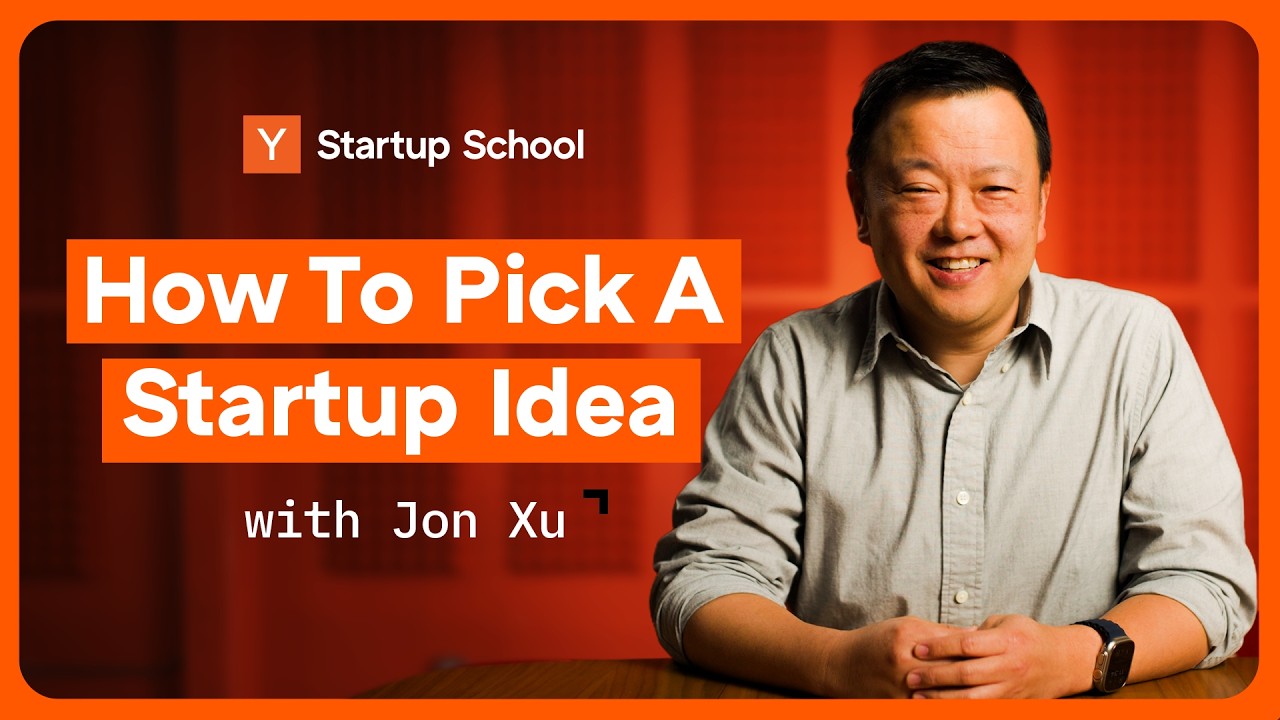
The full discussion can be found on YC's YouTube channel.
How To Pick A Startup Idea - YC
How To Pick A Startup Idea, from YC

"The most important piece of advice I'd give to founders struggling to pick a startup idea," Xu states, "is that it's incredibly hard to make meaningful progress on a startup without committing to a single idea." He further elaborates that the temptation to explore multiple avenues simultaneously can lead to a diffusion of effort and a lack of focus, ultimately hindering the ability to gain traction.

The Power of Deep Dive and Iteration

Xu advocates for a focused approach: pick an idea, go deep, and test it rigorously. This means not just conceptualizing but actively engaging with the problem space and potential customers. He uses the example of companies like GovDash, which pivoted multiple times before finding its successful niche, and Corgi Insurance, which demonstrated that a focused, ambitious vision in a regulated industry could lead to significant growth.

"What I mean by going deep," Xu explains, "is that you should burn the other boats. Pick one idea and go deep on it." This involves understanding the core problem so intimately that you can teach it to others. He stresses that this deep understanding allows founders to identify the true bottlenecks and opportunities, rather than getting lost in superficial solutions.

Xu highlights that the real learning comes from getting into the trenches with customers. "You can only figure out what you should be working on by making contact with reality and getting feedback from customers," he notes. This iterative process, he argues, is crucial for refining the idea and ensuring it resonates with the market.

Qualities of a Winning Idea in the AI Era

In today's rapidly evolving technological landscape, especially with the rise of AI, Xu points out that a good idea should ideally sit at the edge of what current models can do. This means leveraging nascent AI capabilities to solve problems that were previously intractable. "The idea sits at the edge of what models can do today," he suggests, implying that such ideas, while potentially challenging, offer the greatest room for innovation and disruption.

He further elaborates that the most ambitious versions of these ideas are often the ones that can "verticalize." This means focusing on a specific industry or problem to such an extent that the startup becomes the dominant player in that niche. Xu contrasts this with trying to build general-purpose tools, which often face immense competition from larger players.

The Founder-Market Fit

A critical aspect Xu touches upon is the founder's own fit with the idea. He poses the question, "Am I the perfect founder for this?" While not suggesting that founders must have every skill from day one, he emphasizes that a deep understanding of the problem space and a genuine passion for solving it are crucial. He uses the example of a non-technical founder trying to build a complex developer tool; while possible, it's a much steeper climb than for someone with direct experience.

Learning from Failure and Iteration

Xu addresses the inevitable question: "What if it fails?" He posits that the greatest failure is not in the idea itself, but in the inability to learn and adapt. By committing to a single idea and iterating based on customer feedback, founders gain invaluable insights. He shares the story of a company that pivoted multiple times, changing its name and focus with each pivot, but ultimately finding success by focusing on the core problem they were solving.

The key takeaway here is that even if an initial idea doesn't pan out, the learning process is invaluable. "You'll have real conviction to base a pivot on, a better sense of what works and what doesn't," Xu advises. This iterative learning, driven by customer interaction, is the engine of startup growth.

Final Takeaways for Aspiring Founders

Xu concludes with three core pieces of advice:

  1. Stop trying to find the perfect idea. Pick one that genuinely interests you and start learning.
  2. Learn everything you can about the customer. Understand their problems deeply and how your potential solution addresses them.
  3. Commit and go deep. Don't spread yourself too thin. Focus your efforts on one promising direction and iterate rapidly based on feedback.

Ultimately, the journey of building a startup is about relentless learning and adaptation. By focusing on deep customer understanding, iterating quickly, and embracing a clear, ambitious vision, founders can navigate the uncertainties and increase their chances of success.

© 2026 StartupHub.ai. All rights reserved. Do not enter, scrape, copy, reproduce, or republish this article in whole or in part. Use as input to AI training, fine-tuning, retrieval-augmented generation, or any machine-learning system is prohibited without written license. Substantially-similar derivative works will be pursued to the fullest extent of applicable copyright, database, and computer-misuse laws. See our terms.