

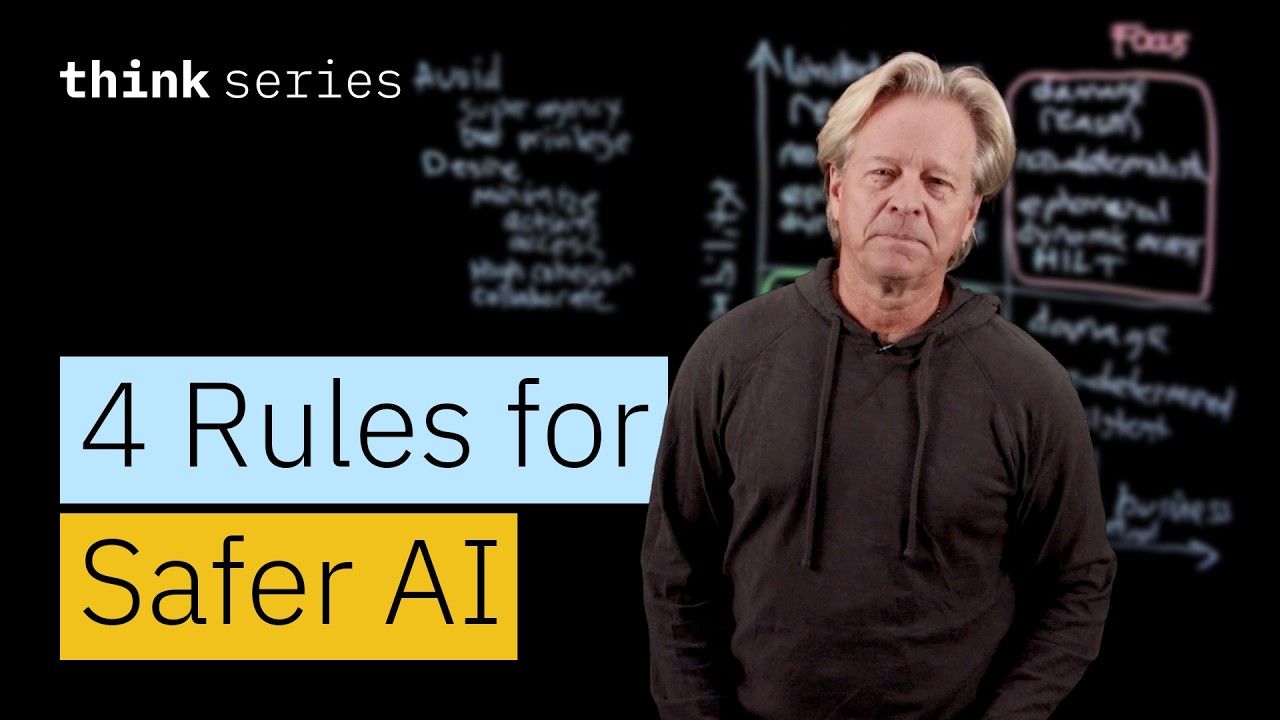
Grant Miller, a Distinguished Engineer at IBM, recently shared insights into the complex world of AI agents and the critical considerations for their development and deployment. In a presentation, Miller outlined the current trajectory of AI agents, emphasizing the need for careful control and understanding of their capabilities. He highlighted the shift from agents performing single, predefined tasks to more sophisticated agents that can collaborate, reason, and adapt to achieve complex goals.
Miller's core thesis revolves around the idea that while the power and versatility of AI agents are rapidly advancing, their development must be guided by principles that ensure safety, predictability, and alignment with human intent. He contrasted the often-portrayed Hollywood vision of all-powerful AI agents with the more nuanced reality of building functional, reliable systems.
Understanding AI Agent Agency
Miller began by illustrating the common perception of AI agents as omnipotent entities capable of performing any task. However, he quickly pivoted to a more grounded perspective, explaining that the true challenge lies in defining and managing the agency of these systems. He presented a dichotomy: either agents have too little agency and are merely tools, or they have too much, leading to unpredictable and potentially undesirable outcomes.
The full discussion can be found on IBM's YouTube channel.
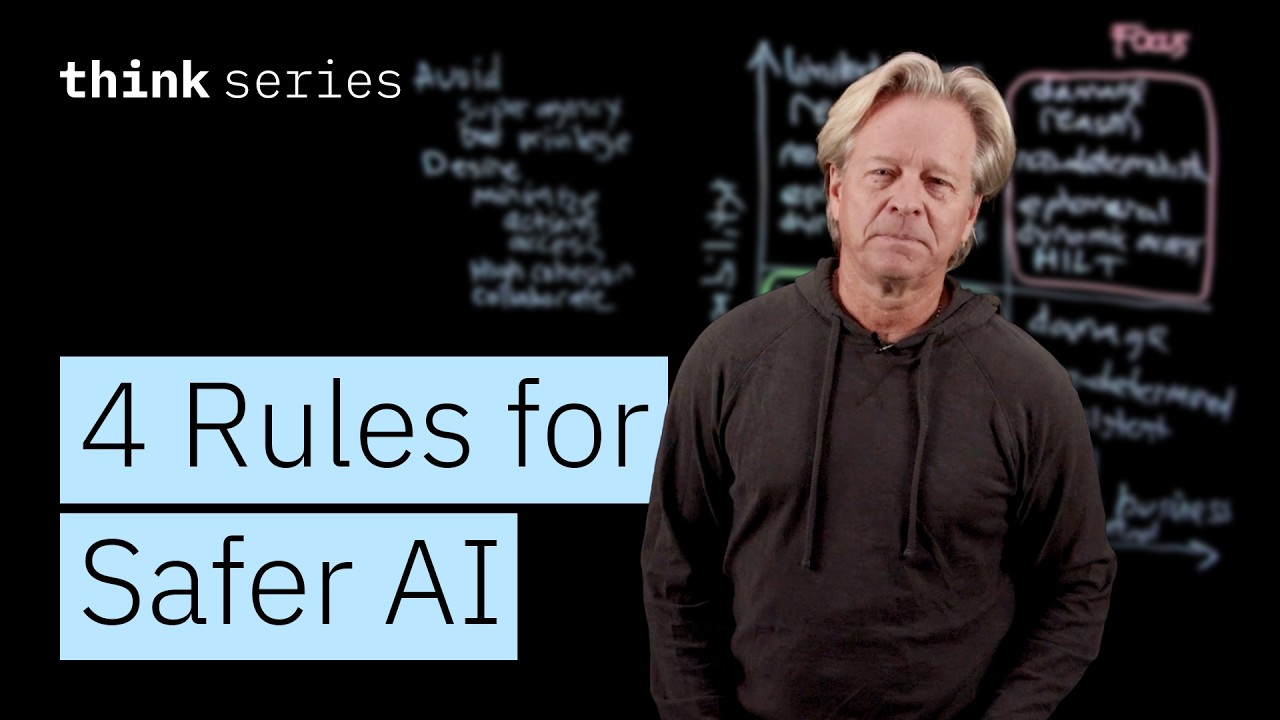
The core of Miller's argument is that the approach to agent design should focus on minimizing two key factors: super agency and over-privilege. Super agency refers to an agent's ability to perform any task it deems necessary to achieve its objective, regardless of its original programming or human oversight. Over-privilege, on the other hand, relates to the extent of access and permissions an agent has within a system, which can amplify the consequences of its actions.
"We don't want super agency," Miller stated, emphasizing that agents should not be allowed to autonomously decide and execute any action they believe will lead to their goal. This is where the concept of "one size that fits all" becomes problematic; a single approach to agency is insufficient for the diverse range of tasks and risks associated with AI agents.
The Risk-Capability Matrix
To better conceptualize and manage the development of AI agents, Miller introduced a useful framework: a 2x2 matrix that maps capability against risk. This matrix helps to categorize different types of agent behavior and design considerations:
- Low Capability, Low Risk: These are simple, rule-based agents with limited scope and minimal potential for negative consequences. They perform well-defined tasks with predictable outcomes.
- Low Capability, High Risk: This quadrant represents agents that are not very capable but still pose a risk due to their access or the context in which they operate. An example might be an agent with broad access to sensitive data but limited ability to understand or process it contextually.
- High Capability, Low Risk: These agents are highly competent and can perform complex tasks, but their actions are constrained, and the potential for harm is mitigated. This is an ideal state for many applications.
- High Capability, High Risk: This is the quadrant where many advanced AI agents currently operate. They possess significant capabilities but also carry a higher risk due to their autonomy and potential for unforeseen actions.
Miller suggested that the goal for many applications is to move towards the "High Capability, Low Risk" quadrant. This involves designing agents that are both powerful and safe, capable of performing complex tasks without posing undue risk.
Desired Agent Behaviors
Miller articulated the desired characteristics of effective AI agents, framing them as a balance between what should be avoided and what should be desired:
- Avoid: Super agency and over-privilege.
- Desire: Minimized actions, minimized access, and high cohesion.
He elaborated on these points:
- Minimized Actions: Agents should perform only the necessary actions to achieve their goals, avoiding extraneous or unprompted behaviors.
- Minimized Access: Agents should only have access to the data and systems required for their specific tasks, adhering to the principle of least privilege.
- High Cohesion & Collaborate: Agents should be able to work effectively with other agents and systems, operating in a coordinated and coherent manner to achieve larger objectives. This implies a need for robust communication and inter-agent coordination protocols.
The concept of "one size that fits all" is detrimental because it fails to account for the varying levels of risk and capability required for different applications. Instead, a more tailored approach is needed, where the agency and access of each agent are carefully defined based on its specific role and the context of its operation.
The Future of AI Agents
Miller concluded by emphasizing the ongoing evolution of AI agents and the importance of a structured approach to their development. He suggested that by understanding the interplay between capability and risk, and by focusing on minimizing undesirable traits like super agency and over-privilege, developers can create agents that are not only powerful but also reliable and safe. The ultimate aim is to build agents that can collaborate effectively, operate within defined boundaries, and contribute positively to human endeavors.
