

IBM's AI Agents: Building a Team for Complex Tasks

Lauren McHugh Olende from IBM discusses the importance of building collaborative AI agent teams, detailing key roles and strategies like prompting and model selection for optimal performance.

3 min read
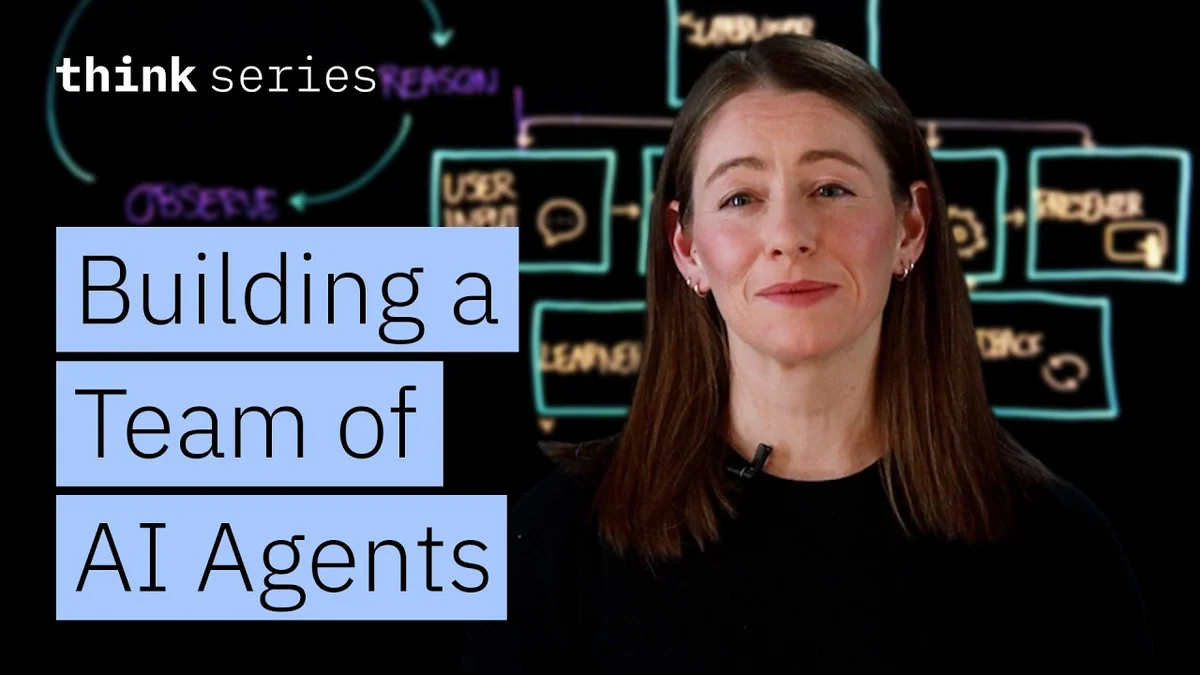
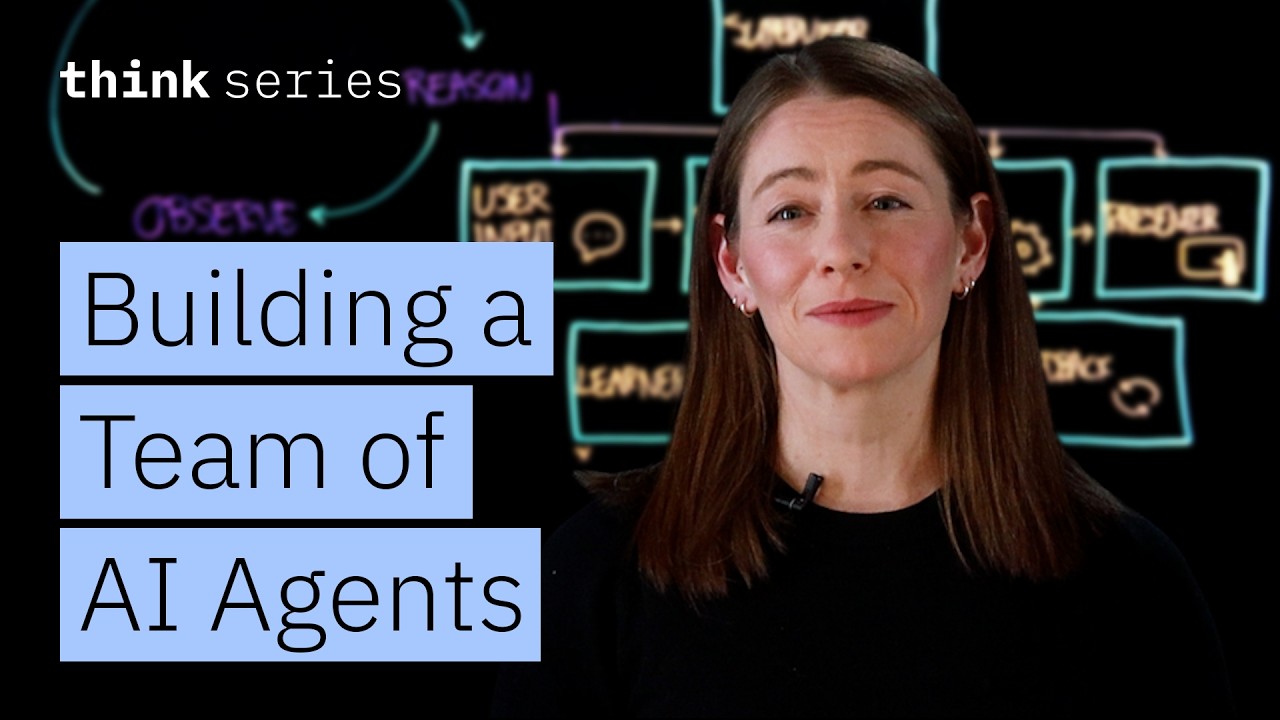
Lauren McHugh Olende from IBM explaining AI agent team structures with a diagram.
Image credit: IBM· IBM

In the rapidly evolving world of artificial intelligence, the concept of AI agents is gaining significant traction. These agents are designed to perform tasks that a standalone Large Language Model (LLM) might struggle with on its own. Lauren McHugh Olende, Program Director at IBM, elaborates on this in a recent IBM Think Series video, highlighting the necessity of building AI teams for complex problem-solving.

Olende explains that AI agents, much like human collaborators, need to work together to achieve a final, cohesive output. This collaborative approach allows for a more efficient and effective tackling of intricate challenges.
The Team Structure of AI Agents

Olende draws a parallel between human teams and AI agent collaborations, stating, "Building a team of collaborators within your agent looks surprisingly like building a team of collaborators in a human." She outlines several distinct roles that AI agents can fulfill:

Related startups

The full discussion can be found on IBM's YouTube channel.

Building a Team of AI Agents: Roles, Feedback, & Teamwork Explained - IBM
Building a Team of AI Agents: Roles, Feedback, & Teamwork Explained — from IBM
  • Doer: The agent that executes specific tasks.
  • Planner: This agent breaks down complex problems into smaller, manageable steps.
  • Tool Operator: This agent interacts with external tools or APIs to gather information or perform actions.
  • Learner: This agent learns from external data sources, like blogs or social media, to stay updated.
  • Feedback Provider/Critic: This agent reviews the output of other agents, identifying errors or areas for improvement.
  • Supervisor: This agent oversees the entire process, ensuring the team's work aligns with the overall goal.

In the example of developing a mobile app, Olende illustrates how these roles might function. The "doer" agent might take user input, the "planner" agent would break this into actionable steps, and a "tool operator" could be used to generate code or access relevant APIs. A "learner" agent could research best practices for mobile app design, while a "feedback" agent critiques the generated code, and a "supervisor" ensures the final output meets the user's requirements.

Key Considerations for AI Agent Team Design

To ensure these AI agent teams function effectively, Olende emphasizes two critical questions:

  • What roles do you need within your agent?
  • How do you make each role good at their job?

She elaborates on the second point by detailing four key strategies:

1. Prompting

The quality of instructions given to an agent directly impacts its performance. Just as with human team members, clear and precise prompts are essential for guiding AI agents towards the desired outcome.

2. Model Selection

Choosing the right AI model for each specific role is crucial. This involves considering the model's specialization, its capabilities, and its suitability for the task at hand. For instance, a model adept at code generation might be chosen for a "tool operator" role.

3. Model Tuning

Fine-tuning models to align with specific tasks and desired behaviors is another vital step. This process allows for tailoring the AI's responses and actions to achieve better results, whether it's to generate high-quality output or to avoid undesirable behaviors.

4. Context

Providing the right context to AI agents is paramount. This means ensuring they have access to relevant information and understanding the scope of their task. Just as human team members need background information to perform effectively, AI agents benefit greatly from well-defined contextual boundaries and relevant data inputs.

By thoughtfully designing these agent teams and optimizing each role through these four strategies, organizations can build more sophisticated and capable AI systems that can tackle increasingly complex challenges.

© 2026 StartupHub.ai. All rights reserved. Do not enter, scrape, copy, reproduce, or republish this article in whole or in part. Use as input to AI training, fine-tuning, retrieval-augmented generation, or any machine-learning system is prohibited without written license. Substantially-similar derivative works will be pursued to the fullest extent of applicable copyright, database, and computer-misuse laws. See our terms.