

• StartupHub.ai
    StartupHub.aiAI Intelligence
Discover
  • Home
  • Search
  • Trending
  • News
Intelligence
  • Market Analysis
  • Comparison
  • Market Map
Workspace
  • Email Validator
  • Pricing
Company
  • About
  • Editorial
  • Terms
  • Privacy
  • v1.0.0
  1. Home
  2. News
  3. How Openai Builds For 800 Million Weekly Users Model Specialization And Fine Tuning
Back to News
Ai video

How OpenAI Builds for 800 Million Weekly Users: Model Specialization and Fine-Tuning

S
StartupHub Team
Nov 28, 2025 at 4:21 PM3 min read
How OpenAI Builds for 800 Million Weekly Users: Model Specialization and Fine-Tuning

OpenAI's Platform Evolution: From One Model to a Portfolio of Specialization
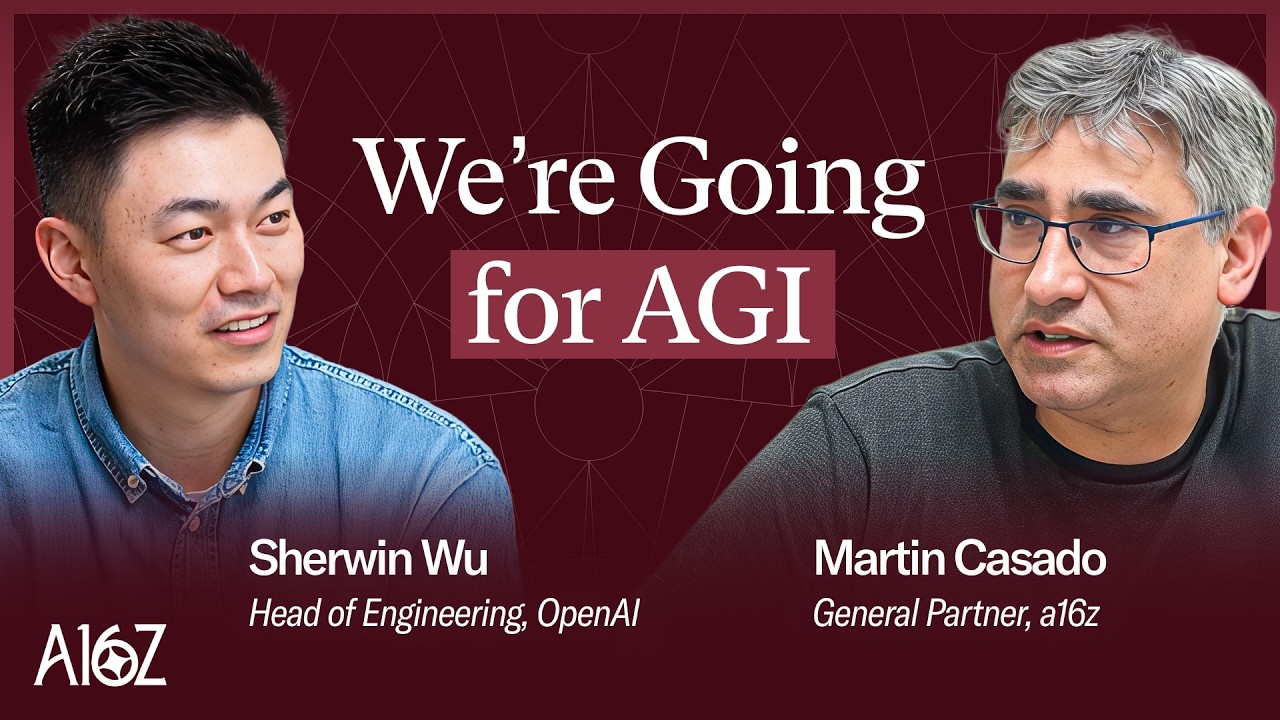
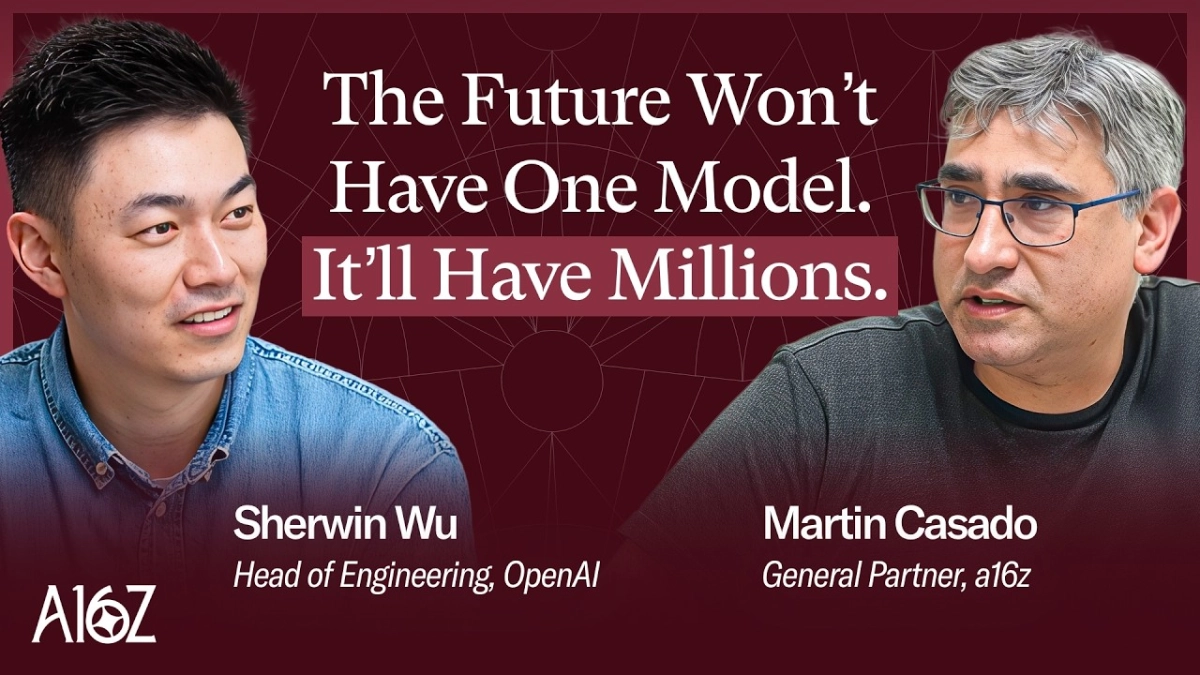
"We want ChatGPT as a first-party app, which is a great way to get 800 million WAUs or whatever now. A tenth of the globe, right?" This statement from Sherwin Wu, Head of Engineering for the OpenAI Platform, encapsulates the scale and ambition driving OpenAI's strategy. In a recent conversation with a16z GP Martin Casado, Wu detailed OpenAI's shift from a singular, general-purpose model to a sophisticated ecosystem of specialized AI systems, custom fine-tuning options, and agent-based workflows, all designed to serve its massive user base.

The conversation, hosted by a16z, delved into the intricacies of how OpenAI manages its platform across models, pricing, and infrastructure. A key insight emerged: the industry has moved beyond the notion of a single, all-encompassing AI model. Wu explained that OpenAI is now cultivating a "portfolio of specialized systems," each tailored for distinct tasks and user needs. This strategic pivot is crucial for addressing the diverse demands of their rapidly expanding user base, which now spans 800 million weekly active users.

A core theme throughout the discussion was the development of trust between users and AI models. Wu highlighted that "people build relationships with models," emphasizing the importance of reliability and consistent performance. This trust is built not just on the model's capabilities, but also on the platform's ability to evolve and offer specialized solutions. The transition from early models like Codex to more advanced systems like the Composer model signifies this evolution, moving towards greater specialization.

The interview also touched upon OpenAI's pricing strategy, with Wu elaborating on why usage-based pricing proves effective, particularly in contrast to the pitfalls of outcome-based pricing. He noted that usage-based models offer more predictable cost structures for developers, allowing them to scale their applications more reliably. This approach is particularly relevant as OpenAI expands its offerings to include custom fine-tuning and Retrieval-Augmented Generation (RAG) APIs, enabling companies to shape model behavior with their proprietary data.

The concept of "agents" in AI was another significant point of discussion. Wu clarified that OpenAI's approach to agents is distinctly different from the often-discussed "free-roaming" AI. Instead, their agent builder is "deterministic, node-based," providing a more controlled and predictable environment for developers. The recent acquisitions of Harmonic Labs and Rockset were noted as key contributions to this agent-focused development, enhancing OpenAI's ability to build sophisticated, task-specific AI workflows.

Related Reading

  • The Nuanced Reality of the AI Chip Race: Google's Specialization vs. Nvidia's Ubiquity
  • Google's AI Resurgence Rattles OpenAI's Dominance

The shift from "prompt engineering" to "context design" was also explored, signaling a maturation in how developers interact with AI models. Wu suggested that prompt engineering, while foundational, is becoming less of the primary focus, with a greater emphasis now placed on how developers can effectively structure and present data to guide model behavior. This evolution reflects a deeper understanding of how to elicit the best performance from AI, moving beyond simple commands to more nuanced interactions.

Ultimately, OpenAI's strategy appears to be one of thoughtful diversification. By moving from a monolithic model to a portfolio of specialized systems, offering robust fine-tuning capabilities, and developing controllable agent workflows, OpenAI is positioning itself to meet the varied needs of its vast user base. This approach acknowledges the complexity of AI applications and the importance of providing tailored solutions that build trust and deliver tangible value.

#AI ecosystem
#AI Platform
#AI Startups
#Fine-Tuning
#Large Language Models
#Machine Learning
#OpenAI model specialization

AI Daily Digest

Get the most important AI news daily.

GoogleSequoiaOpenAIa16z
+40k readers