

Harvey Redefines Legal AI, Shifts Focus to Firm Profitability

5 min read
Legal AI

The core of Harvey's innovation lies not just in applying advanced AI to legal tasks, but in fundamentally reimagining the operational structure and profitability model of the modern law firm. This strategic evolution, moving beyond mere individual productivity, promises to unlock unprecedented efficiencies across the legal landscape.

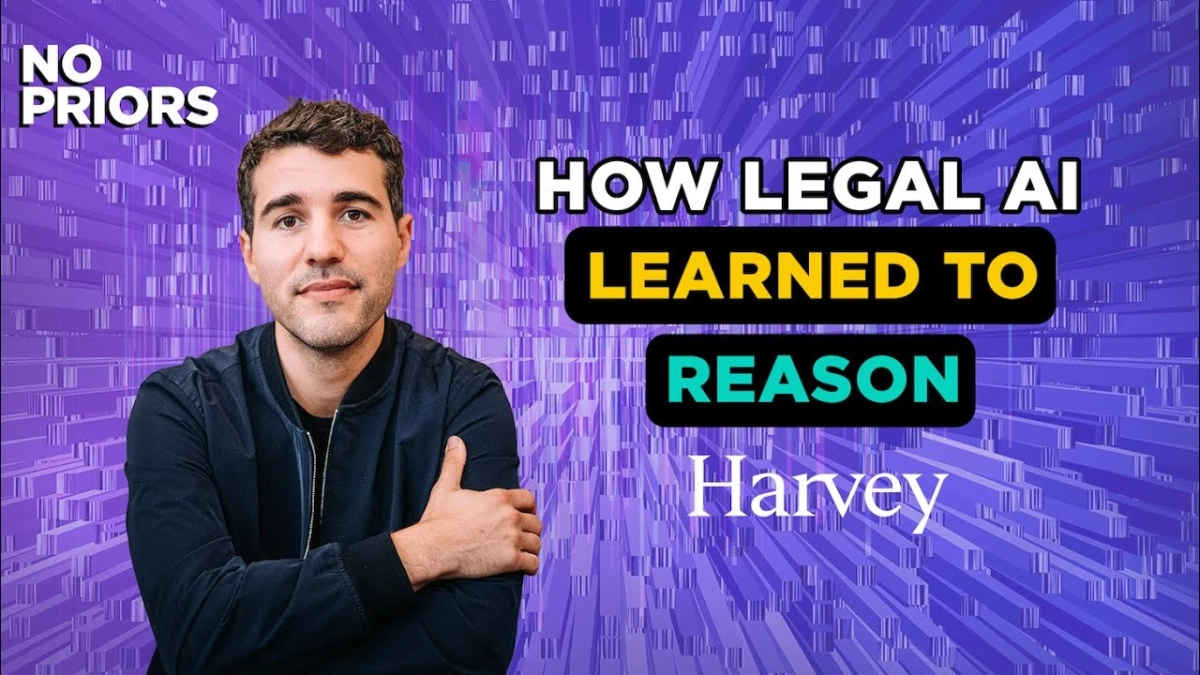
Gabe Pereyra, co-founder and president of legal AI pioneer Harvey, joined Sarah Guo and Elad Gil on the No Priors podcast to dissect the profound shifts occurring within the legal industry. Their conversation illuminated Harvey’s strategic pivot from merely enhancing individual lawyer productivity to orchestrating complex client matters and ultimately, transforming law firm profitability at scale.

Initially, Harvey's product offered lawyers direct access to advanced models like GPT-4, akin to a sophisticated "copilot." While this provided immediate value due to the legal industry's text-heavy nature, it quickly exposed the models' "sharp edges"—issues like hallucinations and a lack of contextual connection to firm-specific knowledge. The company's first two years were thus dedicated to building an "IDE for lawyers" around these models, connecting them to the vast, proprietary context necessary for individual lawyer productivity. This foundational work laid the groundwork for a more ambitious vision.

The crucial strategic decision for Harvey was not to become a law firm itself, but to empower existing legal institutions. This enablement strategy extends beyond law firms to large in-house legal departments within Fortune 500 companies like Walmart and AT&T. Pereyra explains, "The big problem we're solving is not how do you make individual lawyers more productive, it's how do you make a team of lawyers working on a client matter more productive, and more importantly, how do you make an entire law firm working on thousands of these client matters more productive and more profitable." This involves creating a "collaborative tissue" platform that facilitates secure data sharing and workflow management between in-house teams and external counsel.

This approach avoids direct competition, positioning Harvey as a vital infrastructure provider.

Pereyra draws a compelling analogy between legal workflows and a software codebase. Just as developers need tools to navigate and modify complex code, lawyers require structured environments to manage intricate legal processes like fund formation or M&A. He highlights that traditional legal work is challenging precisely because its workflows are often unstructured. "The reason legal is so difficult is the workflows aren't structured," he states. Harvey is developing "agentic AI" that can deconstruct complex legal tasks into logical trees, perform research, draft documents, and verify actions against prior knowledge. This agentic capability promises to redefine the allocation of tasks within a law firm, particularly impacting the roles of associates and partners.

The future of law firms, as envisioned by Pereyra, will see a significant shift in leverage models. While AI won't replace partners, it will dramatically alter the training and responsibilities of junior associates. Partners, like highly experienced software architects, will continue to provide high-level strategy and client relations, tasks that demand nuanced human judgment and deep experiential knowledge. They will oversee complex "client matters" as environments where AI agents execute lower-level tasks, allowing human talent to focus on higher-value, non-routine work. The challenge for law firms now is to adapt their training methodologies to cultivate partners who can effectively leverage AI as an extension of their team, rather than simply performing tasks that AI can automate. This transformation demands a re-evaluation of how firms build, retain, and deploy expertise.

Related Reading

Harvey's "deployed engineering" program underscores the depth of this transformation. Instead of merely selling software, Harvey embeds engineers with clients to customize solutions, connecting to billing and governance systems. This hands-on approach reflects the profound need for bespoke solutions within large, often unique, enterprise legal operations. The rapid adoption by major law firms and corporations, often surprising even Harvey's founders, signals a widespread recognition of AI's potential to unlock unprecedented efficiencies and profitability. The legal sector, once seen as resistant to technological change, is now actively seeking ways to integrate AI, driven by the promise of improved service delivery and enhanced financial performance.

The fundamental problem Harvey addresses is not just about intelligence, but about the very structure of legal work. It’s about transforming unstructured, text-heavy processes into manageable, automatable workflows. This shift demands a rethinking of traditional legal operations, moving towards a model where AI agents handle the "code" of legal documents and research, while human lawyers focus on the "architecture" of legal strategy and client relationships. The ultimate goal is to make every law firm more profitable, not by competing with them, but by providing the infrastructure and expertise to navigate this new AI-driven landscape. This collaborative approach ensures that the benefits of advanced AI are realized across the entire legal ecosystem.