

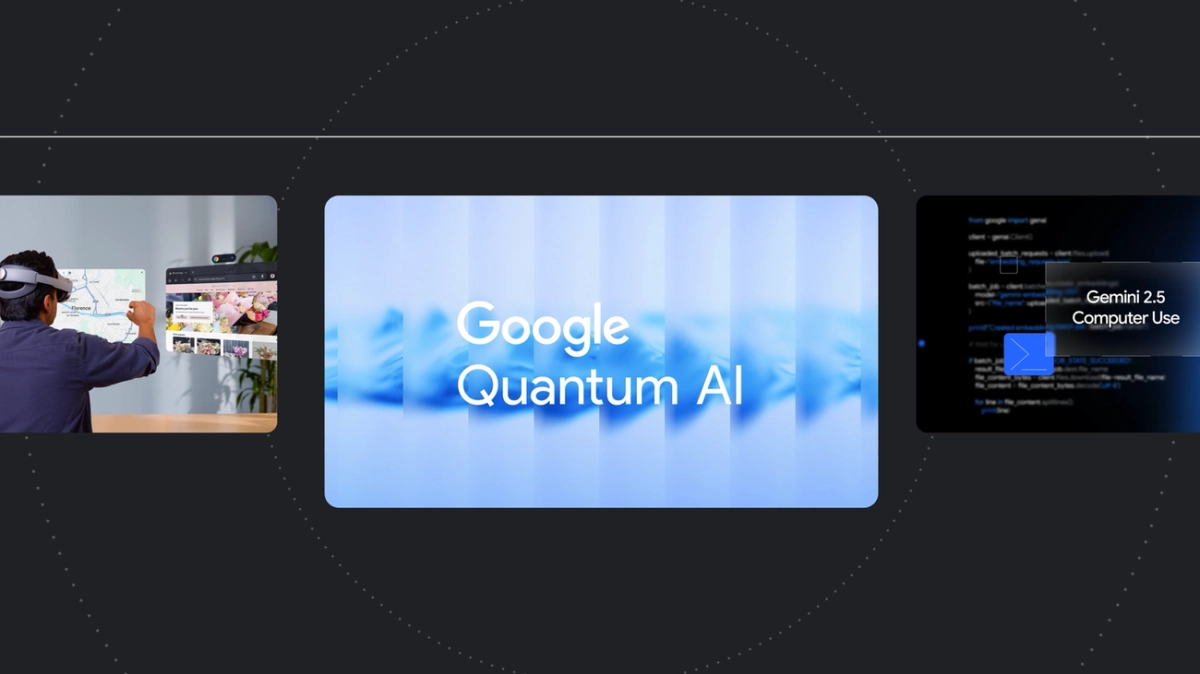
Google's October AI announcements reveal a comprehensive strategy to embed artificial intelligence across every facet of technology, from enterprise solutions to groundbreaking scientific research and daily consumer interactions. These aren't isolated product launches but interconnected advancements, with Google Gemini updates frequently at their core, signaling a mature and aggressive push into the AI-first era. The sheer breadth of these initiatives underscores Google's ambition to not just compete, but to define the next generation of AI applications and infrastructure.
The enterprise sector stands to see significant transformation with the introduction of Gemini Enterprise, positioned as the "front door" for Google AI in the workplace. This move goes beyond basic chatbots, offering a secure platform grounded in a company's own data for building and deploying sophisticated AI agents. Concurrently, the Gemini 2.5 Computer Use model, available via the Gemini API, empowers developers to create AI agents capable of directly interacting with user interfaces, navigating websites, and automating complex digital tasks. This dual approach signifies Google's intent to capture both the high-level strategic enterprise AI market and the granular developer ecosystem for agentic AI.
Beyond commercial applications, Google continues to push the boundaries of fundamental science with AI. A historic quantum computing breakthrough saw the "Quantum Echoes" algorithm achieve verifiable quantum advantage, surpassing classical supercomputers by 13,000 times in molecular structure computation. This paves the way for quantum computers to drive discoveries in medicine and materials science. Furthermore, the collaboration between Google DeepMind, Google Research, and Yale resulted in Cell2Sentence-Scale, an AI model based on the Gemma family, which offers a new pathway for cancer therapy by making tumors more visible to the immune system. These advancements highlight AI's critical role in tackling humanity's grandest challenges.
Expanding AI's Reach: From Home to XR
The consumer and creative domains are also experiencing a significant AI infusion. Google Home is entering a new era, with Gemini for Home replacing the Google Assistant on smart speakers and displays, promising a more conversational and context-aware interaction with smart devices. This redefines the smart home experience, making it more intuitive and integrated. In the realm of immersive technology, the new Samsung Galaxy XR headset, powered by Android XR and integrated Gemini AI, blends digital and physical worlds, offering real-time contextual assistance, from player stats during a game to organizing virtual workspaces. Creative professionals benefit from significant updates to Flow, Google's AI filmmaking tool, which now offers enhanced storytelling capabilities and greater creative control, including multi-image character control and seamless frame bridging.
Addressing the societal implications of widespread AI adoption, Google rolled out new security features during Cybersecurity Awareness Month, including enhanced protections in Google Messages and new account recovery methods. The company also detailed its strategy for tackling emerging AI threats, introducing an expanded AI Vulnerability Reward Program and a new Secure AI Framework 2.0. To ensure a skilled workforce for this AI-driven future, Google launched Google Skills, a learning platform offering nearly 3,000 courses and labs, providing expertise in AI and other technical areas directly from Google experts. According to the announcement these initiatives collectively demonstrate a holistic approach to responsible AI deployment and education.