


Google Cloud's AI Vision: Full Stack Approach to Agents

Google Cloud's Riyaz Habibibhai details the company's full-stack AI strategy, focusing on interoperability, governance, and simplified adoption of AI agents.

6 min read
Sam Charrington and Riyaz Habibibhai in a discussion setting.
Sam Charrington (left) and Riyaz Habibibhai (right) at Google Cloud Next 2026.· TWIML

At Google Cloud Next 2026 in Las Vegas, Riyaz Habibibhai, Director of Cloud AI Product Marketing at Google Cloud, shared insights into the company's strategy for AI agents. Speaking with TWiML founder and principal analyst Sam Charrington, Habibibhai detailed Google Cloud's commitment to a comprehensive, full-stack approach to developing and deploying AI-powered agents.

Riyaz Habibibhai: Driving AI Innovation

Habibibhai leads product marketing for Google Cloud's AI offerings. His role involves translating the company's advanced AI capabilities into tangible value for businesses. He is instrumental in shaping how customers understand and adopt Google's AI solutions, from foundational models to specialized agent platforms.

The full discussion can be found on TWIML's YouTube channel.
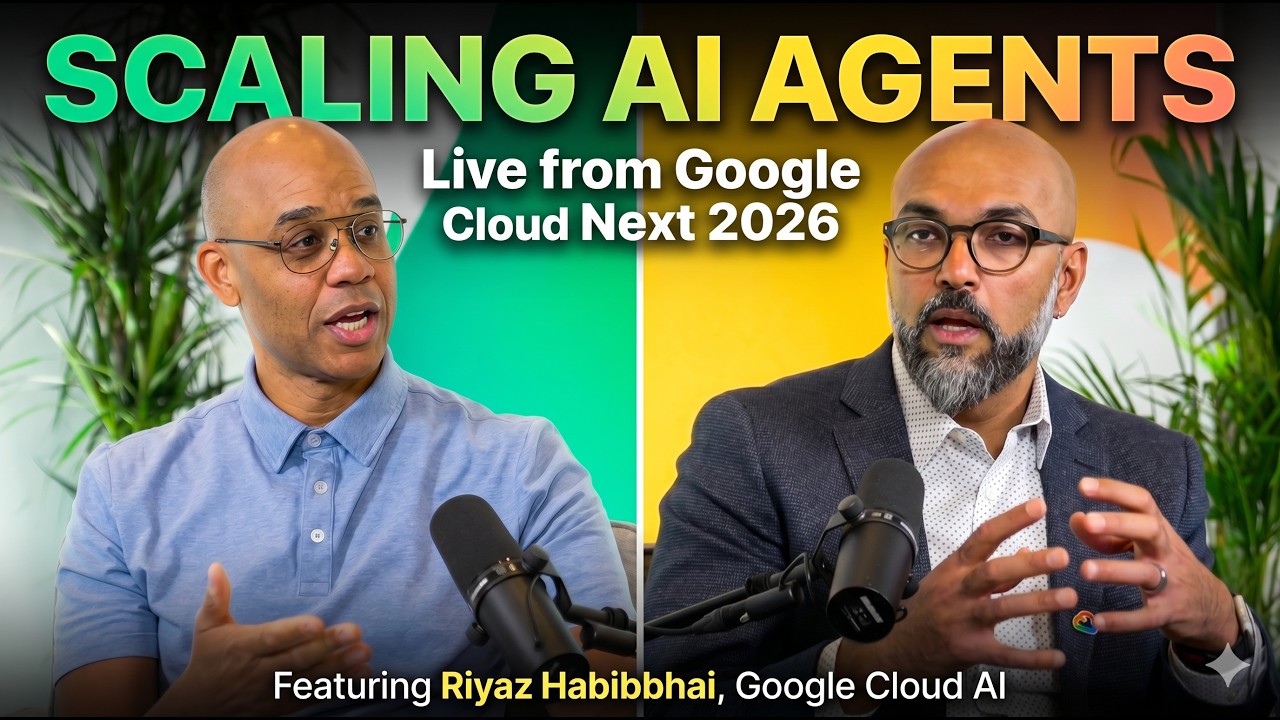
Managing AI Agents at Scale with Google Cloud's Riyaz Habibbhai - TWIML
Managing AI Agents at Scale with Google Cloud's Riyaz Habibbhai — from TWIML

Google's Full Stack Approach

Habibibhai highlighted Google Cloud's consistent strategy of offering a complete AI solution. This encompasses everything from custom silicon like TPUs to foundational models and the data infrastructure required to support them. The goal is to provide an integrated platform that simplifies the development and deployment of AI applications.

"One theme that has been consistent for years is being clear on the value of what Google brings, which is the entire AI-optimized stack, from the chips to the research and models, to what we have from a data cloud perspective, to platform and application, all kind of wrapped with security." — Riyaz Habibibhai

This end-to-end integration aims to reduce complexity and accelerate adoption for customers. By controlling multiple layers of the AI stack, Google Cloud can ensure better performance, cost efficiency, and a more cohesive user experience.

Meeting Customers Where They Are

A significant aspect of Google Cloud's strategy is flexibility and interoperability. Habibibhai emphasized the importance of meeting customers wherever they are in their AI journey, whether they are already leveraging multi-cloud environments or building custom solutions.

"We want to meet our customers where they are, and having the interoperability with other platforms, including what we announced with Microsoft Azure, that interoperability with other platforms including Microsoft Azure, is one that customers really love to hear." — Riyaz Habibibhai

This approach ensures that Google Cloud can integrate with existing customer workflows and infrastructure, rather than forcing a complete overhaul. The focus on openness allows customers to bring their own models and data, providing a more personalized and adaptable AI solution.

Simplifying the Message and Portfolio

As the AI landscape evolves rapidly, Google Cloud is also focused on simplifying its message and product portfolio to make it easier for customers to understand and access its capabilities.

Related startups

"We're trying to continue to simplify the message and portfolio of AI is evolving really fast, and how do we help our customers just understand the portfolio of our products across these stacks and how they can get started." — Riyaz Habibibhai

This simplification is crucial for broad adoption, enabling businesses to quickly identify the right tools and services for their specific AI needs.

Full Stack Innovation

Habibibhai reiterated that the "full stack" approach is not just a marketing term but a core tenet of their innovation strategy.

"Full stack innovation is really the idea that Google Cloud offering a full stack is a consistent theme across several next events and platform innovation." — Riyaz Habibibhai

By optimizing each layer of the stack, from hardware to software applications, Google Cloud aims to deliver superior performance and cost-effectiveness, addressing the common challenge of integration and adoption that many enterprises face.

Governing Agents Across Surfaces

A key challenge for enterprises is managing and governing AI agents across various platforms and surfaces. Google Cloud is addressing this by providing integrated governance solutions.

"One of the things that really jumped out at me is around observability and governance. We had that before, you know, in previous years, much more siloed, but now you can really see what the agent is doing, and in the platform for you to govern and run your agents across surfaces." — Riyaz Habibibhai

The Gemini Enterprise Agent Platform aims to provide a centralized registry for managing agents, offering visibility into their behavior, and enabling policy enforcement across different environments.

Openness in the Agents Platform

The platform's emphasis on openness is a critical differentiator, allowing customers to leverage their existing investments and flexibility in choosing their preferred models.

"The openness is really about meeting the customer where they are and giving them the choice and the flexibility to do that." — Riyaz Habibibhai

This means customers can bring their own machine learning models or leverage Google's own powerful models, ensuring they can build agents that best fit their specific use cases and data requirements.

MCP and Governance

Habibibhai touched upon the importance of governance, particularly in the context of managing multiple agents and ensuring compliance.

"The MCP and governance story has been part of the evolution... Customers are asking, 'How do we govern these things?'... We have our own MCPs, and then you can bring your own MCPs, and then you can link them to your own registries." — Riyaz Habibibhai

This integrated approach to governance, including the use of Model Cards and other compliance tools, is designed to provide organizations with the necessary controls to manage their AI deployments responsibly.

Looking Forward: Challenges & Opportunities

Looking ahead, Habibibhai sees significant opportunities for AI agents to transform businesses, but also acknowledges the challenges that lie ahead, particularly around adoption.

"The number one issue that enterprises face is integration challenges. And so, the fact that you can build your own agents and then run them on the Gemini Enterprise Agent Platform, you can run them across multiple different surfaces." — Riyaz Habibibhai

The advice for organizations looking to adopt AI agents is to focus on building a clear business case, bringing stakeholders along, and leveraging the capabilities that Google Cloud offers to simplify the process.

Agent Adoption Challenges

The discussion also touched on the challenges organizations face in adopting AI agents, with integration and ROI being key concerns.

"We did a customer panel yesterday and asked them, 'What's one piece of advice you would give your audience?' And everybody said, 'Build a POC, make a business case, and bring your stakeholders along.'" — Riyaz Habibibhai

This practical advice underscores the need for a clear strategy and strong internal buy-in to successfully implement AI agents and realize their full potential.

Parting Thoughts

Habibibhai concluded by emphasizing the collaborative nature of Google Cloud's AI development and the importance of customer feedback in shaping the platform's future.

"Thank you for the partnership. Feedback from customers like you has helped us continue to build our product and make sure we simplify that and drive a cohesive story." — Riyaz Habibibhai

The ongoing advancements in Google Cloud's AI capabilities, particularly with the Gemini Enterprise Agent Platform, signal a commitment to empowering businesses with accessible, scalable, and governable AI solutions.

© 2026 StartupHub.ai. All rights reserved. Do not enter, scrape, copy, reproduce, or republish this article in whole or in part. Use as input to AI training, fine-tuning, retrieval-augmented generation, or any machine-learning system is prohibited without written license. Substantially-similar derivative works will be pursued to the fullest extent of applicable copyright, database, and computer-misuse laws. See our terms.