

Generalist AI CEO: Robots Ready for 'GPT-3 Era'

Pete Florence of Generalist AI discusses the "GPT-3 era" for robotics, the importance of data, and the future of adaptable AI robots.

7 min read
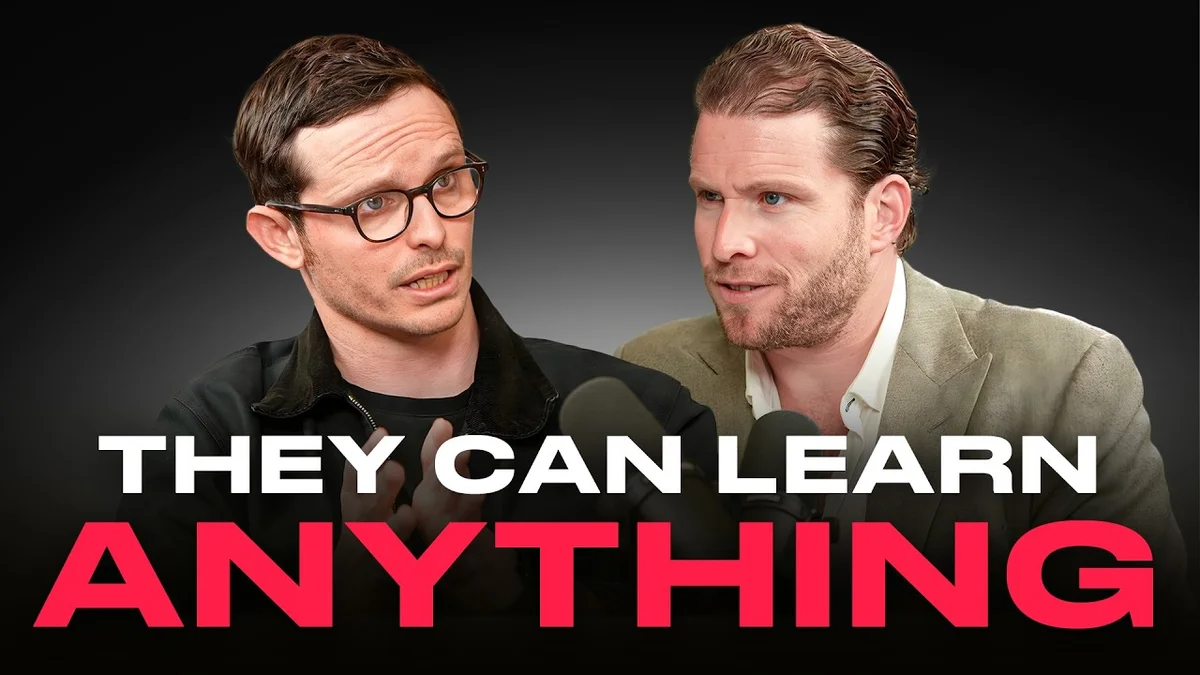
Pete Florence, CEO of Generalist, speaks in a podcast interview about AI robotics.
Joe Lonsdale
Visual TL;DR
Robots lack dataDriver
robots traditionally 'just sitting still' have limited opportunities to learn
From the article"You need to have data to learn stuff," Florence stated, emphasizing that the key is to get robots physically interacting with the world at scale.
Generalist AI CEOCore
Pete Florence discusses the 'GPT-3 era' for robotics and adaptable AI robots
From the article 3 mentionsPete Florence, CEO and co-founder of Generalist, believes the field of AI robotics is on the cusp of a major breakthrough, likening the current stage to the transformative impact of GPT-3 on language models.
Future: Data, Compute, TalentOutcome
path forward requires more data, computational power, and skilled individuals
From the articleAddressing market dynamics, Florence acknowledged the significant investment required in compute, talent, and, crucially, data.
GPT-3 Era RoboticsContext
advanced robotics models becoming highly adaptable, tackling vast array of tasks
From the article 3 mentionsFlorence drew a parallel between the current state of robotics models and the early days of GPT-3.
Robots lack dataDriver
robots traditionally 'just sitting still' have limited opportunities to learn
From the article"You need to have data to learn stuff," Florence stated, emphasizing that the key is to get robots physically interacting with the world at scale.
Tongs & Ice LattesContext
recounting an experience from his graduate studies with physical interaction
From the articleBy strapping a GoPro to his head and emulating simple robotic grippers with clamps, he attempted to perform complex tasks like making an ice latte.
Need physical interactionDriver
key is to get robots physically interacting with the world at scale
Generalist AI CEOCore
Pete Florence discusses the 'GPT-3 era' for robotics and adaptable AI robots
From the article 3 mentionsPete Florence, CEO and co-founder of Generalist, believes the field of AI robotics is on the cusp of a major breakthrough, likening the current stage to the transformative impact of GPT-3 on language models.
GPT-3 Era RoboticsContext
advanced robotics models becoming highly adaptable, tackling vast array of tasks
From the article 3 mentionsFlorence drew a parallel between the current state of robotics models and the early days of GPT-3.
Emergent capabilitiesEffect
robots capable of tackling a vast array of specific tasks with unprecedented speed
From the article 5 mentionsThe company's models, such as Gen One, are already demonstrating emergent capabilities.
Future: Data, Compute, TalentOutcome
path forward requires more data, computational power, and skilled individuals
From the articleAddressing market dynamics, Florence acknowledged the significant investment required in compute, talent, and, crucially, data.
Contents(6)

Pete Florence, CEO and co-founder of Generalist, believes the field of AI robotics is on the cusp of a major breakthrough, likening the current stage to the transformative impact of GPT-3 on language models. In a recent discussion, Florence articulated how advanced robotics models are becoming highly adaptable, capable of tackling a vast array of specific tasks with unprecedented speed.

The Need for Data and Physical Interaction

Florence, who holds a PhD from MIT and previously worked at DeepMind for four and a half years, highlighted a fundamental challenge in robotics: the scarcity of data. Unlike digital domains where vast amounts of text and information are readily available, robots traditionally "just sitting still" have limited opportunities to learn. "You need to have data to learn stuff," Florence stated, emphasizing that the key is to get robots physically interacting with the world at scale.

An Epiphany with Tongs and Ice Lattes

Recounting an experience from his graduate studies, Florence described an "epiphany" that shaped his thinking about robotic dexterity. By strapping a GoPro to his head and emulating simple robotic grippers with clamps, he attempted to perform complex tasks like making an ice latte. The experiment, which involved pouring ice cubes, refilling an ice tray, and handling a Nespresso machine, demonstrated that even with rudimentary "end-effectors," human-level intelligence could achieve a great deal. More importantly, it illuminated a path towards accumulating vast amounts of egocentric data by having many people collect it, thereby accelerating the learning process for AI models.

The full discussion can be found on Joe Lonsdale's YouTube channel.

How This $2B Startup Trains AI Robots in Just 5 Minutes - Joe Lonsdale
How This $2B Startup Trains AI Robots in Just 5 Minutes, from Joe Lonsdale

Bridging the Gap from Research to Application

Florence's background, including his time at Google's DeepMind working on large-scale multimodal learning, provided him with insights into the potential of applying advanced AI techniques, like those found in large language models, to robotics. He noted the transfer learning capabilities seen in language models and aimed to replicate similar progress in "embodied intelligence", intelligence that has a physical presence and can interact with the world. This led him to co-found Generalist, aiming to build a "full-stack" team capable of tackling the complex, interdisciplinary challenges of creating generalized AI for the physical world.

The 'GPT-3 Era' for Robotics

Florence drew a parallel between the current state of robotics models and the early days of GPT-3. Just as GPT-3 was mind-blowing but not yet commercially viable for most applications, current generalist robotics models are showing significant breakthroughs. "We feel like it's a similar type of era right now for robotics," Florence explained, "where the general models they are getting better at a very significant pace and they're starting to cross into these levels kind of like the GPT-3 era where we're having these general models cross into commercial viability." He predicts that within the next couple of years, robots will be capable of performing a vast range of tasks, fundamentally changing what's possible.

Emergent Capabilities and Future Potential

The company's models, such as Gen One, are already demonstrating emergent capabilities. Florence highlighted examples like emergent ambidexterity, where a model trained to perform a task with its right hand can spontaneously use its left hand. He also mentioned the ability of these models to show ingenuity with tools, even when presented with new tools not seen during training. This generalization ability is crucial for real-world deployment, where scenarios can change unexpectedly. The ability to train models in minutes, rather than weeks or months, signifies a dramatic acceleration in the field.

The Path Forward: Data, Compute, and Talent

Addressing market dynamics, Florence acknowledged the significant investment required in compute, talent, and, crucially, data. Unlike language models that can leverage vast internet text, robotics requires proprietary data creation. However, he emphasized that the key is not just collecting data, but understanding how to create the right type of data to foster specific intelligence capabilities. The ultimate goal is to democratize the ability to create physical goods and solve complex problems, potentially leading to a more prosperous world where advanced capabilities are accessible to more people.

© 2026 StartupHub.ai. All rights reserved. Do not enter, scrape, copy, reproduce, or republish this article in whole or in part. Use as input to AI training, fine-tuning, retrieval-augmented generation, or any machine-learning system is prohibited without written license. Substantially-similar derivative works will be pursued to the fullest extent of applicable copyright, database, and computer-misuse laws. See our terms.