

Forward Deployed Engineering: A "Dirty Secret" Examined

Natalie Meurer of Sierra debunks the 'dirty secret' of Forward Deployed Engineering, arguing the role's definition is too broad yet essential in the AI era.

Natalie Meurer speaking at a podium with a slide titled 'The Dirty Secret of Forward Deployed Engineering'
AI Engineer
Visual TL;DR
FDE: "Dirty Secret"Driver
From the article 2 mentionsNatalie Meurer, Head of Agent Engineering at Sierra, recently took the stage at the AI Engineer World's Fair to tackle what she calls the "dirty secret" of Forward Deployed Engineering (FDE): its increasingly nebulous definition.
Meurer's BackgroundContext
from policy nerd to Palantir FDE, now Sierra Agent Engineering Head
From the article 9+ mentionsMeurer’s background offers a unique perspective on the evolution of FDE.
Palantir ExperienceContext
worked as infrastructure and forward deployed engineer with defense clients
From the article 9 mentionsHer experience at Palantir, from 2016 to 2021, provided her with a firsthand understanding of the role’s origins and its subsequent transformations.
Sierra Agent EngineeringCore
leads Agent Engineering at Sierra after Stanford, applying FDE insights
From the article 5 mentionsAfter Stanford, she joined Sierra, where she now leads Agent Engineering.
Nebulous FDE DefinitionDriver
term has become so broad it risks meaning nothing, yet is hottest job
From the articleNatalie Meurer, Head of Agent Engineering at Sierra, recently took the stage at the AI Engineer World's Fair to tackle what she calls the "dirty secret" of Forward Deployed Engineering (FDE): its increasingly nebulous definition.
AI Era EssentialEffect
despite broad definition, FDE role is essential in the AI era
From the articleThe era of custom solutions emerged around 2016, with FDEs building solutions, often in the form of "Slate" dashboards, to address known problems.
Customer AccountabilityCore
customer accountability remains the constant amidst FDE's shifting sands
From the article 8 mentionsAcross all these evolving facets, Meurer identified a single continuity point: customer accountability.
Contents(4)

Natalie Meurer, Head of Agent Engineering at Sierra, recently took the stage at the AI Engineer World's Fair to tackle what she calls the "dirty secret" of Forward Deployed Engineering (FDE): its increasingly nebulous definition. Despite its popularity, Meurer argued that the term has become so broad it risks meaning nothing, while simultaneously being the hottest job in AI.

Forward Deployed Engineering: A "Dirty Secret" Examined - AI Engineer
Forward Deployed Engineering: A "Dirty Secret" Examined, AI Engineer

From Policy Nerd to Agent Engineering Head

Meurer’s background offers a unique perspective on the evolution of FDE. Starting as a policy enthusiast at Georgetown, she transitioned into tech, eventually landing a role at Palantir. There, she worked as an infrastructure engineer and a forward deployed engineer, primarily with law enforcement and defense clients. Her experience at Palantir, from 2016 to 2021, provided her with a firsthand understanding of the role’s origins and its subsequent transformations. After Stanford, she joined Sierra, where she now leads Agent Engineering. She noted that her initial disdain for the term "deployment team" at Sierra, feeling it didn't accurately reflect the work, spurred her to write an article two years prior defining "agent engineering" as a subdiscipline of AI engineering, emphasizing customer accountability.

The Shifting Sands of Forward Deployed Engineering

Meurer traced the history of FDE, beginning with Palantir's job postings around 2016. Back then, the emphasis was on location and being "on the ground" with customers, largely due to on-premise deployments. Initially, the role was akin to DevOps, focusing heavily on platform stability. Meurer shared a personal anecdote about her onboarding project at Palantir, which involved deploying software on an EC2 instance, highlighting the hands-on, often late-night, nature of the early FDE role.

By 2012, as Palantir’s platform matured, the focus shifted to data integration. Meurer likened data integration software without integrated data to a "movie theater that's playing nothing." Forward Deployed Engineers then took on the dual role of DevOps and data integration, requiring a deep understanding of customer environments to model data appropriately, often referred to as building an "ontology."

The era of custom solutions emerged around 2016, with FDEs building solutions, often in the form of "Slate" dashboards, to address known problems. The individuals best positioned to make this data useful were those who understood it most deeply, the FDEs.

The advent of Palantir’s Foundry platform in 2020 marked another evolution, emphasizing making data useful and moving from "data to decision-making." A key realization was that dashboards needing to write back to data sources were more effective and less prone to decay. This period also saw Palantir aiming to empower customers to perform more of this work themselves, exemplified by their work with Airbus on the Skywise platform, which enabled thousands of engineers to use Foundry. More recently, Palantir’s AIFTE platform aims to leverage large language models for similar tasks.

The "Dirty Secret": FDE Doesn't Exist (Or Exists Too Much)

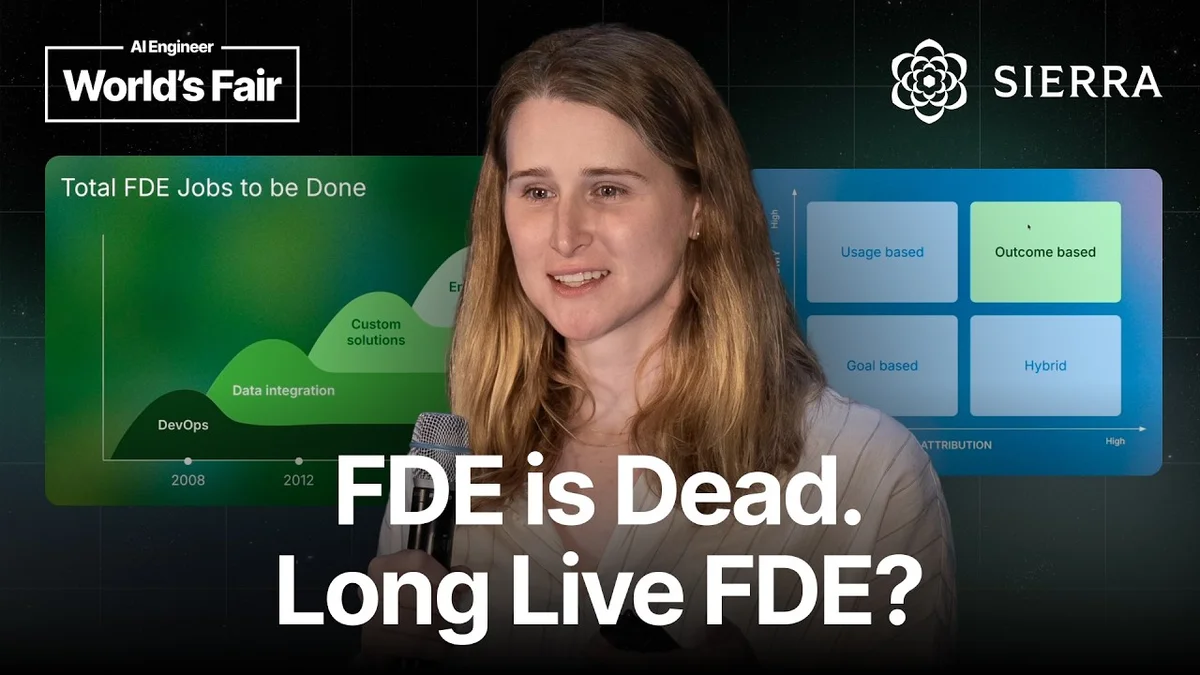
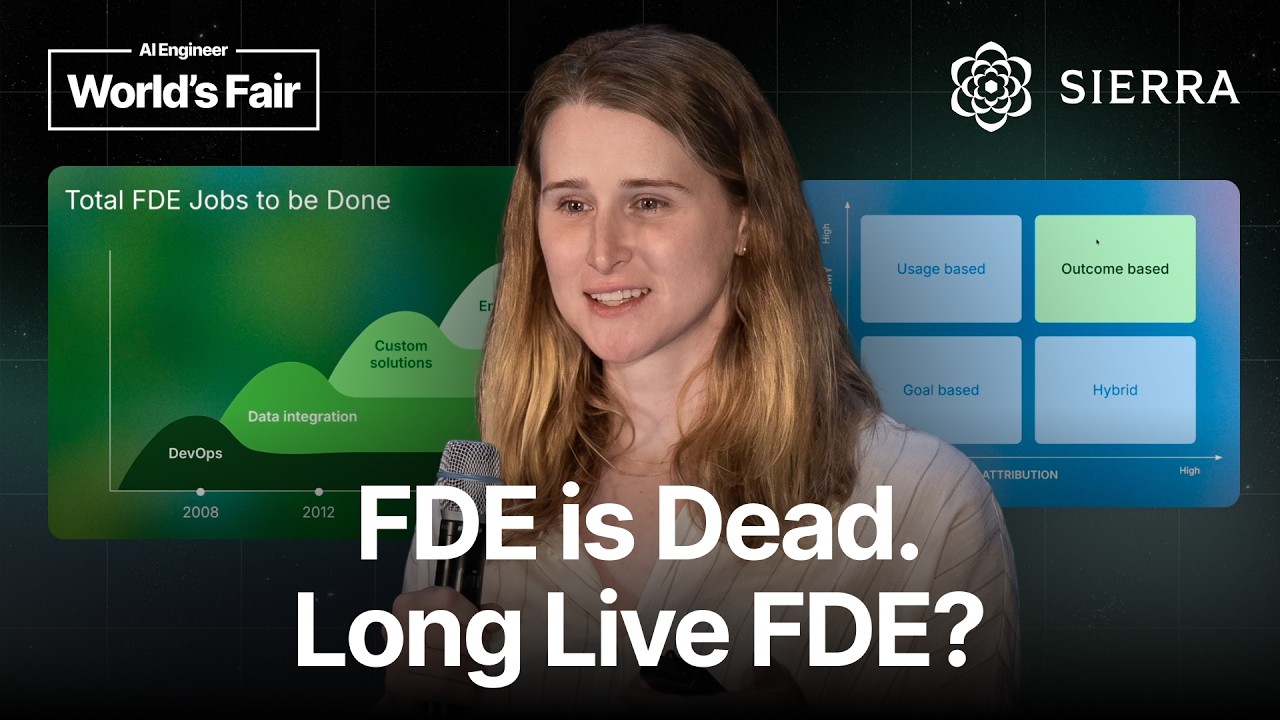
Meurer presented a timeline illustrating the expanding scope of FDE, from platform stability to enablement and beyond. She argued that by 2020-2024, the role of FDE had become so multifaceted that it "doesn't mean anything quite yet, or it means everything." She posited that it serves as an excellent training ground for generalists, contributing to the success of Palantir alumni in founding new companies.

The "dirty secret," Meurer revealed, is that "Forward Deployed Engineering doesn't exist." She elaborated that the term is used to describe so many different things that it has lost its coherent definition. Yet, it remains a highly sought-after position. She aims to convince the audience that this is true, but that "this doesn't matter."

Today, companies like Google are hiring customer engineers, and OpenAI is investing heavily in corporate AI pushes, signaling the widespread recognition of this role. However, Meurer highlighted the sheer breadth of skills now expected of FDEs: "8 years as Staff-level engineer, 6 years direct client-facing sales experience, 4 years as a solution architect, demonstrated ability to prototype quickly with customers, teaching experience, and deep fluency in Python, TypeScript, Java, SQL, APIs, cloud infrastructure, and security reviews." She joked that this is what it feels like to hire for these roles.

Customer Accountability as the Constant

Across all these evolving facets, Meurer identified a single continuity point: customer accountability. Whether it’s for DevOps, enablement, custom solutions, or data integration, FDEs are ultimately accountable to the customer. She then posed a thought-provoking question about the broader impact of cheap code generation on engineering, suggesting that FDEs can now be more impactful in product development by building end-to-end solutions with coding agents.

Meurer also touched upon the shift in software sales, moving towards outcome-based pricing models. While usage-based pricing is common for foundation models, she believes the market will increasingly adopt outcome-based pricing, where payment is tied to the value delivered. This trend, coupled with the enhanced capabilities of FDEs, makes guaranteeing outcomes central to the role.

She concluded by revisiting her earlier vision of agent engineering as a subdiscipline focused on outcomes, but now believes that "everything is forward deployed engineering, or at least everything is trending that way." Product engineering, agent engineering, AI engineering, solutions engineering, and customer engineering all share common threads like customer enablement, DevOps, and solution building. These are all actions taken on behalf of customers, and the pricing should reflect the outcomes achieved. "Forward deployed engineering as a concept," she stated, "even if it is one, sort of lacks a coherent definition, is something that actually allows us to enable those outcomes."

Meurer’s final sentiment was a paradoxical declaration: "Forward deployed engineering is dead. And long live forward deployed engineering." Sierra is actively hiring for FDE roles, and Meurer invited further discussion on the topic.

© 2026 StartupHub.ai. All rights reserved. You may not republish this article in full without a license. Search engines and AI research tools may crawl and summarize for reference. Bulk reproduction or model training requires a license. See our terms.
Daniel Singer

Written by

Daniel Singer

Editor, StartupHub.ai

Daniel Singer is the editor of StartupHub.ai, a technology expert and thought leader on AI and its applications across sectors, from fintech and healthcare to developer tooling and consumer software. He writes and tests the tools covered here thoroughly and regularly, and built StartupHub.ai to give founders, operators and buyers a clearer read on what they are actually being sold.

More from Daniel Singer