

Firework CEO: Post-Training is Key to Unique AI Business

Firework CEO Lin Qiao discusses the strategic importance of post-training AI models to build unique business value and achieve competitive advantages.

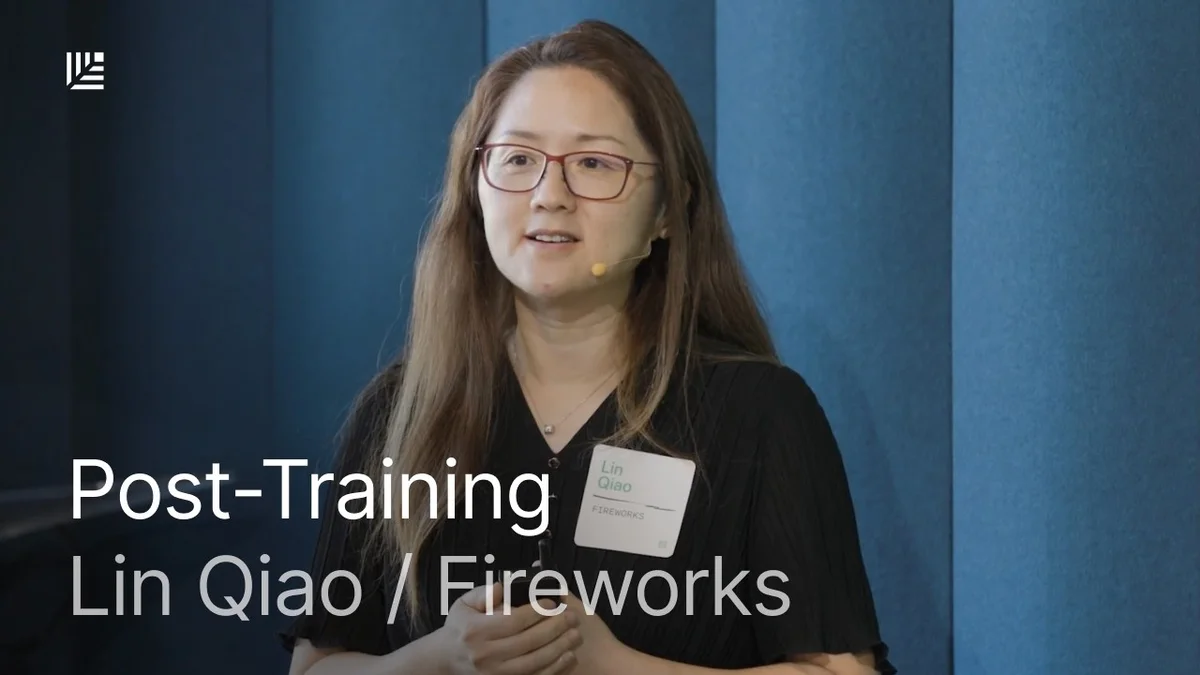
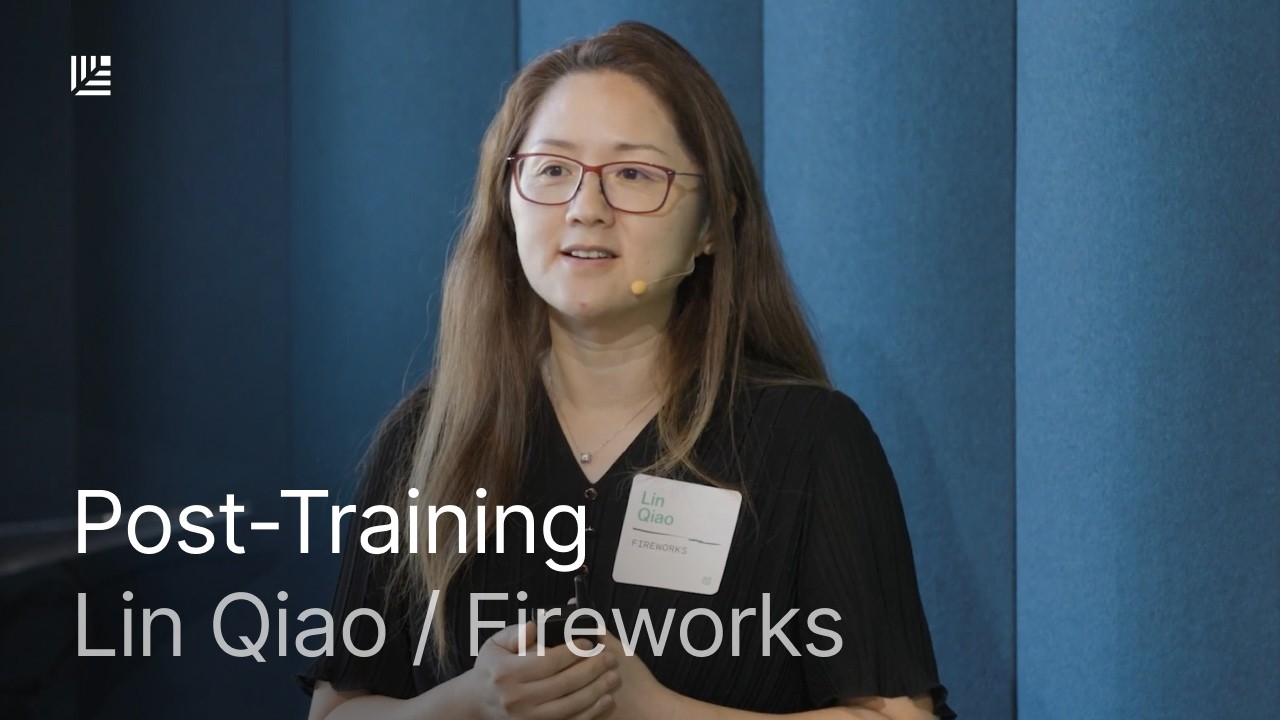
Lin Qiao, CEO of Firework, presenting on post-training AI models.
Sequoia Capital
Visual TL;DR
AI Dev Costs DropDriver
advancements in AI collapsing resource requirements for application development
Off-the-Shelf AIDriver
companies relying on generic APIs for their AI needs, lacking differentiation
From the articleQiao highlighted how the collapsing of resource requirements in application development, driven by advancements in AI, is shifting companies from relying on off-the-shelf APIs to building more deeply differentiated products.
Firework CEO QiaoCore
Lin Qiao emphasizes strategic importance of post-training AI models
From the article 2 mentionsIn a recent talk, Lin Qiao, CEO and co-founder of Firework, a specialized intelligence platform, emphasized the critical role of post-training in building durable AI-powered businesses.
Post-Training KeyContext
critical role of post-training in building durable AI-powered businesses
From the article 3 mentionsQiao also highlighted six common ways teams burn time and money in post-training:
Own IntelligenceEffect
From the article 6 mentionsAnd that means they carry their own judgment, taste, and determination, conviction into that product." Building on this, she believes that companies must bake their unique judgment and customer understanding into the intelligence they build, rather than relying solely on generic APIs.
Avoid PitfallsEffect
prevents common issues arising from generic, undifferentiated AI solutions
Unique Business ValueOutcome
achieve competitive advantages and solve unique problems in special ways
Real-World SuccessOutcome
demonstrates practical applications and benefits of this strategic approach
From the articleFinally, serving these models effectively, through A/B testing and iterative loops, is crucial for success.
Contents(4)

In a recent talk, Lin Qiao, CEO and co-founder of Firework, a specialized intelligence platform, emphasized the critical role of post-training in building durable AI-powered businesses. Qiao highlighted how the collapsing of resource requirements in application development, driven by advancements in AI, is shifting companies from relying on off-the-shelf APIs to building more deeply differentiated products.

Firework CEO: Post-Training is Key to Unique AI Business - Sequoia Capital
Firework CEO: Post-Training is Key to Unique AI Business, Sequoia Capital

Owning Intelligence, Not Renting

Qiao argued that in the current AI landscape, where open models are gaining traction, the depth of an alliance between companies stems from a shared belief in the industry's potential. She stated, "Every single company exists for a reason because they focus on solving a unique problem in a special way. And that means they carry their own judgment, taste, and determination, conviction into that product." Building on this, she believes that companies must bake their unique judgment and customer understanding into the intelligence they build, rather than relying solely on generic APIs.

Owning one's intelligence, according to Qiao, starts with data. This includes curating high-quality production data and generating synthetic data to enrich existing datasets. The next step involves using this data to build models and own the weights, employing a collection of techniques tailored to specific problems. Finally, serving these models effectively, through A/B testing and iterative loops, is crucial for success.

The Post-Training Progression

Qiao outlined a progression for AI development, starting with simple prompting, then moving to Retrieval Augmented Generation (RAG) to ground AI in a company's own data. This is followed by supervised fine-tuning (SFT) or LoRA for teaching format and behavior, preference tuning (like DPO) for personalizing taste and tone, and finally reinforcement learning (RL) for optimizing on a reward signal. She noted that while SFT transfers new knowledge, RL sharpens behavior, and that most teams eventually incorporate RL.

Avoiding Common Pitfalls

Qiao also highlighted six common ways teams burn time and money in post-training:

  • Data quantity over quality: Pristine examples are more valuable than noisy ones.
  • No eval before training: If you can't measure improvement, you can't ship it.
  • Sloppy RL environments: Imperfect training can lead to shortcuts that break in production.
  • Training-serving drift: Small gaps in compounds can lead to significant drift over time.
  • Wrong tool for the job: Fine-tuning is for facts, RL is for behavior.
  • Building the car vs. tuning the engine: Focus on data and reward signals first.

Real-World Successes

Qiao showcased several examples of companies successfully leveraging post-training on Fireworks' platform. Cursor, a coding assistant, has continuously released new models, competing at the frontier of quality. Doximity, a healthcare AI company, topped the Stanford-Harvard clinical safety benchmark. Factory, a security-focused company, tuned a model that excelled in risk detection.

These examples, Qiao emphasized, demonstrate that by focusing on custom data and leveraging open models, companies can build specialized intelligence that outperforms even closed frontier models in quality, cost, and speed.

© 2026 StartupHub.ai. All rights reserved. You may not republish this article in full without a license. Search engines and AI research tools may crawl and summarize for reference. Bulk reproduction or model training requires a license. See our terms.
Daniel Singer

Written by

Daniel Singer

Editor, StartupHub.ai

Daniel Singer is the editor of StartupHub.ai, a technology expert and thought leader on AI and its applications across sectors, from fintech and healthcare to developer tooling and consumer software. He writes and tests the tools covered here thoroughly and regularly, and built StartupHub.ai to give founders, operators and buyers a clearer read on what they are actually being sold.