

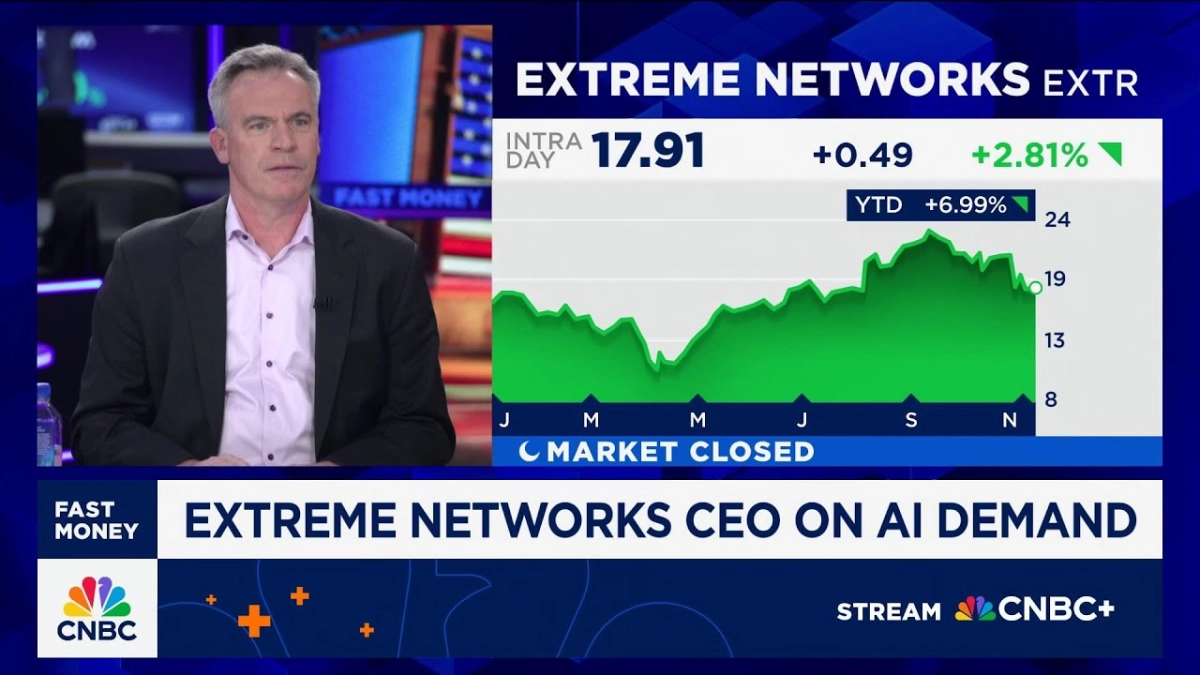
Ed Meyercord, CEO and President of Extreme Networks, recently articulated a clear strategy on CNBC's Fast Money, distinguishing his company's approach to the burgeoning AI market. Speaking from the NASDAQ ahead of Extreme Networks’ Investor Day, Meyercord outlined how the networking solutions provider is not merely riding the wave of AI demand but actively shaping its application within the enterprise, positing their unique position as a significant competitive advantage against industry behemoths.
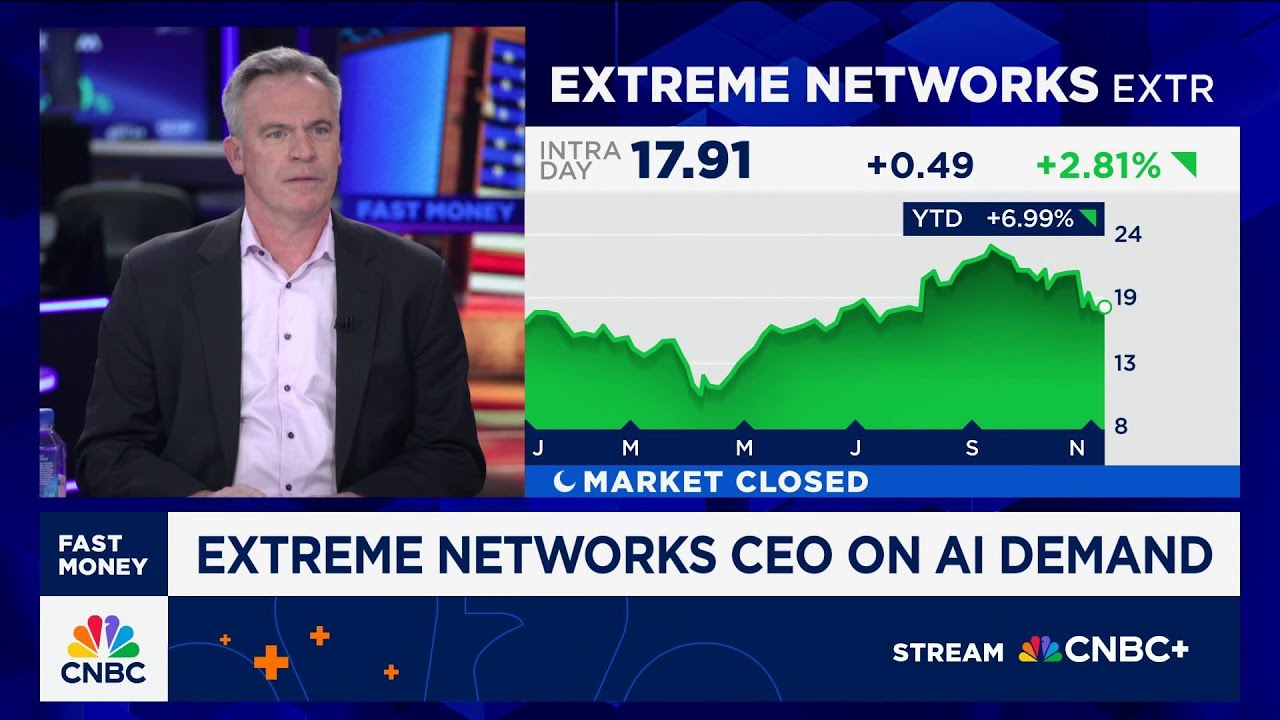
The core of Extreme Networks' strategy, as Meyercord explained to Melissa Lee and the Fast Money panel, lies in its focus on enterprise networking, a segment often overshadowed by the colossal investments in hyperscale cloud and large language model (LLM) data centers. While the "rush to spend billions of dollars by all of these hyperscalers" dominates headlines, Extreme Networks operates on "the other side," applying AI technology directly to the operational fabric of businesses. This distinction is crucial for understanding their market identity and growth trajectory.
Meyercord emphasized that Extreme Networks is "taking AI technology and applying it to enterprise customers trying to deliver the networking experience." This isn't about building the foundational infrastructure for AI models themselves, but rather about enhancing the actual network infrastructure that enterprises rely on daily, leveraging AI for greater security, simplicity, and automation. This targeted application allows Extreme Networks to carve out a specialized niche, offering sophisticated solutions tailored to the immediate operational needs of its diverse client base.
A key insight Meyercord presented was the inherent advantage of their size in this evolving landscape. He stated, "It's actually better to be a smaller player than a larger player," when competing against entrenched giants like Cisco, HP, and Juniper. This agility allows Extreme Networks to innovate and integrate AI into their networking platform more rapidly and cohesively, without the legacy constraints or broad portfolio complexities that often hinder larger corporations. Their ability to deliver the "very first platform for network" infused with AI positions them as a nimble disruptor in a market segment ripe for intelligent automation.
Extreme Networks provides comprehensive enterprise networks, a blend of hardware and software designed for expansive, complex environments. Their customer roster spans across major sectors, including NFL stadiums and Major League Baseball, where they manage high-density Wi-Fi experiences, to the world's largest grocer, Kroger, which operates a private cloud overseeing 2,800 stores on an Extreme network. They also serve governments, education, manufacturing, and healthcare, recently securing a significant deal with the Japanese government by outcompeting Cisco, a testament to their differentiated technology.