

The era of hand-engineered autonomous vehicle systems, once the industry standard, is rapidly giving way to a new paradigm of end-to-end deep learning. This profound shift, dubbed Autonomous Driving 2.0, represents a fundamental re-architecture of how intelligent machines perceive, plan, and navigate the physical world, promising scalability and generalization that eluded its predecessors.
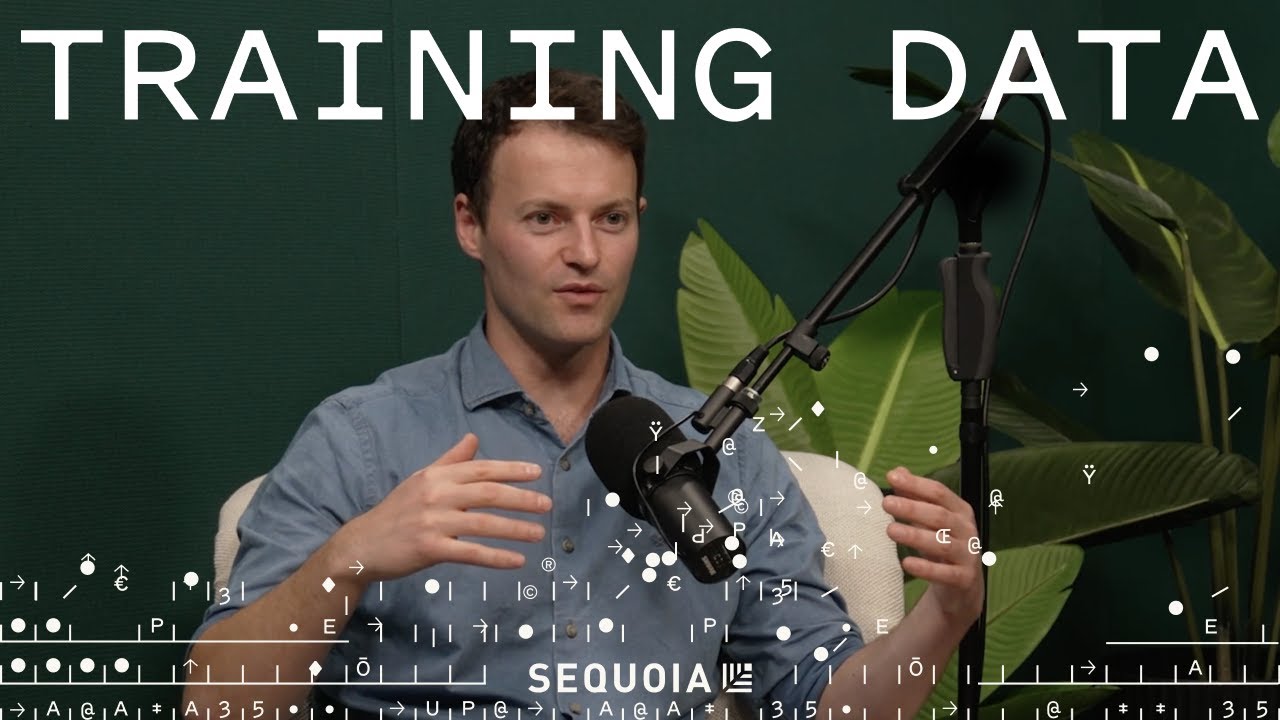
Alex Kendall, CEO of Wayve, recently articulated this transformative vision in an interview with Pat Grady and Sonya Huang of Sequoia. Kendall highlighted the stark contrast between the traditional, modular robotics approach and Wayve's pioneering generalization-first strategy, emphasizing the pivotal role of foundation models and world models in accelerating autonomous capabilities.
In the nascent stages of autonomous vehicle development, the prevailing approach, or AV 1.0, was rooted in classical robotics. Companies meticulously hand-engineered distinct components for perception, planning, mapping, and control. This method, while seemingly logical, created massive C++ codebases, each module painstakingly crafted to address specific scenarios and environments. The inherent complexity and brittleness of this segmented architecture meant that deploying autonomous vehicles required extensive, often prohibitive, re-engineering for every new city or vehicle type, relying heavily on high-definition maps and expensive LiDAR systems.
Wayve, founded in 2017, took a contrarian stance, betting on a unified, end-to-end deep learning network. Kendall explained, "We thought that the future of robots would be intelligent machines that have the onboard intelligence to make their own decisions. And of course the best way we know how to build an AI system is with end-to-end deep learning." This single neural network processes raw sensor data directly to produce driving commands, bypassing the need for explicit, hand-coded rules for every conceivable edge case.
A core insight underpinning Wayve's strategy is the imperative of generalization for scale. The traditional AV 1.0 model struggled to adapt to novel situations or geographies without significant human intervention and re-coding. Wayve's end-to-end approach, conversely, is designed to learn from diverse data, enabling it to generalize across varied environments, vehicle types, and sensor configurations. This allows for rapid deployment and adaptation to new cities and automotive platforms, drastically reducing the time and cost associated with expansion. Kendall emphasized this need, stating, "We need to be able to generalize. We need to be able to amortize our cost over one large intelligence... and to be able to very quickly adapt to each different application that our customers care about." This architectural choice positions Wayve not as a vertically integrated robo-taxi operator, but as an embodied AI foundation model provider for a broad spectrum of automotive OEMs and fleets.