



Visual TL;DR
AI Agent HallucinationsDriver
From the article 9+ mentionsIn the rapidly evolving world of AI, the challenge of agent hallucinations remains a significant hurdle, impacting both operational costs and the reliability of AI applications.
Elizabeth Fuentes LeoneCore
From the article 9+ mentionsElizabeth Fuentes Leone, a Developer Advocate for Amazon (NASDAQ:AMZN) Web Services (AWS) specializing in agentic applications, recently outlined five advanced techniques to combat these issues.
Code-Centric MethodsContext
five advanced techniques beyond prompt engineering for developers
From the articleBy moving beyond prompt-based fixes and integrating these five code-centric techniques, developers can build more reliable, cost-effective, and robust AI agents, ready for real-world production challenges.
Semantic Tool SelectionContext
AI agents choose appropriate tools based on query meaning
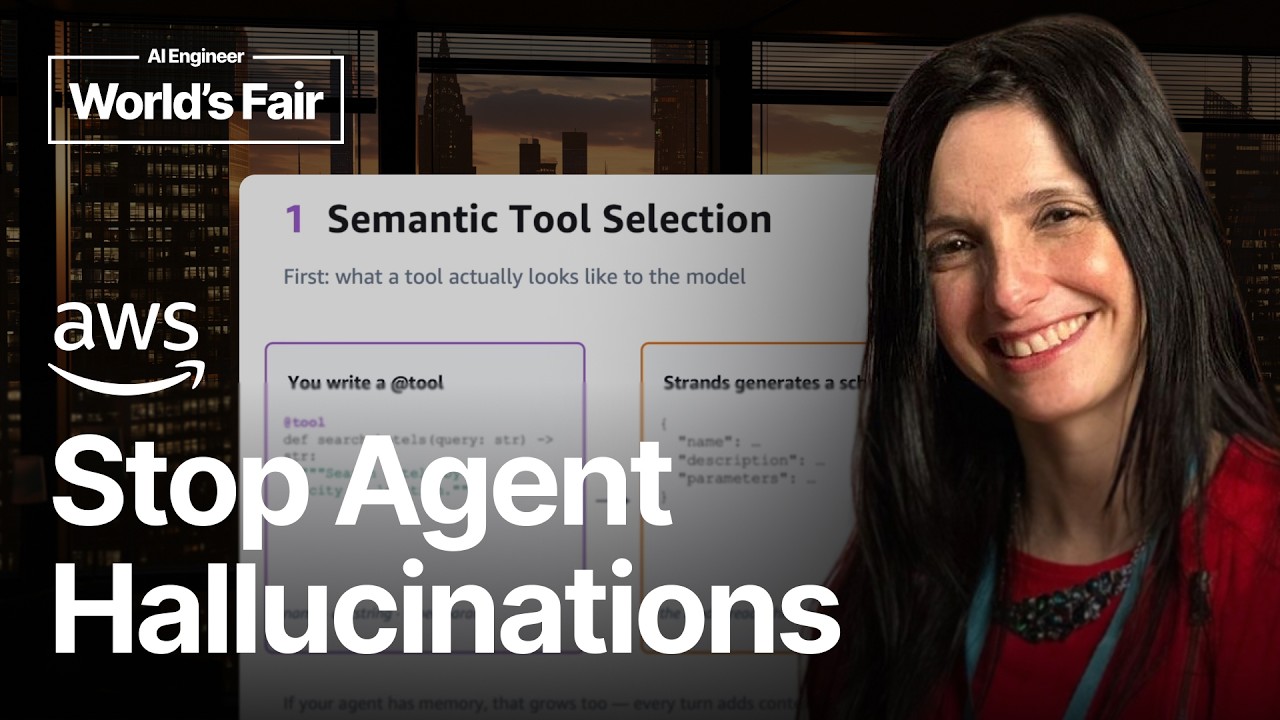
From the article 2 mentionsThe first technique, Semantic Tool Selection, addresses the issue of excessive context window usage.
Graph-RAGContext
retrieval augmented generation using knowledge graphs for precision
From the article 2 mentionsGraph-RAG offers a solution by building a knowledge graph from documents, representing entities and relationships.
Multi-Agent ValidationContext
multiple AI agents cross-verify information for accuracy
From the articleTo counter this, a multi-agent validation system can be implemented.
Neuro-Symbolic GuardrailsContext
combining neural networks with symbolic rules to prevent errors
From the article 2 mentionsNeuro-Symbolic Guardrails achieve this by placing rules in Python code, making them inescapable for the model.
Accurate, Efficient AIOutcome
building more reliable and cost-effective AI agent applications
From the articleHer presentation, aimed at developers and tech enthusiasts, emphasizes code-based solutions over mere prompt engineering, offering practical pathways to building more accurate and efficient AI agents.