

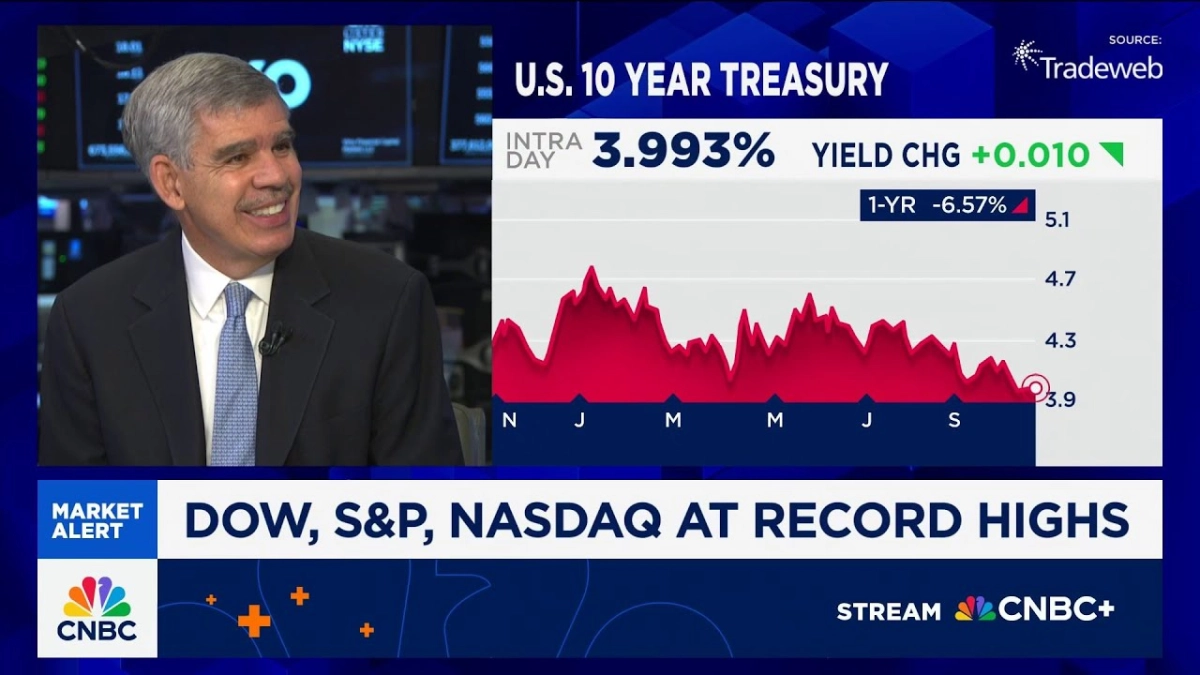
"Some AI names will end up in tears," declared Mohamed El-Erian, Allianz's chief economic advisor, during a recent segment on CNBC's 'Squawk on the Street.' His candid assessment cut through the prevailing market euphoria, offering a nuanced perspective on the artificial intelligence revolution. El-Erian, a former PIMCO CEO, engaged with the program's hosts, providing commentary on the significant disparity between AI-related stock valuations and those of other sectors, the critical need for effective AI diffusion, and the broader societal implications of this transformative technology.
El-Erian views AI as a "major transformational general-purpose technology." He draws a compelling parallel, stating, "It's like electricity; it's going to change so much of what we do." This analogy underscores AI's foundational potential, suggesting it will redefine industries and daily life as profoundly as electricity did over a century ago. This deep impact means that having access to, and effectively utilizing, AI will become a critical differentiator for businesses and nations alike.
Despite this immense potential, El-Erian cautions against unbridled optimism regarding current market valuations. He labels the present investment climate in AI as a "rational bubble." This seemingly oxymoronic term acknowledges the legitimate excitement and real long-term promise of AI, yet highlights a dangerous tendency for over-investment. "It's rational because everybody has an incentive to over-invest in AI because the payoff is so huge," he explained. However, the critical caveat follows: "but you're going to have a relatively limited number of winners." This implies a significant shake-out is inevitable, where many hopeful ventures will falter, unable to convert speculative capital into sustainable value.
The current market disparity, where AI-centric companies soar while others lag, is a direct consequence of this rational bubble. The allure of AI's perceived exponential growth pulls capital into the sector, inflating valuations for even peripheral players. This dynamic, driven by the fear of missing out on the next technological paradigm shift, risks creating substantial losses for those invested in companies that ultimately fail to deliver on their AI promises.
Beyond market mechanics, El-Erian identifies four critical risks that humanity is currently failing to address adequately in the context of AI. The first is the absence of a robust "diffusion policy." He argues, "We don't have a diffusion policy. We should have a better diffusion policy because that's what's going to impact productivity." Without a deliberate strategy to spread AI's benefits across all sectors of the economy and society, the technology's full potential to boost productivity and foster inclusive growth will remain unrealized, leading to concentrated benefits and exacerbated inequalities.