

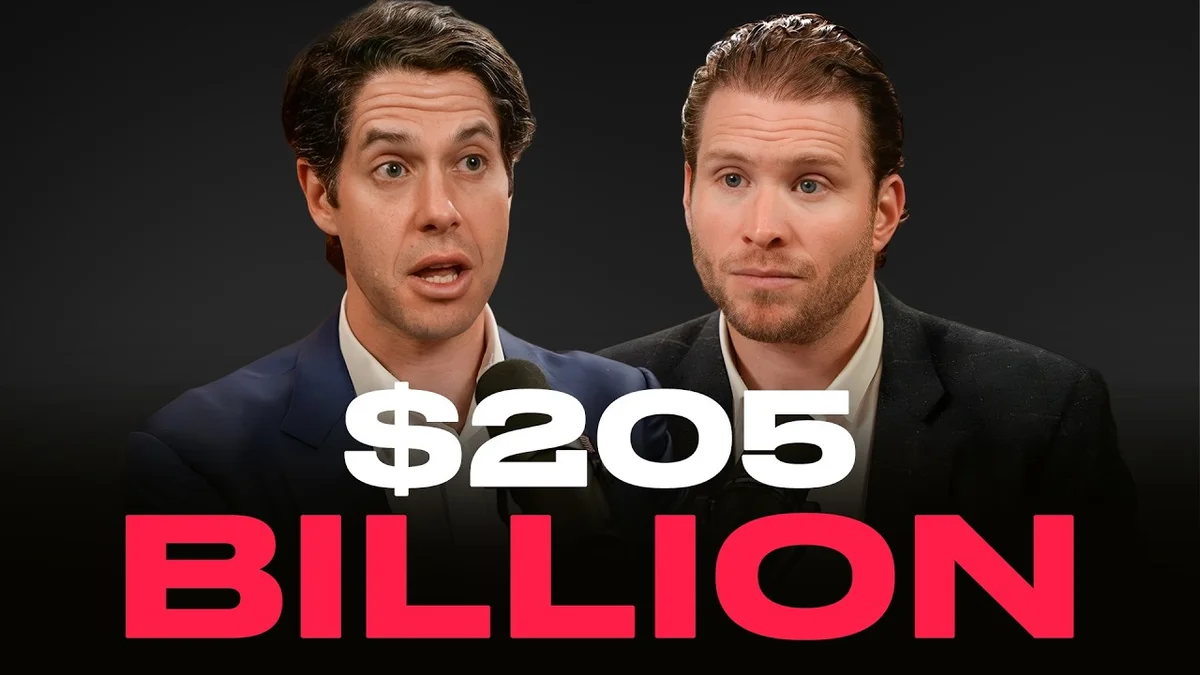
DFC CEO Ben Black: "We Deliver a Return for the US Taxpayer"

DFC CEO Ben Black discusses the agency's $205 billion authorization, its focus on key sectors, and its strategy to foster economic growth through private capital and trusted partnerships.

3 min read
Ben Black, CEO of the DFC, speaking at a round table discussion.
Image credit: Joe Lonsdale· Joe Lonsdale

Ben Black, CEO of the U.S. International Development Finance Corporation (DFC), recently articulated the agency's mission and strategic approach in a discussion highlighting the importance of American economic statecraft and fostering global partnerships. Black, confirmed to lead the DFC last fall, detailed how the organization aims to invest $205 billion to support developing allies and advance U.S. foreign strategic interests, all while delivering a return for American taxpayers.

Background and Vision

Black, whose own background includes a history major at Dartmouth, finance experience at Goldman Sachs, and a JD/MBA from Harvard, shared personal insights into his commitment to service, influenced by his grandfather's military service in World War II. This personal history underscores a broader theme of dedication and sacrifice for the nation.

Related startups

He described the DFC's core mandate as mobilizing private capital to "move the needle for the development of our partners and allies." This approach contrasts with previous models where foreign aid was sometimes seen as simply "shoving money out the door" without clear returns or strategic alignment, potentially fostering dependency and benefiting adversaries.

The full discussion can be found on Joe Lonsdale's YouTube channel.
Running DC Like Wall Street: CEO of America's Investment Fund - Joe Lonsdale
Running DC Like Wall Street: CEO of America's Investment Fund, from Joe Lonsdale

Strategic Investment Pillars

The DFC's investment strategy focuses on three key sectors:

  • Energy: The U.S. is positioned as a major global energy exporter, and the DFC aims to support projects that facilitate the export of U.S. natural gas and LNG.
  • Critical Minerals: Recognizing the importance of secure supply chains, the DFC targets investments in the mining and processing of essential minerals like lithium and cobalt.
  • Technology: The agency supports the development and deployment of advanced technologies, aligning with U.S. interests in innovation and global competitiveness.

A New Approach to Global Engagement

Black emphasized the shift from previous models that sometimes led to significant spending with little oversight or tangible benefit for the U.S. He drew parallels to the Marshall Plan, noting its success in rebuilding economies while also stimulating U.S. industry through the purchase of American goods and services. The DFC, he explained, aims to replicate this by fostering projects that not only support partner nations but also create demand for American exports and expertise.

This strategy involves building infrastructure, such as ports and processing facilities, in partner countries that can then facilitate U.S. energy and mineral exports. By integrating these projects into the local economy, the DFC aims to foster economic growth and create stronger, more reliable partnerships.

Focus on Mutual Benefit and Long-Term Growth

A key differentiator highlighted by Black is the emphasis on private sector principles within the DFC. The agency seeks to operate at the "speed of the private sector," focusing on projects with clear metrics, returns, and long-term potential. This contrasts with a more transactional or aid-based approach that might lack accountability.

Black pointed to the recent successes in Latin America, where new administrations are prioritizing pro-business, pro-growth, and anti-crime initiatives, aligning with U.S. interests. He also cited the agency's work in Rwanda as an example of fostering development through partnerships, noting the country's remarkable recovery and focus on economic growth.

The DFC's approach is not just about financial returns but also about advancing American values, including free markets, property rights, and a commitment to transparency and accountability. By fostering these principles, the agency aims to create a more stable and prosperous global environment, benefiting both its partners and the United States.

© 2026 StartupHub.ai. All rights reserved. Do not enter, scrape, copy, reproduce, or republish this article in whole or in part. Use as input to AI training, fine-tuning, retrieval-augmented generation, or any machine-learning system is prohibited without written license. Substantially-similar derivative works will be pursued to the fullest extent of applicable copyright, database, and computer-misuse laws. See our terms.