

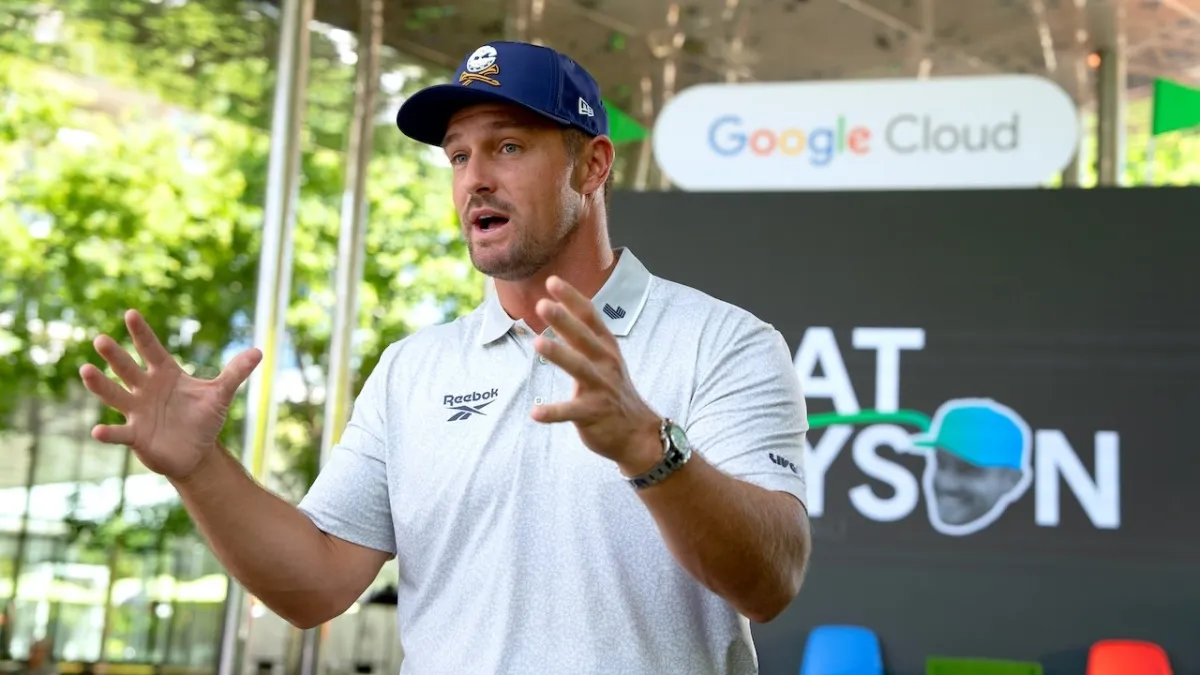
Bryson DeChambeau, golf's self-proclaimed 'Mad Scientist,' is taking his data-driven obsession to a new level, partnering with Google Cloud to leverage artificial intelligence in his quest for peak athletic performance. This isn't just another endorsement deal; it's a significant move that signals a deeper integration of advanced AI into elite sports, pushing the boundaries of what 'AI sports performance' truly means.
DeChambeau, known for his unconventional approach to golf, from single-length clubs to bulking up for distance, has always been an outlier. His collaboration with Google Cloud isn't surprising given his history of meticulously analyzing every variable in his game. What *is* noteworthy is the caliber of the tech partner. Google Cloud brings immense computational power and sophisticated AI/ML capabilities to the table, far beyond what most athletes or even professional teams currently employ.
According to the announcement, the partnership aims to analyze vast datasets related to DeChambeau's biomechanics, swing dynamics, equipment performance, and even environmental factors. This isn't just about tracking a few metrics; it's about building predictive models that can identify minute inefficiencies, optimize training regimens, and potentially even inform real-time strategic decisions on the course. Imagine an AI model that can suggest a specific club or swing adjustment based on current wind conditions, course topography, and DeChambeau's fatigue levels. That's the ambition here.
The immediate focus will likely be on refining DeChambeau's already powerful, yet sometimes inconsistent, game. Google Cloud's AI will parse everything from high-speed camera footage to force plate data, looking for patterns and correlations that human coaches or traditional analytics might miss. This could lead to hyper-personalized training programs, injury prevention strategies, and a more consistent, optimized performance trajectory. It’s a stark contrast to the often anecdotal or experience-based coaching methods prevalent in many sports.
The Broader Implications for AI Sports Performance
This collaboration isn't just a win for Bryson DeChambeau; it's a powerful proof-of-concept for the entire sports industry. If Google Cloud can demonstrably enhance the performance of an elite, data-hungry athlete like DeChambeau, it opens the floodgates for other sports. We've seen AI used in scouting, game strategy, and fan engagement, but its direct application to individual athlete performance at this scale is still nascent.