

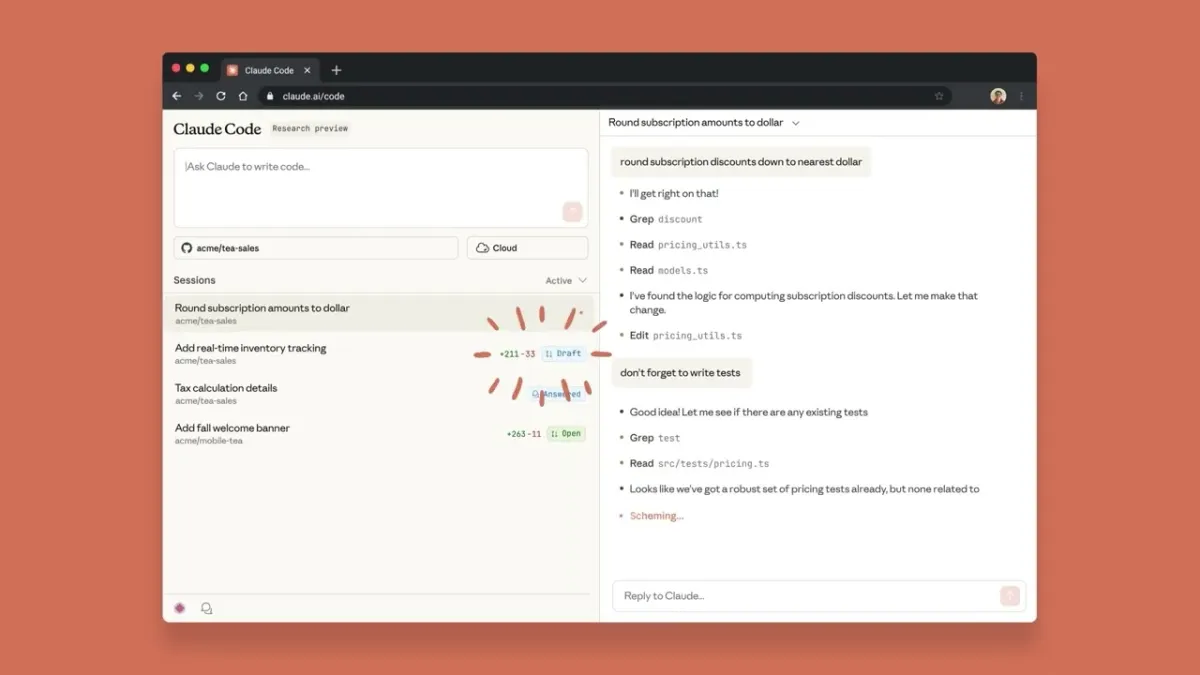
The latest demonstration from Anthropic unveils Claude Code on the web, signaling a profound shift in how routine programming tasks can be delegated and executed. This research preview, showcased in Anthropic's recent video, positions Claude not merely as a coding assistant, but as an autonomous agent capable of understanding, planning, executing, and verifying code changes directly within a browser-based environment, leveraging Anthropic's cloud infrastructure. The core promise is to free developers from the drudgery of bug backlogs and repetitive fixes, enabling a focus on more complex, innovative work.
The video illustrates this capability through a practical scenario. A developer, Nate, receives a Slack message from a colleague, Matt, outlining two pending tasks: "Make the inventory dashboard update in real-time" and "Round subscription discount amounts down to the nearest dollar." Instead of manually diving into the codebase, Nate directs these instructions to Claude Code, providing a GitHub repository as context. This immediate delegation highlights a significant departure from traditional development workflows, where even minor adjustments can consume valuable engineering cycles.
Claude Code’s subsequent actions are particularly insightful. Upon receiving the real-time inventory update request, the system embarks on a structured process. It first states, "Starting Claude Code...", then proceeds to "Read Dashboard.tsx" and "base.ts," indicating an initial understanding of the project's structure and relevant files. A crucial step follows: "I can see you're using React with a modular component structure. Let me check the API setup." This suggests not just file parsing, but a contextual comprehension of the tech stack and architectural patterns, a hallmark of sophisticated AI reasoning. The system then identifies a specific technical requirement, noting, "Found your REST endpoints. I'll need to add WebSocket support for real-time updates," before indicating its intention to "Edit TeaInventory.tsx." This sequence demonstrates a clear planning phase, moving from problem identification to solution strategizing and targeted code modification.
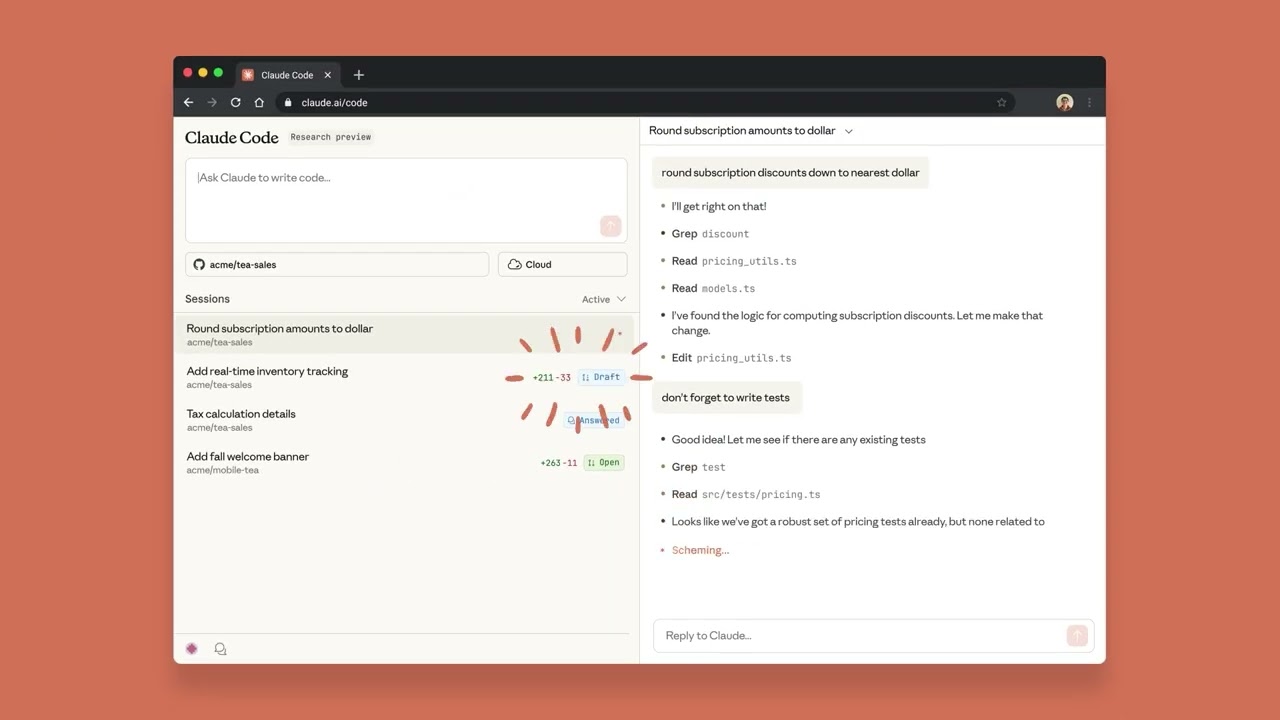
The true power of this autonomous agent emerges in its ability to handle multiple, distinct tasks concurrently or sequentially, and to respond dynamically to user input. While working on the inventory update, Nate inputs the second task: "Round subscription discounts down to nearest dollar." Claude Code acknowledges this with "I'll get right on that!" and initiates a similar process of discovery and modification, including "Grep discount," "Read pricing_utils.ts," and "models.ts," leading to the conclusion, "I've found the logic for computing subscription discounts. Let me make that change." This parallel processing capability points to a future where engineering teams can offload a significant volume of low-to-medium complexity tasks, accelerating release cycles and reducing bottlenecks.
A pivotal moment in the demonstration occurs when Nate, acting as a human supervisor, reminds Claude Code, "don't forget to write tests." The AI’s response, "Good idea! Let me see if there are any existing tests," followed by "Grep test" and a subsequent plan to add new tests, underscores its capacity for iterative refinement and adherence to best practices. This interaction highlights that Claude Code is designed to augment, rather than replace, human oversight, providing an intelligent partner that can be guided and corrected. It learns from feedback and integrates critical development steps, such as testing, into its workflow.