


China's AI Models Challenge US Dominance in Cost and Use

Bloomberg's Luz Ding discusses how Chinese AI models are rapidly gaining ground on US counterparts in usage and cost, offering compelling value and accessibility.

7 min read
Bloomberg reporters discussing the AI race between the US and China, with a guest reporter on screen.
Bloomberg Podcast
Visual TL;DR
China AI ModelsCore
rapidly gaining ground on US counterparts in usage and cost-effectiveness
From the article 9+ mentionsThe global AI race is heating up, with China rapidly closing the gap on the United States in key areas like model usage and cost-effectiveness.
Cost-EffectivenessDriver
offering compelling value and accessibility, appealing to a wider range of users
From the articleThe global AI race is heating up, with China rapidly closing the gap on the United States in key areas like model usage and cost-effectiveness.
Moonshot k m k threeCore
From the article 3 mentionsOriginally separated by over a year in development timelines, this gap has reportedly shrunk to just a few months, particularly following advancements like China's Moonshot k m k three model release in July.
Narrowing GapContext
development timeline gap shrunk from over a year to just a few months
From the article 3 mentionsAccording to StartupHub.ai data, while OpenAI holds a strong StartupHub score of 86/100, the performance gap is indeed narrowing.
Global Usage SurgeEffect
Chinese models seeing a surge in global usage via major AI access platforms
From the article 2 mentionsChinese AI models are seeing a surge in global usage.
Performance BenchmarksContext
From the article 5 mentionsThis progress is evident in benchmarks measuring coding, scientific reasoning, and general ability.
US Dominance ChallengedOutcome
China's AI models challenge US dominance in cost and use, heating up the race
Sector-Specific AdoptionEffect
models show strong performance and adoption in specific industry sectors
From the articleChinese models are increasingly demonstrating their viability, particularly in terms of cost and accessibility, which could reshape the future of AI adoption worldwide.
IPO RaceContext
fierce competition extends to the IPO race and market dynamics
From the articleThe global AI race is heating up, with China rapidly closing the gap on the United States in key areas like model usage and cost-effectiveness.
Contents(6)

The global AI race is heating up, with China rapidly closing the gap on the United States in key areas like model usage and cost-effectiveness. Luz Ding, a Bloomberg News Tech Reporter, shared insights from a deep dive into this fierce competition, highlighting how Chinese AI models are becoming increasingly competitive and appealing to a wider range of users.

The Narrowing Gap in AI Capabilities

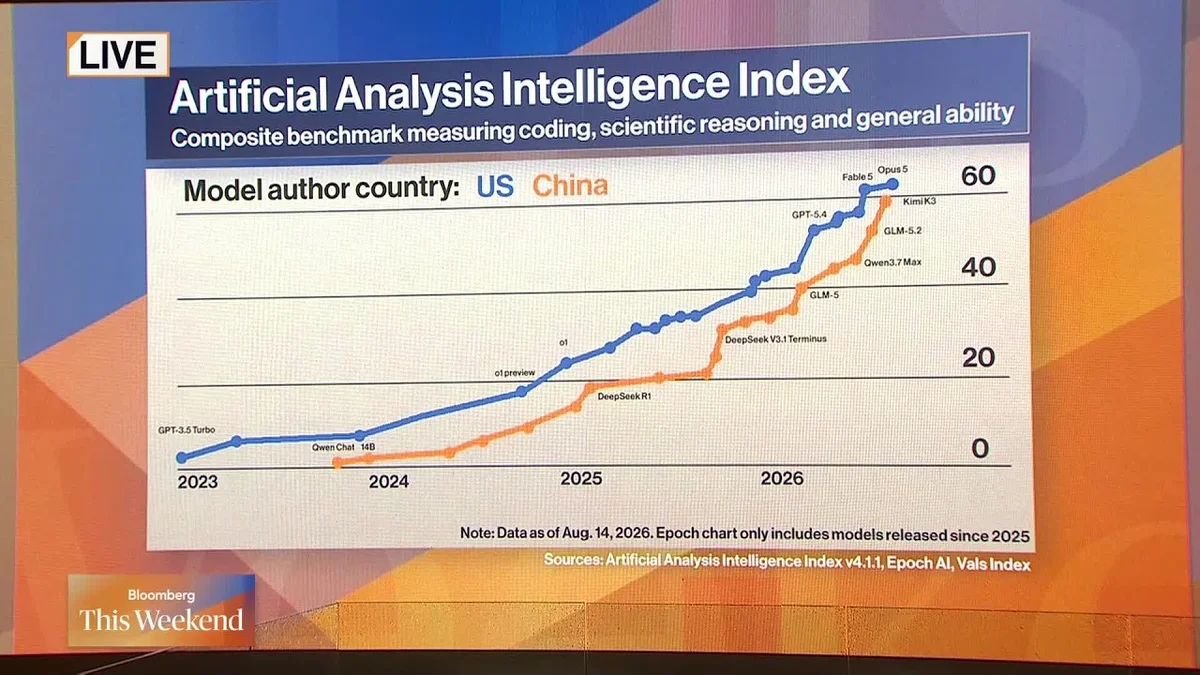
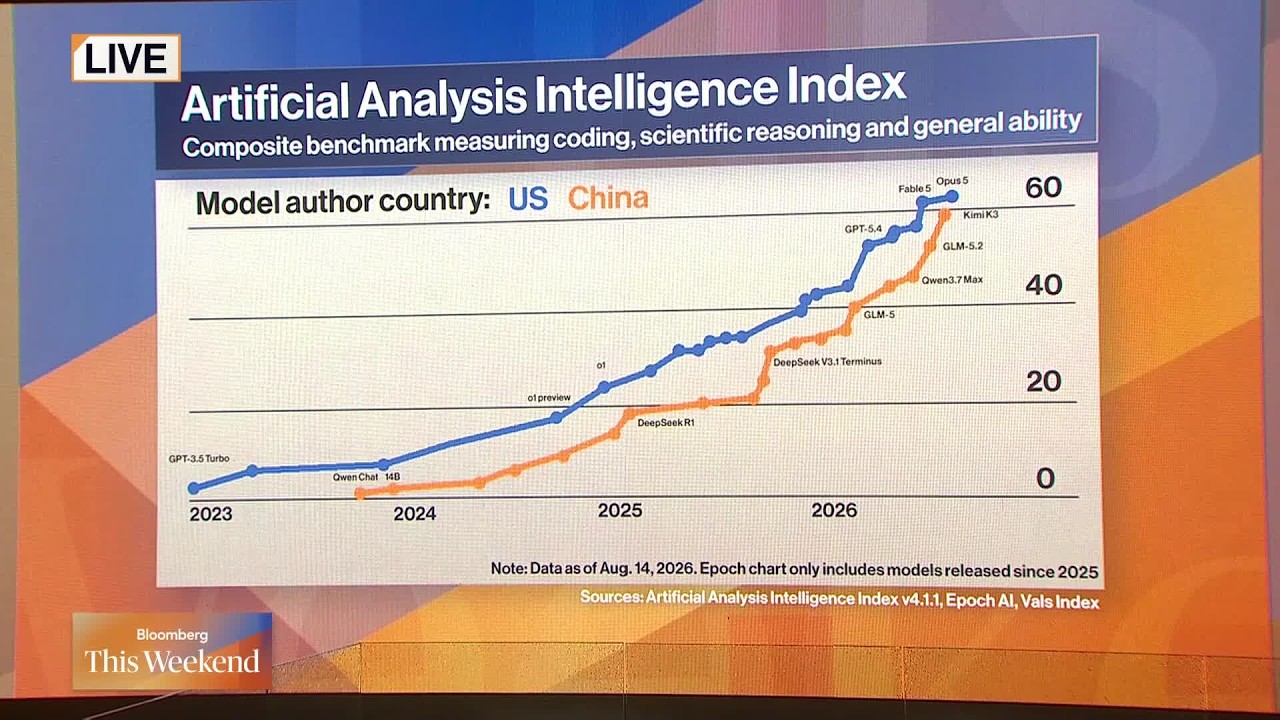
The data presented indicates a significant convergence in the performance of leading AI models from both the US and China. Originally separated by over a year in development timelines, this gap has reportedly shrunk to just a few months, particularly following advancements like China's Moonshot k m k three model release in July. This progress is evident in benchmarks measuring coding, scientific reasoning, and general ability.

Global Usage and Accessibility

Chinese AI models are seeing a surge in global usage. Data from Open Router, a major AI access platform, shows that Chinese models accounted for over 60% of usage in July, surpassing US models for the first time on that platform. A key factor contributing to this trend is the open-weight nature of many top Chinese models. This means they can be downloaded, modified, and deployed locally, even by companies in the US or Canada, without necessarily sending data to China. This accessibility and flexibility make them attractive options.

The full discussion can be found on Bloomberg Podcast's YouTube channel.

Chinese AI Models Gain Ground on US AI in Price and Use - Bloomberg Podcast
Chinese AI Models Gain Ground on US AI in Price and Use, from Bloomberg Podcast

Cost-Effectiveness as a Differentiator

A significant advantage for Chinese AI models lies in their cost. In a practical test where models were tasked with creating a fictional e-commerce website, a Chinese model like Kimi k three was able to produce a functional site for a quarter of the price of a US model. While a sophisticated website from Anthropic's model, Fable five, cost around $50, a similar output from Kimi k three was achievable for under $5, especially if slightly longer wait times were acceptable. This price disparity makes Chinese models highly appealing for cost-conscious developers and businesses.

Sector-Specific Performance and Adoption

While US models often lead in specific, highly demanding categories, Chinese models are demonstrating strong performance across various sectors. The research indicates that Chinese models are more prevalent in the top rankings for finance services. Their combination of capable performance and significantly lower pricing is making them an irresistible choice for many companies. Notably, several major US tech companies, including Airbnb, DoorDash, and Coinbase, are reportedly adopting these Chinese AI solutions.

The IPO Race and Market Dynamics

The discussion also touched upon the implications of this competition for US AI giants like OpenAI and Anthropic as they prepare for potential IPOs. While these companies continue to lead in developing the most capable models and are generating substantial revenue, the growing accessibility and affordability of Chinese alternatives present a new market dynamic. Chinese models are carving out a niche by serving smaller companies and markets in developing countries that may not be able to afford the premium pricing of US-developed AI, thus expanding their global reach.

According to StartupHub.ai data, while OpenAI holds a strong StartupHub score of 86/100, the performance gap is indeed narrowing. Chinese models are increasingly demonstrating their viability, particularly in terms of cost and accessibility, which could reshape the future of AI adoption worldwide.

Frequently Asked Questions

What is DeepSeek and why has it gained attention in the AI community?

DeepSeek is a suite of large language models developed in China. It has garnered significant attention due to its strong performance, often rivaling or exceeding that of leading Western models on various benchmarks. This has contributed to discussions about the increasing competitiveness of Chinese AI development.

Are there concerns about China's AI models being used for illicit activities, such as data theft?

There have been accusations of AI theft operations involving Chinese entities and Western AI models. These allegations suggest attempts to extract proprietary information and capabilities from AI systems. Such incidents raise questions about intellectual property protection and the ethical development of AI.

What is the impact of US export restrictions on China's AI hardware capabilities?

US restrictions on advanced AI chip exports have significantly reduced Nvidia's market share in China. In response, Chinese companies are developing domestic AI chips to circumvent these limitations. This has led to a substantial shift in the supply chain for AI hardware within China.

How is China leveraging AI for its data infrastructure and automation?

China is undertaking a massive buildout of AI data centers, signaling a significant investment in its AI infrastructure. Additionally, industries like automotive manufacturing are adopting AI and automation to enhance efficiency, with examples showing reduced staffing needs and increased production output.

Is China attempting to influence foreign elections using AI-generated content?

Reports indicate that China is utilizing AI to enhance its capabilities in spreading disinformation and fake news, particularly in the context of foreign elections. This raises concerns about the potential for AI to be used as a tool for geopolitical influence operations.

© 2026 StartupHub.ai. All rights reserved. Do not enter, scrape, copy, reproduce, or republish this article in whole or in part. Use as input to AI training, fine-tuning, retrieval-augmented generation, or any machine-learning system is prohibited without written license. Substantially-similar derivative works will be pursued to the fullest extent of applicable copyright, database, and computer-misuse laws. See our terms.