

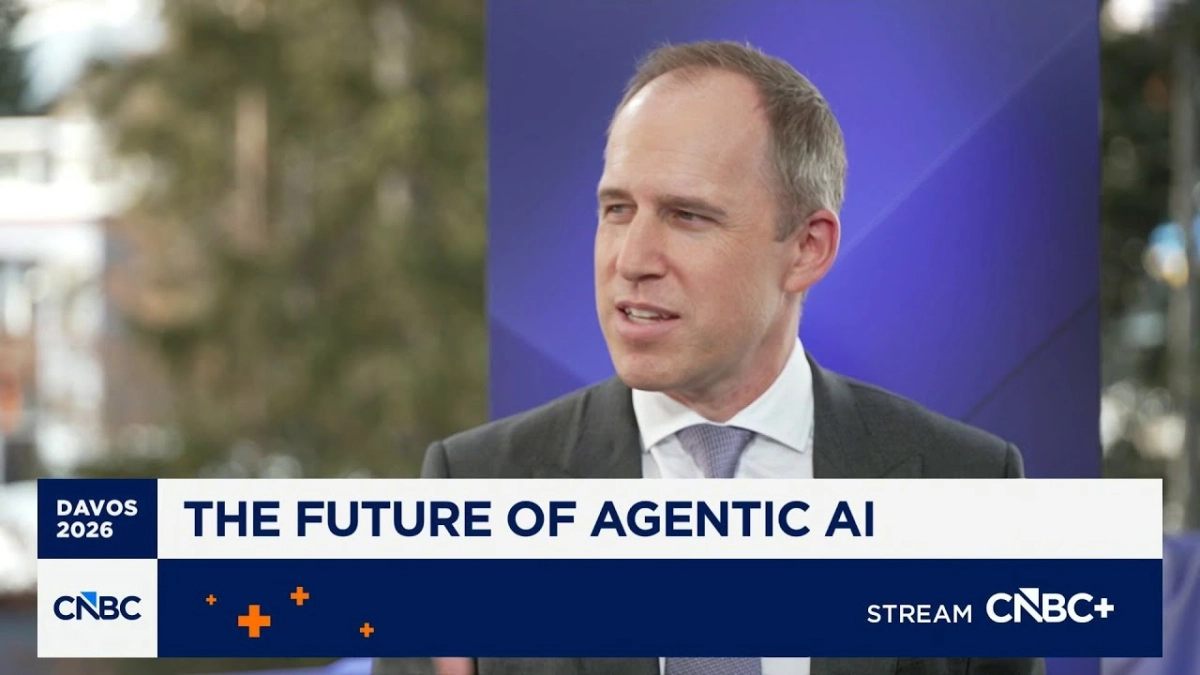
Bret Taylor, co-founder and CEO of Sierra and Chairman of the OpenAI board, recently characterized the current state of artificial intelligence as being akin to the internet in 1996. Speaking with CNBC’s Squawk Box panel at the World Economic Forum in Davos, Taylor articulated an optimistic, yet sober, view of the AI revolution, emphasizing that while the technology’s transformative potential is self-evident, the infrastructure, regulatory landscape, and practical applications are only just beginning to mature. He positioned the immediate future of AI not in generalized models alone, but in specific, applied solutions that solve complex enterprise problems.
The discussion quickly moved past the hype cycle to focus on tangible adoption, a crucial point for investors and corporate leaders seeking returns on massive AI investments. Taylor noted that enterprise customers are not necessarily looking to build their own foundational models; they are seeking "solutions to problems." This pivot from foundational model development (the domain of giants like OpenAI and Google) to applied AI is where Taylor sees immediate and scalable value creation. He highlighted two early areas of explosive growth: software engineering (citing tools like OpenAI’s Codex and companies like Cursor) and customer service, the area where his company, Sierra, is focused on deploying advanced conversational agents.
Taylor’s perspective on the enterprise market suggests that real productivity gains will come from automating mundane, repetitive, yet crucial business processes. He pointed to examples like legal contract review and Know Your Customer (KYC) procedures in banking, noting that while these tasks "intellectually aren’t hard," they become massive undertakings if a company has to build the automation from scratch. The true innovation, he argued, lies in startups providing off-the-shelf, specialized AI agents that integrate directly into existing enterprise systems. Sierra, for instance, is already handling over a million outbound calls monthly for clients like Rocket Mortgage, demonstrating that agentic AI is moving rapidly from proof-of-concept to massive operational scale.
This focus on agentic AI, autonomous systems capable of executing multi-step business processes, represents a fundamental shift in how enterprise software is conceived. Taylor described the key change: "The atomic unit of an AI agent is actually a process." Unlike traditional systems of record or engagement, agents act as intelligent automation layers that span departments and legacy platforms, redefining workflows entirely. This level of integration creates significant switching costs and defensibility for applied AI companies, contrasting sharply with the consumer market where users might jump easily between foundational models like ChatGPT and Gemini.
When asked about the widespread concern that the current AI boom might be a bubble, Taylor admitted that the vast influx of capital into the ecosystem is creating messy competition, but he argued that this chaos is necessary for progress. He explained: "You end up with too many competitors at every layer of the stack... I don't think you can get innovation without that kind of messy competition." He anticipates a period of consolidation and correction over the next few years, where the free market will ultimately determine which products deliver the most value and possess the strongest moats. For enterprise AI vendors, these moats are built not just on proprietary models, but on deep integration into core business processes and specialized domain expertise, a far more defensible position than consumer-facing applications.