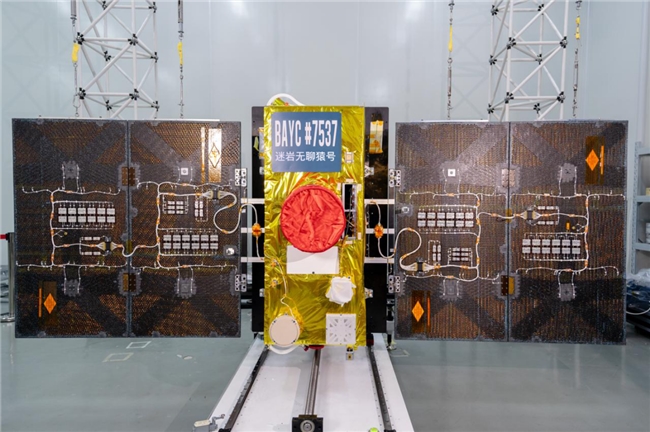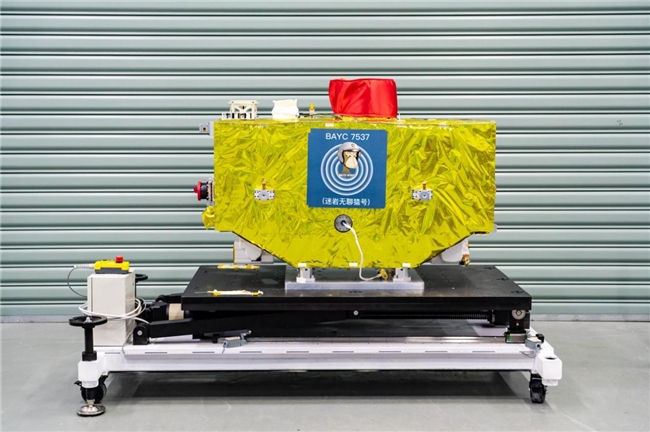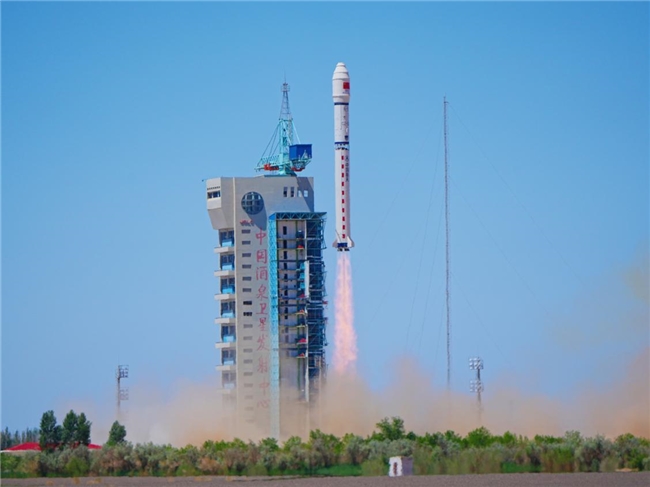
LONDON, May 21, 2025 (GLOBE NEWSWIRE) -- On May 14, 2025, 12:12 p.m. (Beijing Time), Adaspace successfully launched 12 satellites of the Space Computing Constellation 021 Mission from Jiuquan Satellite Launch Center through the Long March 2D launch vehicle. The successful entry of the satellites into the intended orbit marks the successful launch of the world's first space computing constellation, which will open a new chapter of the global "space computing era". Space Computing Constellation 021 Mission is not only the first constellation of "Star-Compute" program initiated by Adaspace, but also the first constellation of "Three-Body Computing Constellation" of Zhejiang Lab. The constellation consists of 12 computing satellites in one orbit invested by different entities and developed by Adaspace. The launch and orbiting of BAYC#7537 computing satellite marks Web3's transformation from the virtual economy to the space computing network.
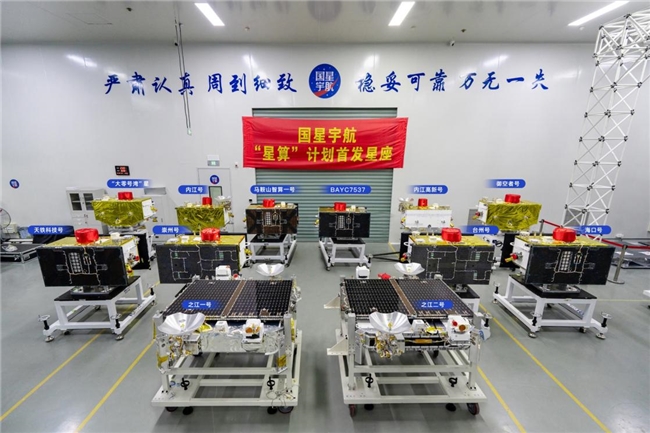
According to the introduction, the "protagonist" of this launch consists of 12 computing satellites in one orbit invested by different entities and developed by Adaspace, including Neijiang (Star Era-27), Neijiang High-Tech (Star Era-28), Taizhou (Star Era-29), Haikou (Star Era-30), Ma'anshan Intelligent Computing-1 (Star Era-31), Chongzhou (Star Era-32), Tiantie Technology (Star Era-33), BAYC #7573 (Star Era-34), Yukongzhe (Star Era-35), "Grand Neobay"(Star Era-36), Zhejiang-1 (Star Era-37) and Zhejiang-2 (Star Era-38). After the assembly of 12 satellites in one orbit, the on-orbit verification and application of the basic functions of space-based computing, such as chain building, networking and cloud formation, will be finished through interstellar laser high-speed interconnection, stable constellation networking and distributed computing management.

What is a computing constellation? In the past, satellites were only used for communication, navigation and remote sensing. Computing satellites are defined as the fourth type of satellites, which will become the basis of the first three satellites, and then form a new network system called computing constellation through the interconnection of satellites.
According to Wang Jian, academician of Chinese Academy of Engineering and director of Zhejiang Lab, the constellation can raise the computing power of a single satellite from level T to level P and realize interconnection between satellites like the Internet connects different computers together. "The construction of space computing constellation enables the single satellite to be of greater value and has far-reaching implications for the transformation of the aerospace industry."