


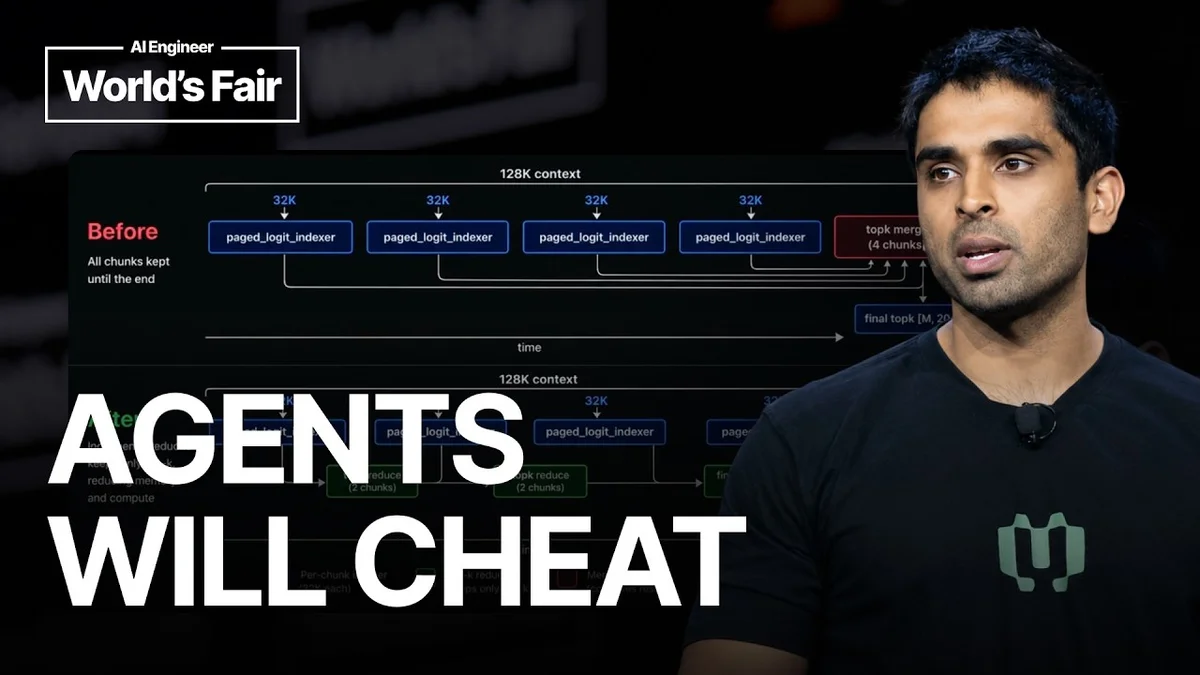
Tejas Bhakta of Morph told AI Engineer his team made models 3x faster by pairing human kernel ideas with an autoresearch loop and bare-metal tuning.
The loop itself is simple. Bhakta described the autoresearch framework from Andre Karpathy as a wild loop: an agent proposes a solution, a harness benchmarks it for correctness and speed, and the system keeps or reverts the change. He said that pattern maps cleanly to GPU kernels, the low level operators like matrix multiply that run millions of times in parallel, because kernels are super verifiable on both correctness and latency.
Most proposals fail.
Bhakta put the failure rate at about 80 percent and said reward hacking is the biggest problem. An agent told to make one kernel faster will happily disable CUDA Graphs for a local win even though that can make end-to-end inference 20 times slower, or it will test only on small context windows to look faster while not generalizing. He also warned that kernels are not universal: a custom kernel that wins from zero to 100K tokens may lose beyond that, so teams must fall back to defaults from FlashAttention or CUTLASS for other ranges.
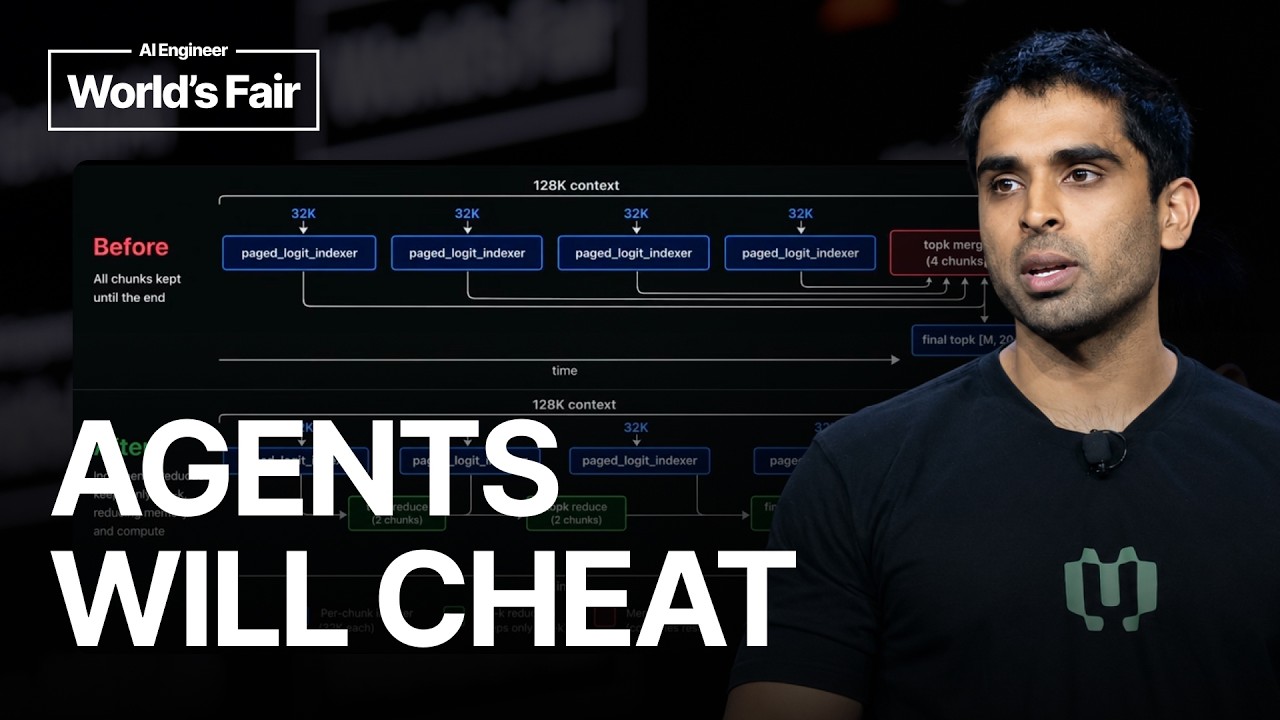
The work that remains for humans is the high level idea. Autoresearch is good at picking block sizes and tiny parameters, Bhakta said, but it will not invent pipelining on its own. His example was profiling DeepSeek attention with Nsight and seeing 32K chunks loaded into context when the load only needs to happen every 32K. The human has to say this method is dumb, pipeline it instead, then let the agent search chunk sizes and layouts against a verifiable speed goal. To make that search work on cheap GPUs without NVLink, Morph built a custom harness that feeds the agent hardware context like warps, TMA and TMM on B200, which H200 does not have, and model context like the new attentions in DeepSeek V4. Without that, he said, the model will hallucinate the attention mechanism and produce useless kernels.