


How Claude AI Handles Long-Horizon Agentic Tasks

Anthropic's Lance Martin discusses building agent harnesses for Claude to reliably perform complex, long-horizon AI tasks.

7 min read
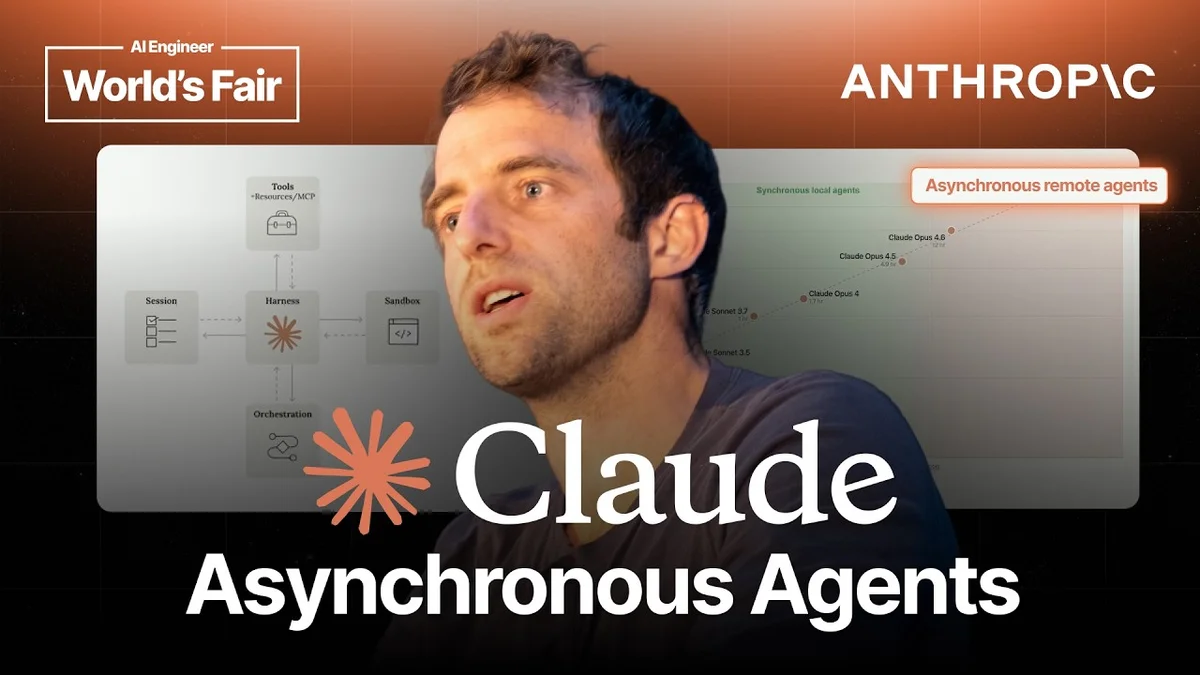
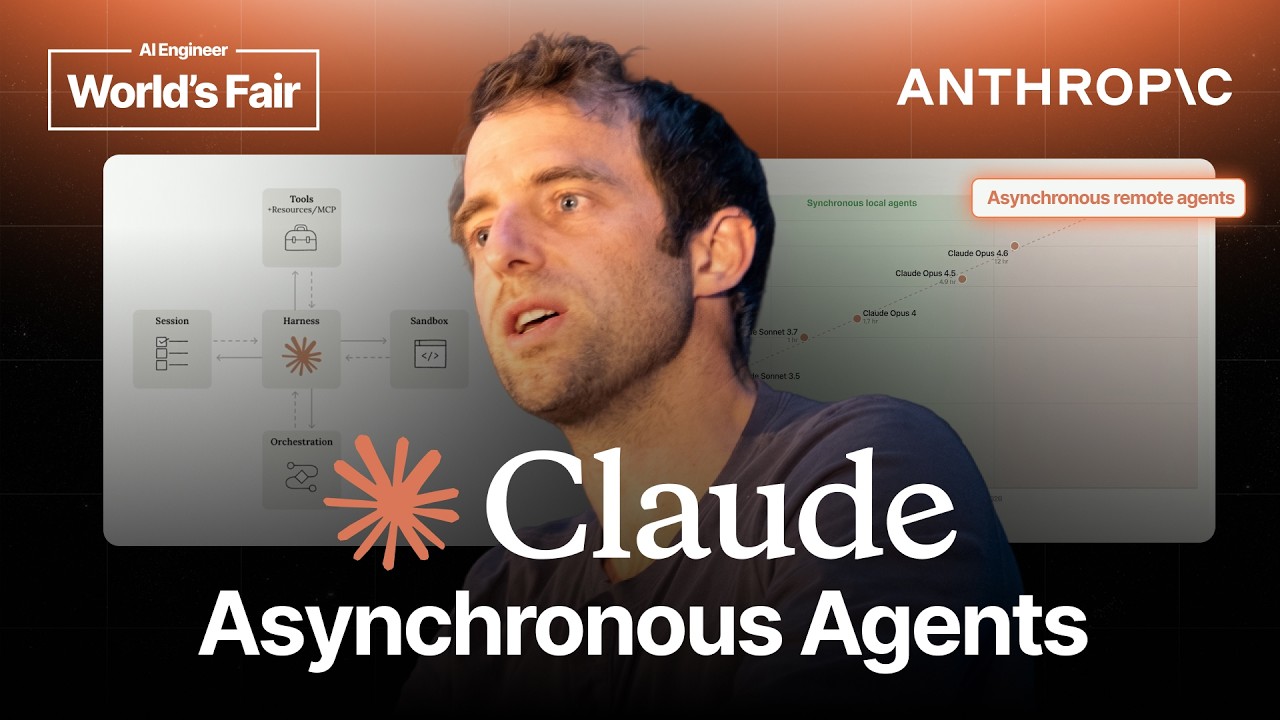
Lance Martin speaking at a conference about Anthropic's Claude AI capabilities.
AI Engineer
Visual TL;DR
Long-Horizon AI TasksDriver
From the article 9+ mentionsLong-horizon tasks in AI refer to complex projects that require an agent to perform a sequence of actions over an extended period, often involving multiple steps, planning, and adaptation.
Anthropic's ClaudeCore
AI agent pushing boundaries of what AI agents can achieve reliably
From the article 9+ mentionsIn a recent talk, Anthropic engineer Lance Martin shared the lessons behind building reliable agent harnesses for Claude: the scaffolding that lets the model execute complex, multi-step workflows without requiring human input at every step.
Complex ProjectsContext
managing workflows, conducting research, developing software over time
From the article 7 mentionsLong-horizon tasks in AI refer to complex projects that require an agent to perform a sequence of actions over an extended period, often involving multiple steps, planning, and adaptation.
Agent HarnessesCore
developed for dependable and secure execution of extended AI operations
From the article 9+ mentionsThe core of Anthropic's work, as presented by Lance Martin, revolves around building what are termed "agent harnesses." These harnesses act as frameworks or scaffolding that support and manage the AI agent's operations.
Reliable PerformanceEffect
ensuring coherence, accuracy, and security throughout multi-stage projects
From the article 2 mentionsClaude's agent harness approach, described by Anthropic engineer Lance Martin, has since informed a wave of industry frameworks for reliable long-running AI tasks.
Lance Martin InsightsContext
shared valuable lessons learned regarding agent harness development
From the article 4 mentionsThe approach, discussed by engineer Lance Martin, focuses on reliability first: the harness ensures Claude can complete complex work consistently without introducing unintended side effects or losing context mid-task.
More Capable AIOutcome
AI systems handling multi-stage, complex projects with sustained effort
From the articleAgentic AI systems capable of handling complex, multi-step work have become one of the most competitive frontiers in AI development.
Contents(4)

Claude AI agentic tasks are emerging as the defining test of practical AI capability in 2026. In a recent talk, Anthropic engineer Lance Martin shared the lessons behind building reliable agent harnesses for Claude: the scaffolding that lets the model execute complex, multi-step workflows without requiring human input at every step. StartupHub.ai analysis gives Anthropic an AI quality score of 96 out of 100, the highest rating among foundation model providers we track, reflecting the maturity of its safety and reliability engineering. That score points to something real: when it comes to long-horizon agentic work, Claude's architecture and tooling are demonstrably ahead of the field.

How Claude AI Handles Long-Horizon Agentic Tasks - AI Engineer
How Claude AI Handles Long-Horizon Agentic Tasks, from AI Engineer

Agentic AI systems capable of handling complex, multi-step work have become one of the most competitive frontiers in AI development. Anthropic has been among the most aggressive investors in this area: StartupHub.ai data shows Anthropic scoring 76/100 in our startup tracker, among the highest ratings across foundation model labs we follow, reflecting its continued research output and safety-first approach to agent deployment. Claude's agent harness approach, described by Anthropic engineer Lance Martin, has since informed a wave of industry frameworks for reliable long-running AI tasks.

Understanding Long-Horizon Tasks

Long-horizon tasks in AI refer to complex projects that require an agent to perform a sequence of actions over an extended period, often involving multiple steps, planning, and adaptation. These tasks are distinct from simple, single-action requests. They might include, for example, conducting extensive research, managing a complex workflow, or even developing a piece of software over time. The challenge lies in maintaining coherence, accuracy, and security throughout the entire duration of the task, preventing errors or drift.

Building Reliable Agent Harnesses

The core of Anthropic's work, as presented by Lance Martin, revolves around building what are termed "agent harnesses." These harnesses act as frameworks or scaffolding that support and manage the AI agent's operations. For long-horizon tasks, these harnesses are crucial for ensuring reliability and security. This involves developing mechanisms for error detection, correction, state management, and secure execution of actions. The goal is to create an environment where an AI agent, like Claude, can operate effectively and safely over prolonged periods without human intervention for every step.

Martin's discussion highlights the practical challenges and solutions Anthropic has encountered. This includes strategies for breaking down large tasks into manageable sub-tasks, ensuring that Claude can maintain context and a clear objective throughout the process, and implementing safeguards to prevent unintended consequences or security breaches. The development of these harnesses is key to unlocking the full potential of advanced AI models for real-world applications that demand persistence and sophisticated task management.

Claude's Built-In Browser: Agent Harnesses Move to the Desktop

As of late August 2026, Anthropic shipped a built-in browser directly into the Claude desktop app, rolling out to Pro, Max, Team, and Enterprise plan users. When a long-horizon task requires interacting with a website, a browser panel opens inside Claude and the model navigates pages, clicks, types, fills forms, and reads dashboards as part of the same continuous workflow. This is agent harness engineering applied to the web in a first-party product: no external orchestration layer required. For developers working through the lessons Lance Martin described, this removes one of the most common friction points in agentic task design: handoffs between Claude and a separate browser automation tool. Anthropic's own MCP (Model Context Protocol) was updated to the 2026-07-28 spec in the same release, bringing a stateless core, stronger OAuth and OIDC authorization, and versioned extensions for enterprise-managed connectors. StartupHub.ai data gives Anthropic a quality score of 96 out of 100 among foundation model providers we track, the highest rating in our database, and the browser feature fits the pattern: capabilities that previously required custom harness work, pushed into the first-party product layer.

Last updated: August 28, 2026

Frequently Asked Questions

What are long-horizon AI tasks?

Long-horizon AI tasks are complex, multi-step objectives that require an AI agent to plan, execute, and adapt across many sequential actions, often without human input at every step. Examples include writing and running code across a full project, conducting multi-stage research, or managing a workflow end-to-end. They differ from simple prompt-response tasks because they demand sustained context and reliability over time.

How does Anthropic build agent harnesses for Claude?

Anthropic engineers build agent harnesses as scaffolding layers around Claude that manage state, detect and correct errors, break large goals into sub-tasks, and enforce security guardrails. The approach, discussed by engineer Lance Martin, focuses on reliability first: the harness ensures Claude can complete complex work consistently without introducing unintended side effects or losing context mid-task.

Why are long-horizon tasks hard for AI agents?

Long-horizon tasks are hard because errors compound across steps, context windows have limits, and any ambiguity in the original goal can lead the agent off course over dozens of actions. Maintaining coherence, handling unexpected states, and knowing when to pause for human review are core engineering challenges Anthropic has been working to solve with its agent harness research.

© 2026 StartupHub.ai. All rights reserved. Do not enter, scrape, copy, reproduce, or republish this article in whole or in part. Use as input to AI training, fine-tuning, retrieval-augmented generation, or any machine-learning system is prohibited without written license. Substantially-similar derivative works will be pursued to the fullest extent of applicable copyright, database, and computer-misuse laws. See our terms.