

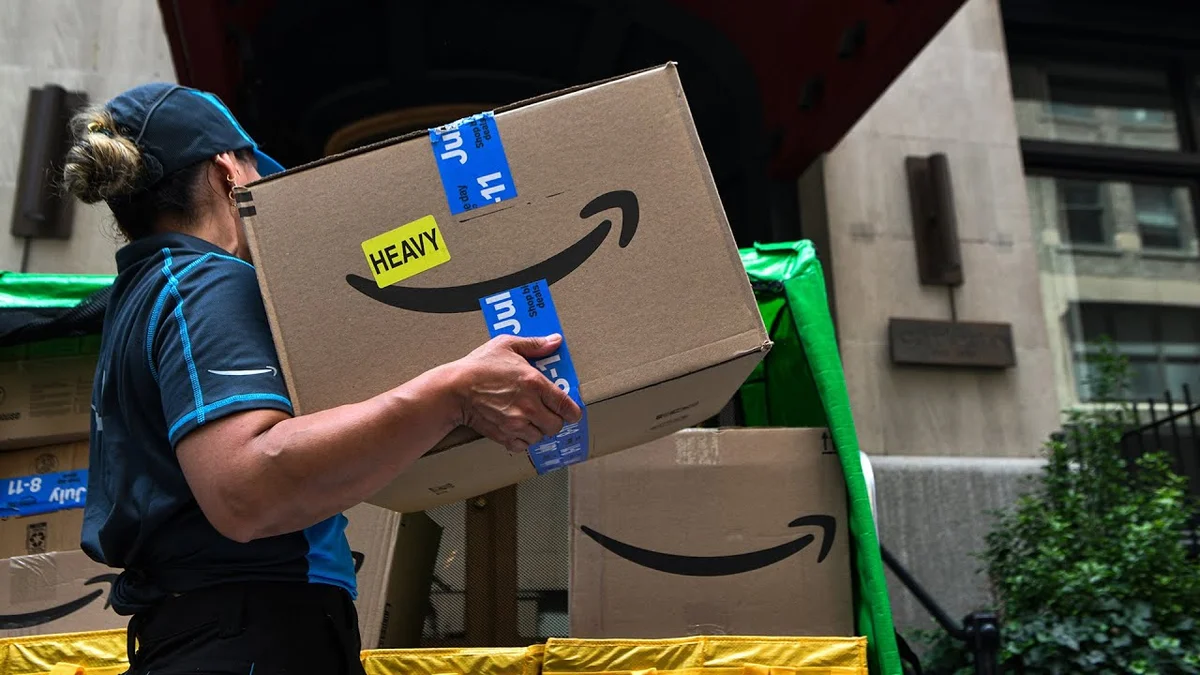
Amazon Prime Day Advanced Amid AI Shopping Shift

Amazon moves Prime Day up one month, signaling a shift driven by AI's growing role in consumer shopping.

Two news anchors on a set discussing a story, with a split screen showing an analyst on a video call.
News anchors David Gura and Christina Ruffin discuss Amazon's Prime Day timing and the impact of AI on shopping.· Bloomberg Podcast
Visual TL;DR
AI Shopping RevolutionDriver
AI is increasingly influencing consumer purchasing decisions and timing
From the article 9 mentionsAmazon has advanced its flagship Prime Day sales event by one month, a significant move that industry analysts attribute, in part, to the increasing integration of artificial intelligence into the shopping journey.
Agentic Shopping RiseContext
AI-powered shopping assistants are becoming more sophisticated and influential
From the articleThe concept of "agentic shopping," where AI agents act on behalf of consumers, is poised to transform the retail landscape.
Consumer Spending HabitsContext
Evolving behaviors are adapting to AI's growing role in the journey
From the article 2 mentionsBy moving Prime Day up by a month, Amazon is attempting to capture a larger share of consumer spending before the typical back-to-school shopping season.
Future E-commerceContext
AI agents will play a larger role in online retail
From the article 9+ mentionsThe presentation concluded with a look at the future of e-commerce sales by agentic mode, projecting significant growth for AI-driven transactions.
Amazon Prime Day ShiftEffect
Flagship sales event advanced one month by Amazon
From the article 9 mentionsThis shift means consumers may not need to actively browse during traditional sale periods like Prime Day if their AI agents are already managing their purchasing needs throughout the year.
Strategic TimingContext
Reflects adapting to consumer spending influenced by AI
From the article 5 mentionsThe data also revealed a trend where consumers are becoming more strategic about their purchases, looking for deals even on everyday items.
Amazon's AdaptationOutcome
Navigating a landscape where AI influences purchasing
From the article 6 mentionsGoyal highlighted that while Prime Day has historically served as a major sales driver for Amazon, the company is now navigating a landscape where AI-powered shopping assistants are becoming more sophisticated and influential.
Contents(5)

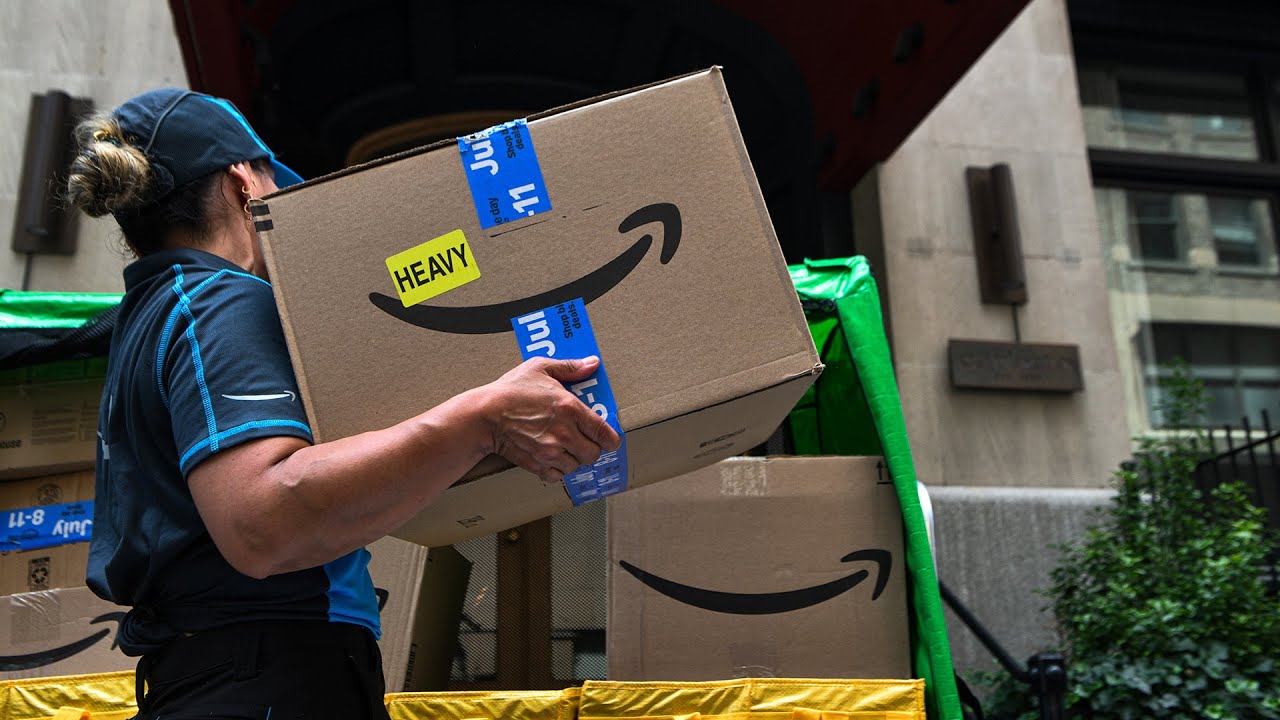
Amazon has advanced its flagship Prime Day sales event by one month, a significant move that industry analysts attribute, in part, to the increasing integration of artificial intelligence into the shopping journey. The e-commerce giant's decision to shift the highly anticipated sales period reflects a broader trend of adapting to evolving consumer behaviors, particularly how AI is influencing purchasing decisions and timing.

Punam Goyal, Senior E-commerce & Retail Analyst at Bloomberg Intelligence, discussed the implications of this shift and the broader impact of AI on the retail sector. Goyal highlighted that while Prime Day has historically served as a major sales driver for Amazon, the company is now navigating a landscape where AI-powered shopping assistants are becoming more sophisticated and influential.

The AI Shopping Revolution and Prime Day

The core of the discussion centered on how AI is reshaping the e-commerce experience. Goyal explained that consumers are increasingly delegating shopping tasks to AI agents, a trend projected to significantly boost e-commerce sales in the coming years. These agents can handle everything from searching and filtering products to making purchases based on user-defined preferences and budgets.

The full discussion can be found on Bloomberg Podcast's YouTube channel.

Amazon Advances Prime Day by One Month Amid AI Shopping Shift - Bloomberg Podcast
Amazon Advances Prime Day by One Month Amid AI Shopping Shift, from Bloomberg Podcast

"Delegated shopping is the next step in e-commerce: shoppers give instructions and artificial-intelligence agents handle purchases within preset price, brand and preference limits," Goyal noted, referencing a Bloomberg Intelligence report. This shift means consumers may not need to actively browse during traditional sale periods like Prime Day if their AI agents are already managing their purchasing needs throughout the year.

Strategic Timing for Consumer Spending

By moving Prime Day up by a month, Amazon is attempting to capture a larger share of consumer spending before the typical back-to-school shopping season. Goyal suggested that this also serves to proactively capture Prime member sign-ups and re-engage existing members. The early timing aims to capitalize on consumer willingness to spend, especially when AI agents are being used to identify and secure deals.

The analyst also touched upon the financial implications. While Amazon does not disclose specific Prime Day revenue figures, Goyal emphasized that such events are crucial for driving top-line growth. The strategy of pulling spending forward is a recognized tactic to boost quarterly performance, especially in a competitive retail environment where consumer discretionary spending can be influenced by economic factors.

Consumer Spending Habits and AI Influence

Goyal presented data indicating that while consumers are still actively seeking deals, their purchasing behavior is evolving. The report showed that a significant portion of consumers plan to use AI for shopping, with younger generations being particularly inclined to delegate tasks to AI agents. This suggests a future where AI assistants will play an even larger role in consumer purchasing decisions.

"What we found is that the younger generation, the millennials, the Gen Zs, are very likely if they don't own Prime, they will sign up for Prime and keep the subscription indefinitely," Goyal stated. This highlights the long-term value Amazon places on its Prime membership program, which serves as a sticky platform for its broader e-commerce and AI initiatives.

The Rise of Agentic Shopping

The concept of "agentic shopping," where AI agents act on behalf of consumers, is poised to transform the retail landscape. Goyal's research suggests that by 2030, a substantial portion of e-commerce transactions will involve AI agents. This could redefine how consumers interact with online retailers, shifting from active browsing to passive delegation.

"It's about pulling spend forward," Goyal explained, referring to the strategy behind the timing of Prime Day. "If you think about the holiday calendar year, there really isn't such an event in the summer outside of back to school. So, when they launch this in the summer, it's just to pull forward much of the spend to capture the consumer's wallet and dollar share earlier."

The data also revealed a trend where consumers are becoming more strategic about their purchases, looking for deals even on everyday items. This cautious approach, influenced by economic conditions such as inflation and interest rates, means that events like Prime Day are crucial for driving sales, especially for big-ticket items.

AI Agents and Future E-commerce

The presentation concluded with a look at the future of e-commerce sales by agentic mode, projecting significant growth for AI-driven transactions. Goyal emphasized that as AI agents become more capable, they will increasingly handle the entire shopping process, from product discovery to checkout.

"So, you go into an agent and you say, 'I want to buy a black dress for prom,' for example. And it knows what you want to buy, it knows how much you want to spend, and it knows how soon you need it and it just ships it to your door," Goyal elaborated, illustrating the potential of fully automated shopping experiences. This shift underscores the importance of AI in the future of retail and highlights Amazon's strategic positioning to capitalize on this evolving trend.

© 2026 StartupHub.ai. All rights reserved. You may not republish this article in full without a license. Search engines and AI research tools may crawl and summarize for reference. Bulk reproduction or model training requires a license. See our terms.
Daniel Singer

Written by

Daniel Singer

Editor, StartupHub.ai

Daniel Singer is the editor of StartupHub.ai, a technology expert and thought leader on AI and its applications across sectors, from fintech and healthcare to developer tooling and consumer software. He writes and tests the tools covered here thoroughly and regularly, and built StartupHub.ai to give founders, operators and buyers a clearer read on what they are actually being sold.