

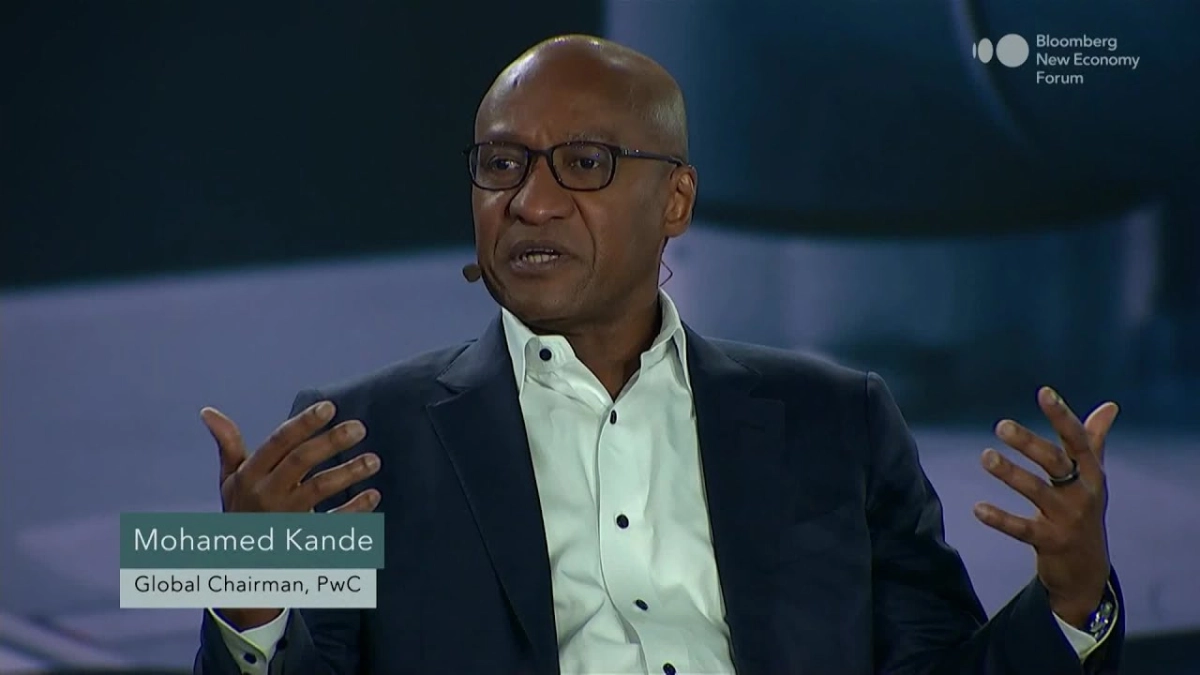
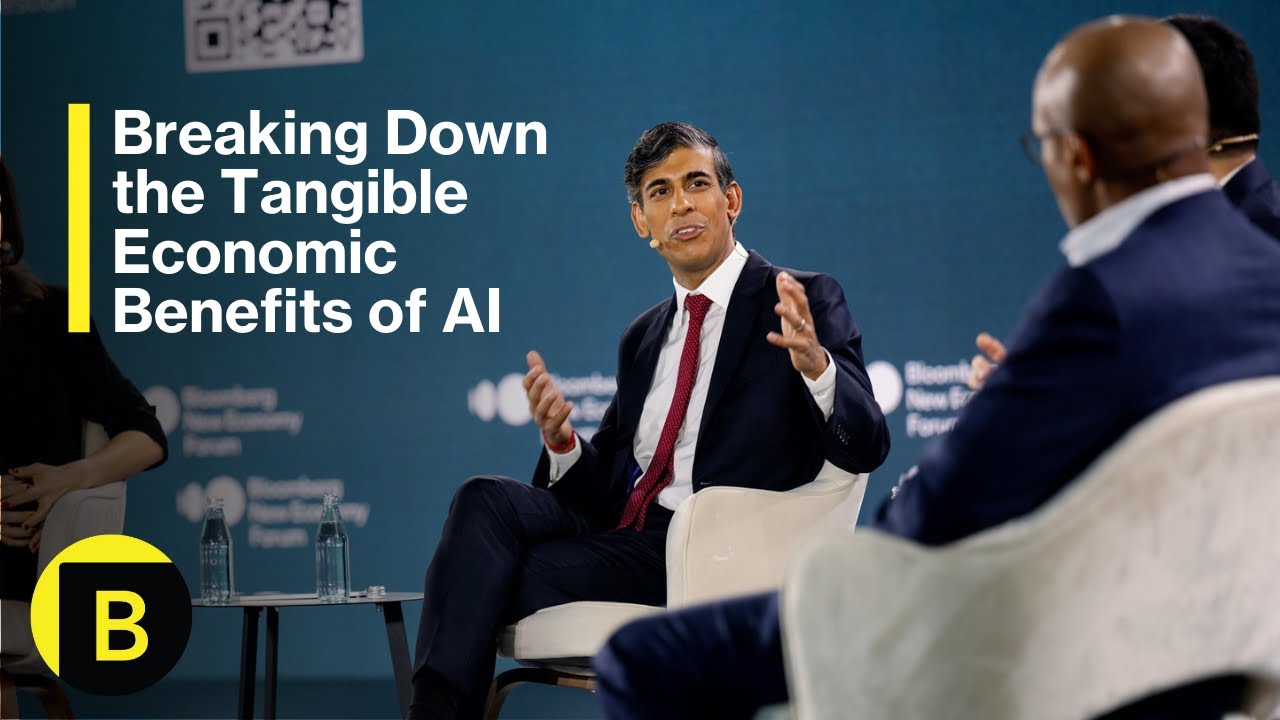
The conversation at the 2025 Bloomberg New Economy Forum in Singapore, featuring Mohamed Kande, Global Chairman of PwC, Forrest Li, Founder and CEO of Sea Limited, and Rishi Sunak, former UK Prime Minister, underscored a pivotal shift in the artificial intelligence narrative. Moderated by Bloomberg's Parmy Olson, the panel moved beyond the speculative "if" of AI adoption to the urgent "how fast" and "how profoundly" it is already reshaping global economies and daily lives. The consensus was clear: AI is not merely an incremental improvement but a foundational technology poised to unlock unprecedented value and address complex challenges.
Mohamed Kande of PwC articulated this evolution directly, stating, "When it comes to the wins, I think we are past the stage where companies, including ourselves, are asking whether they should adopt artificial intelligence or not. That is no longer the question. The question is now how fast can we go." This sentiment encapsulates a core insight from the discussion: the industrial world has moved from evaluating AI's potential to actively implementing it, driven by a clear understanding of its immediate productivity gains. PwC, for instance, proactively equipped all its employees across 139 countries with AI tools, fostering an environment where AI is seen not as a threat to jobs but as a "digital colleague" that augments human capabilities. The primary struggle, Kande noted, lies not in adoption itself but in precisely quantifying the return on investment for augmentation, measuring the value of tasks *not done* because AI handled them, rather than tasks eliminated.
Forrest Li, leading Sea Limited, offered compelling evidence from the dynamic Southeast Asian market. He positioned AI as a "very, very powerful production tool" transforming consumer and seller experiences on platforms like Shopee. Li highlighted how AI empowers small business owners, often lacking advanced skills, to create high-quality product descriptions, images, and videos with ease. This democratizes sophisticated marketing capabilities, fostering greater engagement and conversion rates. Buyers, too, benefit from AI-generated summaries of reviews, making purchasing decisions faster and more informed. Li’s decision to offer these AI tools for free to sellers on Shopee, witnessing high adoption rates and tangible business improvements, illustrates a profound insight: AI can democratize advanced capabilities, empowering a vast ecosystem of individuals and small businesses to thrive.
The conversation further illuminated AI's potential to address systemic societal challenges, a critical insight brought forward by Rishi Sunak. He cited the UK's initiative for a targeted prostate cancer screening program. Given that prostate cancer is often symptomless but highly treatable if detected early, a national screening program has historically been a logistical and financial hurdle. However, AI’s ability to rapidly and accurately analyze MRI scans fundamentally alters this equation. "AI has changed the dynamics on that," Sunak explained, detailing how these new tools are "incredibly accurate and quick at assisting our clinicians at going through the MRI scans." This makes a widespread screening program feasible, promising to save countless lives and reduce healthcare burdens. Here, AI’s return on investment transcends mere economic efficiency, offering a direct, life-saving impact.
Related Reading
- Banking on AI: Profit Upside vs. Enduring Challenges
- ABB CEO Sees No Slowdown in AI Spending, Electrification Driving Industrial Growth
- AI's Universal Impact: Every Job Transformed
The panel acknowledged the substantial capital being poured into AI infrastructure, trillions earmarked for data centers, chips, and related technologies, viewing it as a necessary catalyst for a new age of innovation. This investment, coupled with the unprecedented speed of AI development, underpins their collective optimism. Kande stated, "We are only witnessing the beginning of a new innovation age. I truly believe that." While acknowledging the concentration of power among a few large tech giants on the supply side, Kande expressed confidence that this concentration is acceptable as long as it fuels innovation on the demand side, ultimately benefiting everyone. Li echoed this long-term perspective, asserting that the value AI will create in the coming years will dwarf today's achievements, making people's lives better in myriad ways.