


AI Won't Save US From Demographic Decline, Expert Says

Martha Gimbel of Yale's Budget Lab questions the optimistic view of AI solving demographic decline, citing job mismatches and the need for human touch in elder care.

6 min read
Two anchors on a news set with a remote guest on a screen.
Bloomberg Podcast
Visual TL;DR
Demographic DeclineDriver
aging population and declining birth rates create national challenges
From the article 4 mentionsThis divergence means that past patterns of technological adoption and societal impact may not be a perfect guide for the current situation, where technological transition is occurring alongside demographic decline.
AI Solution OptimismContext
some believe AI can solve demographic decline issues
From the article 2 mentionsThis mismatch suggests that simply slotting AI into existing roles may not be a straightforward solution to labor shortages caused by demographic shifts.
Gimbel's SkepticismCore
Yale expert Martha Gimbel questions AI's ability to solve these issues
From the article 8 mentionsMartha Gimbel, Executive Director and Co-Founder of the Budget Lab at Yale University, expressed skepticism about AI's ability to single-handedly navigate the nation's aging population and declining birth rates.
Job MismatchDriver
AI's impact on jobs doesn't align with older workers or immigrants
From the article 2 mentionsShe cited flight attendants as an example, noting that while the profession tends to have an older workforce, AI is unlikely to significantly alter the nature of the job.
Human Touch NeededDriver
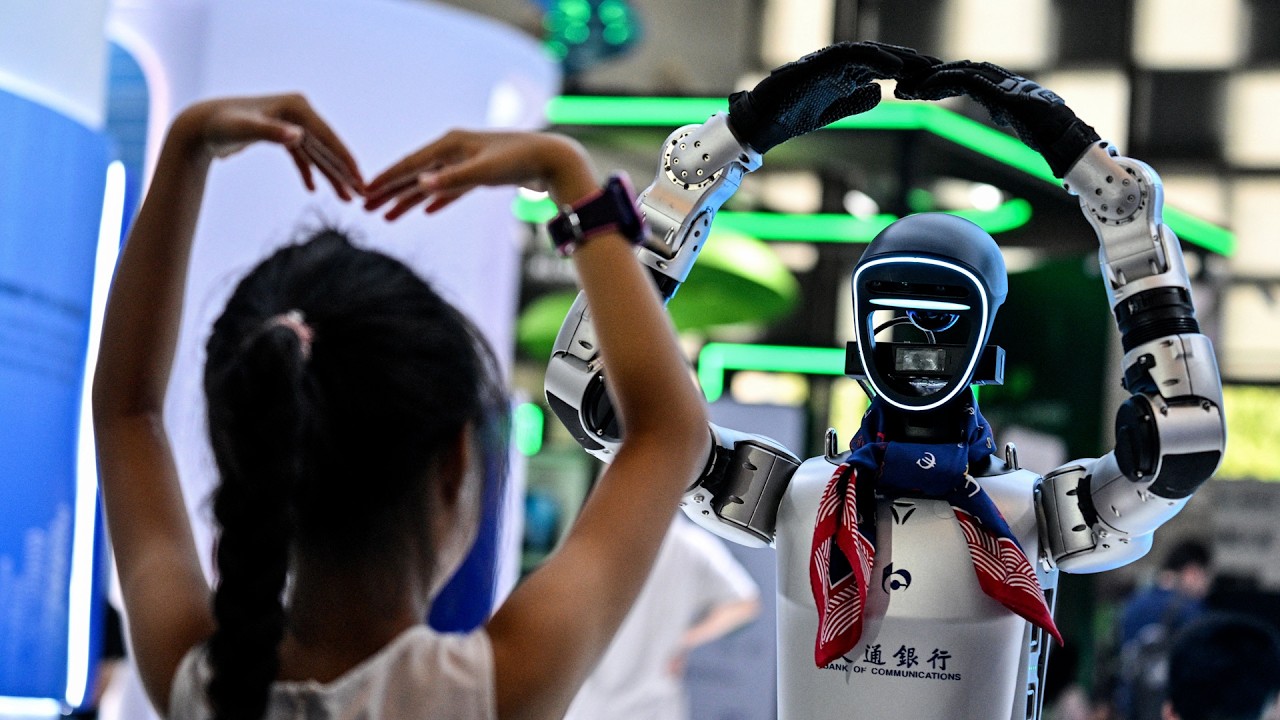
elder care and other sectors require human interaction, not just AI
AI Won't Save UsOutcome
AI alone cannot fully address America's complex demographic challenges
Flight Attendant ExampleContext
From the articleShe cited flight attendants as an example, noting that while the profession tends to have an older workforce, AI is unlikely to significantly alter the nature of the job.
Contents(4)

The promise of artificial intelligence to solve America's demographic challenges is facing scrutiny. Martha Gimbel, Executive Director and Co-Founder of the Budget Lab at Yale University, expressed skepticism about AI's ability to single-handedly navigate the nation's aging population and declining birth rates.

AI's Mismatch with Demographic Shifts

Gimbel pointed out that the jobs AI is likely to impact most, either by increasing productivity or replacing workers, do not typically align with the sectors where older workers or immigrants are concentrated. She cited flight attendants as an example, noting that while the profession tends to have an older workforce, AI is unlikely to significantly alter the nature of the job.

"The jobs that AI is likely going to be helpful with, you know, whether it's increasing productivity or replacing workers, doesn't line up particularly well with the jobs where we have a lot of older workers or frankly the jobs where we have a lot of immigrants," Gimbel stated. This mismatch suggests that simply slotting AI into existing roles may not be a straightforward solution to labor shortages caused by demographic shifts.

The full discussion can be found on Bloomberg Podcast's YouTube channel.

Demographic Shift Tests AI Promise - Bloomberg Podcast
Demographic Shift Tests AI Promise, from Bloomberg Podcast

Historical Context and Current Challenges

Drawing a parallel to the Industrial Revolution, Gimbel highlighted a key difference: historical technological advancements occurred during periods of population growth. "From 1750 to 1814, the population of England doubled, and then you threw technological change on top of that. We are not facing a doubling of the population," she explained. This divergence means that past patterns of technological adoption and societal impact may not be a perfect guide for the current situation, where technological transition is occurring alongside demographic decline.

Gimbel warned that layering these two significant transitions could compound difficulties. "What you're doing is throwing one transition on top of another transition and just likely compounding and making more difficult the effects of each of them," she said.

Consumer Demand and the Human Touch

Beyond the workforce implications, Gimbel emphasized the importance of considering consumer demand, particularly in sectors serving an aging population. She noted the increasing need for healthcare and caregiving roles as the population ages. However, she questioned whether consumers would embrace AI in these sensitive areas.

"What do consumers want? Where is consumer demand going to increase? You're going to have more and more demand for health care and for, you know, jobs that look after people as the population ages. And so then you have a question like, can AI help with that? And do people want AI to help with that, or do they want to, you know, age with humans around them, and who are looking after them?" Gimbel posed. She shared a personal anecdote about her mother's explicit wish to avoid a "robot nursing home," underscoring the potential human element preference.

Potential Roles for Robots in Elder Care

Despite her reservations about AI as a universal solution, Gimbel acknowledged that robots could play a vital role in specific areas, particularly in elder care. "Elder care is incredibly physically demanding. And if you can help, you know, lift people out of bed, things like that, that's going to make a huge difference for the quality of care," she stated.

This suggests that while AI might not fully replace human workers or solve all demographic challenges, targeted robotic applications could alleviate some of the physical burdens in caregiving and potentially reduce costs, allowing human caregivers to focus on more nuanced and emotionally resonant aspects of care.

© 2026 StartupHub.ai. All rights reserved. You may not republish this article in full without a license. Search engines and AI research tools may crawl and summarize for reference. Bulk reproduction or model training requires a license. See our terms.