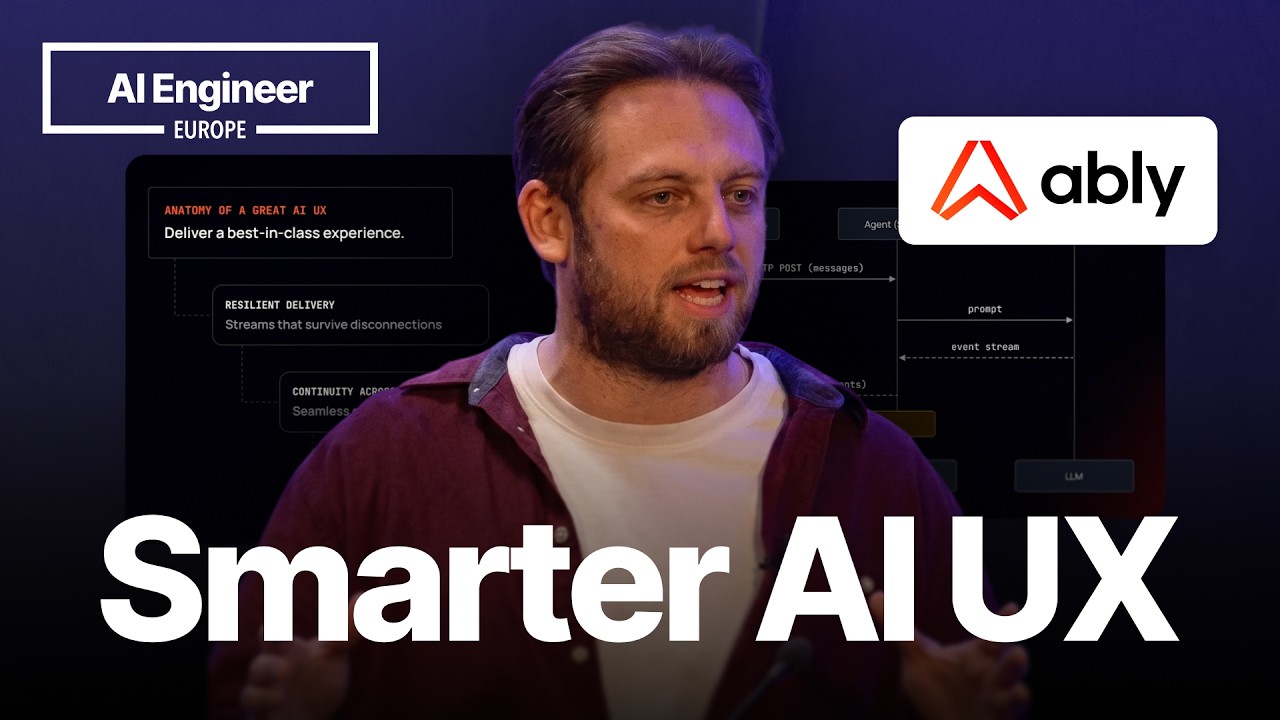





Visual TL;DR
AI UX is BrokenDriver
user experience issues in AI applications are common and frustrating
From the article 2 mentionsThe agent might continue generating tokens, but with no client to receive them, the work is wasted, and the user is left with an incomplete or broken experience.
Not Model FaultContext
problems stem from infrastructure, not the AI models themselves
From the article 7 mentionsMike Christensen, a staff engineer at Ably, delivered a compelling presentation at AI Engineer Europe titled "Why Your AI UX Is Broken (and It's Not the Model's Fault)." Christensen argued that the common perception of AI UX issues stemming from flawed models is often a misdiagnosis, with the real culprits lying in the fundamental architecture and implementation of these systems.
Default ArchitectureContext
common pattern uses HTTP streaming for AI chat applications
From the article 4 mentionsHe elaborated, "The default architecture is fundamentally oriented on the idea of a single client, a single connection, to a single agent." This one-to-one mapping creates significant challenges when dealing with the dynamic nature of user interaction in modern applications.
HTTP Streaming ProblemsDriver
single point-to-point connection creates issues with AI event streams
From the article 4 mentionsChristensen identified three key problems arising from the reliance on HTTP streaming for AI UX:
Decoupling & Durable SessionsCore
solution involves separating components and maintaining persistent connections
From the article 6 mentionsHe introduced the concept of "durable sessions" or "channels" as a more effective solution.
Ably's AI TransportCore
real-world implementation of the proposed durable session architecture
From the article 4 mentionsTo facilitate these more robust AI UX patterns, Ably has developed "AI Transport," a drop-in session layer for AI applications.
Improved AI UXEffect
fixing infrastructure leads to better user experiences with AI