


AI in Racing: OpenAI Podcast Explores Data & Driver Synergy

OpenAI's Joyce Ruffell and RaceTek's Chase Holden discuss how AI is revolutionizing motorsports, from data analysis to driver communication.

6 min read
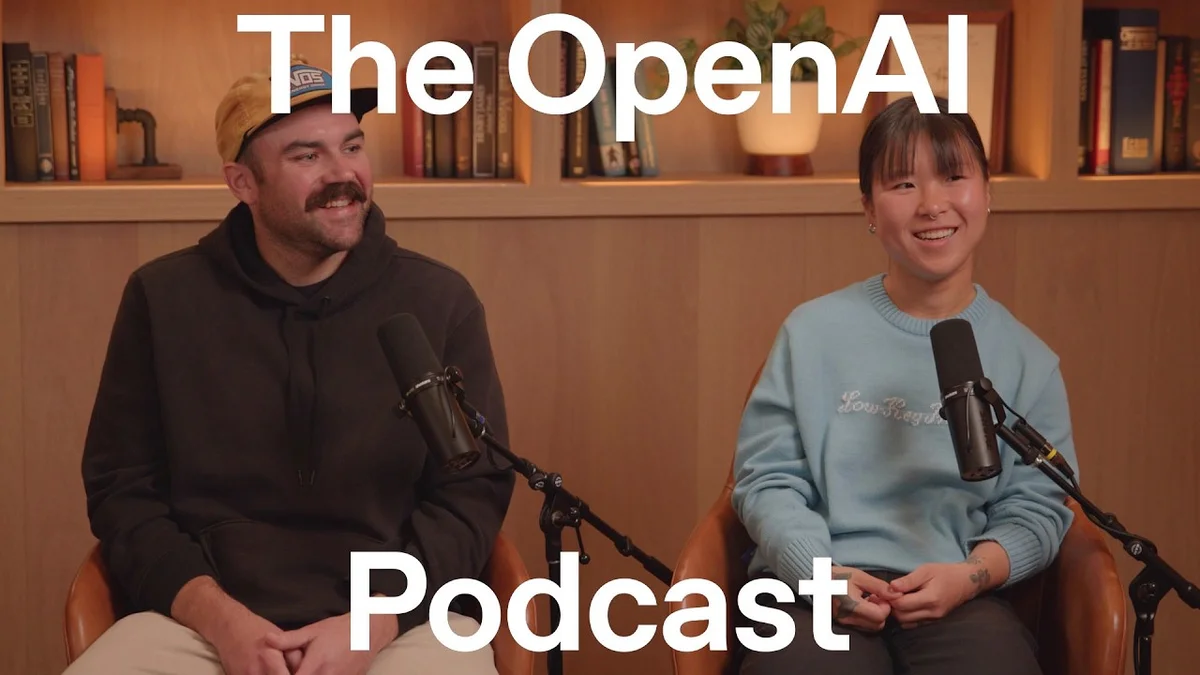
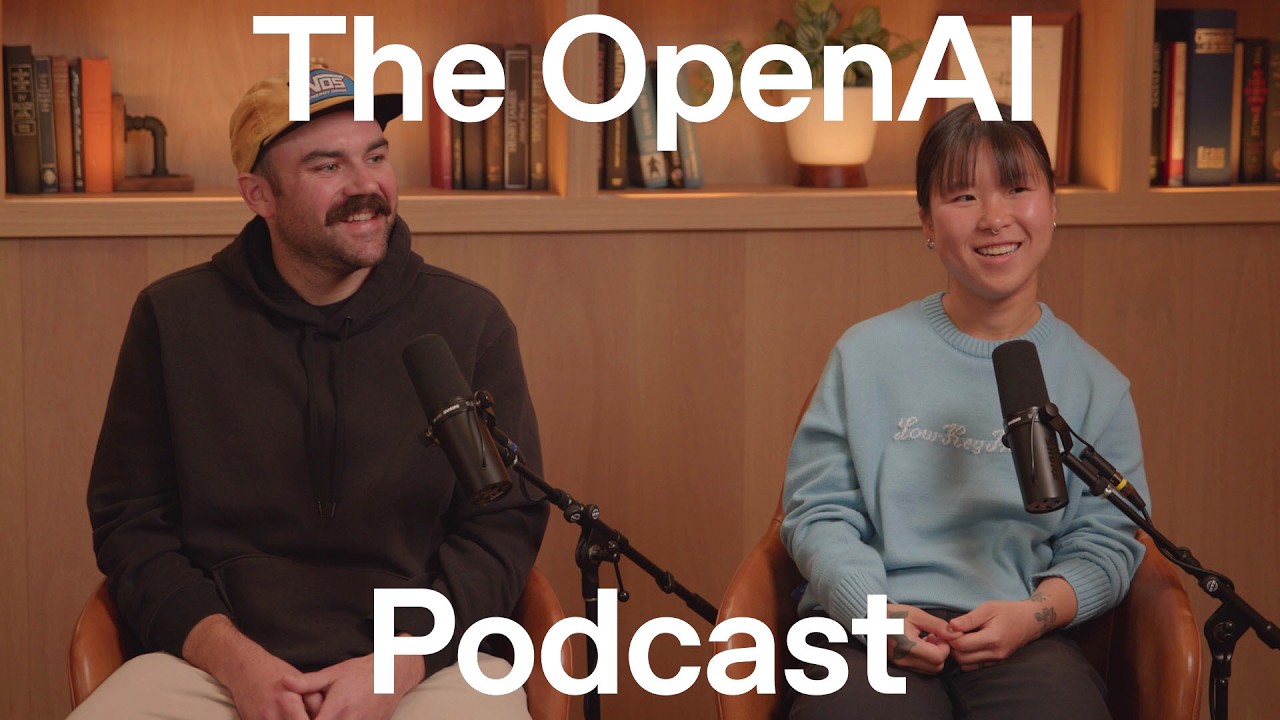
Three people sitting in chairs, two facing forward and one turned to the side, in a podcast recording setting.
OpenAI Youtube
Visual TL;DR
AI in Racing PodcastContext
From the article 9+ mentionsIn the latest episode of The OpenAI Podcast, host Andrew Mayne sits down with Joyce Ruffell, a researcher at OpenAI, and Chase Holden, co-founder of RaceTek Systems, to explore the burgeoning intersection of artificial intelligence and motorsports.
OpenAI ResearchCore
From the article 3 mentionsJoyce Ruffell, an OpenAI researcher with a focus on data problems like data sources, quality, pipelines, and efficiency, shared her experience working on a research collaboration with the storied Chip Ganassi Racing team.
Chip Ganassi RacingDriver
collaboration with storied team to make their wealth of historical data accessible
From the articleJoyce Ruffell, an OpenAI researcher with a focus on data problems like data sources, quality, pipelines, and efficiency, shared her experience working on a research collaboration with the storied Chip Ganassi Racing team.
AI Data AnalysisCore
leveraging AI to refine race team logistics and driver performance insights
From the article 9+ mentionsThe team, a long-standing presence in IndyCar, Indy NXT, NASCAR, and sports-car racing, possesses a wealth of historical data that Ruffell's work aims to make more accessible for analysis and hypothesis testing.
Driver SynergyEffect
AI enhances driver communication and optimizes man-machine partnership on track
From the article 2 mentionsThe conversation dives into how AI is being used to refine everything from race team logistics and driver performance to the creation of entirely new racing businesses.
New Racing BusinessesOutcome
AI is enabling the creation of entirely new racing businesses and innovations
From the article 9+ mentionsThe conversation dives into how AI is being used to refine everything from race team logistics and driver performance to the creation of entirely new racing businesses.
Future of MotorsportsOutcome
AI is revolutionizing motorsports, from data analysis to driver communication
From the article 4 mentionsThey envision a future of co-working between humans and AI, where AI acts as an extension of human capabilities, enabling teams to achieve more.
Contents(5)

In the latest episode of The OpenAI Podcast, host Andrew Mayne sits down with Joyce Ruffell, a researcher at OpenAI, and Chase Holden, co-founder of RaceTek Systems, to explore the burgeoning intersection of artificial intelligence and motorsports. The conversation dives into how AI is being used to refine everything from race team logistics and driver performance to the creation of entirely new racing businesses.

From Researcher to Racing Innovator

Joyce Ruffell, an OpenAI researcher with a focus on data problems like data sources, quality, pipelines, and efficiency, shared her experience working on a research collaboration with the storied Chip Ganassi Racing team. The team, a long-standing presence in IndyCar, Indy NXT, NASCAR, and sports-car racing, possesses a wealth of historical data that Ruffell's work aims to make more accessible for analysis and hypothesis testing.

The full discussion can be found on OpenAI Youtube's YouTube channel.

What racing reveals about working with AI, the OpenAI Podcast Ep. 22 - OpenAI Youtube
What racing reveals about working with AI, the OpenAI Podcast Ep. 22, from OpenAI Youtube

The data generated in motorsports is characterized by its high-bandwidth, time-series nature, requiring processing both retroactively and in real-time at the track. Ruffell highlighted the challenge and opportunity in making this data usable for quick decision-making and fine-tuning strategies before races and practice sessions.

Building a Racing Company with AI

Chase Holden, the co-founder of RaceTek Systems, detailed his entrepreneurial journey into motorsports, which began with a passion for racing and a fascination with AI. Having transitioned from finance and media into the racing world, Holden saw the potential for AI tools like ChatGPT and Codex to revolutionize the sport.

RaceTek Systems focuses on building bespoke racing intelligence systems. Holden explained their project to create an all-in-one racing intelligence platform that consolidates data and insights, allowing crews to assess situations with a "smarter lens" and make better decisions. He noted that his path into racing was unusual, coming from media and then pivoting to the competitive side, fueled by the belief that AI could offer a novel edge.

The Data Wars and the Man-Machine Partnership

Both guests emphasized the critical role of data in modern racing, with Holden describing the current era as "data wars." He stressed that success hinges on the ability to organize and interpret this data effectively. "It's always going to be about who can organize the best," Holden stated. "The man and the machine, how do you get those to work together as seamlessly as possible?"

Ruffell elaborated on the data challenges, noting that while teams have extensive know-how, making data accessible for comparison and hypothesis testing is key. The speed at which insights can be derived from data directly impacts the number of experiments and fine-tuning that can occur before each session, ultimately enhancing the value of data-gathering exercises.

Leveraging AI for Performance and Insight

The conversation also touched upon the practical applications of AI. Ruffell highlighted that a significant impact has been through "education" about how AI models work, demystifying the technology for the racing teams. She emphasized the importance of understanding that AI is a tool, not magic, and that effective use relies on quality input, a concept known as prompt engineering.

Holden pointed out that AI can help bridge the gap between the quantitative data from sensors and the qualitative insights from drivers and engineers. He explained how AI can parse anecdotal feedback, like how a car felt or engineer's notes, making it correlatable with hard data for a more holistic understanding.

The Future of AI in Motorsports

The discussion also touched upon the human-centric nature of racing, even with the increasing integration of AI. Both Ruffell and Holden agreed that while AI can optimize processes and provide insights, the human element, creativity, intuition, and strategic thinking, remains paramount. They envision a future of co-working between humans and AI, where AI acts as an extension of human capabilities, enabling teams to achieve more.

Looking ahead, Holden advised aspiring innovators to shed stereotypes about AI, stay curious, and explore what these tools can do. He suggested starting with platforms like ChatGPT and engaging in conversations to understand their potential, emphasizing that AI can be a powerful ally in bringing novel ideas to fruition.

© 2026 StartupHub.ai. All rights reserved. You may not republish this article in full without a license. Search engines and AI research tools may crawl and summarize for reference. Bulk reproduction or model training requires a license. See our terms.